"Cannot Trust Russia to Comply with Treaty"... EU Concerns Amid Withdrawal
Possibility of Arms Control Treaty Discussion at Next Month's US-Russia Summit
[Asia Economy Reporter Hyunwoo Lee] The U.S. Biden administration has notified Russia that it will not return to the Open Skies Treaty, resulting in the termination of all arms control agreements between the U.S. and Russia except for the New START. As the arms control agreement issue is expected to be a major agenda item at the upcoming U.S.-Russia summit next month, the European Union (EU) is reportedly concerned about the possibility of accidental clashes.
According to foreign media including the AP on the 27th (local time), Wendy Sherman, U.S. Deputy Secretary of State, informed Sergey Ryabkov, Russian Deputy Foreign Minister, of the U.S. government's decision not to rejoin the Open Skies Treaty. The Open Skies Treaty is one of the arms control agreements signed in 1992 and effective since 2002, involving the U.S., Russia, the United Kingdom, France, Germany, and 34 other countries.
This treaty allows mutual unarmed aerial reconnaissance among member countries to ensure international monitoring and transparency regarding the military capabilities and activities of the signatories. By sharing information on military status and activities, it has been regarded as an agreement serving a mutual surveillance function to suppress reckless arms races and accidental conflicts.
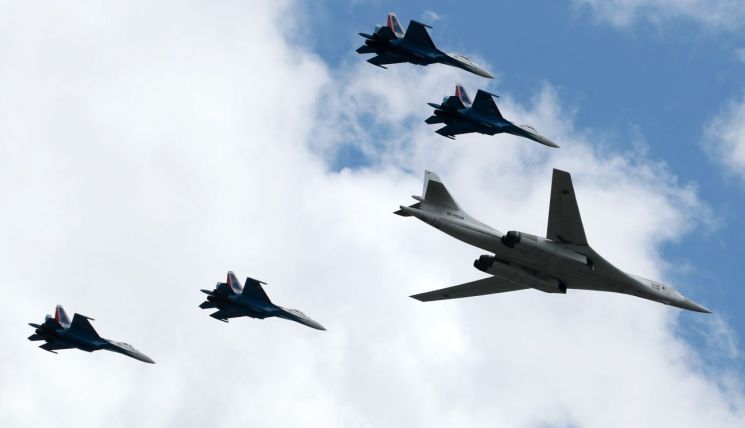
However, the U.S. government, during former President Donald Trump's administration, unilaterally declared withdrawal in May last year, citing Russia's non-compliance with the treaty. The withdrawal took effect in November last year, six months later, leading to accidental clashes between reconnaissance and combat aircraft of both countries in various locations. The air forces' reconnaissance and combat aircraft clashed in areas such as the Arctic and Alaska waters, which are neutral zones with unclear boundaries, as well as the Black Sea region where the Ukraine conflict is ongoing, and Eastern Europe.
As a result, the EU is reportedly concerned about the rising military tensions due to increased accidental clashes between the two countries. Previously, the EU requested the U.S. to reconsider its withdrawal, emphasizing that the treaty allowed NATO countries confronting Russia to obtain information on Russia's military movements. However, the Trump administration rejected this and declared withdrawal. At that time, there were strong concerns within the U.S., mainly from the Democratic Party, about weakening the transatlantic alliance due to the withdrawal.
Contrary to expectations, the Biden administration's decision not to rejoin means the tensions between the two countries are likely to continue. Although the Biden administration had previously stated it was not opposed to rejoining the treaty, it later shifted to a decision against rejoining, citing the lack of assurance from Russia that it would properly comply with the treaty.
Meanwhile, with all arms control agreements between the U.S. and Russia terminated except for the New START, the arms control issue is expected to be a major topic at the U.S.-Russia summit scheduled for the 16th of next month in Geneva, Switzerland.
© The Asia Business Daily(www.asiae.co.kr). All rights reserved.

















