Whether Abuse of App Store Market Dominance is an Issue... Final Trial Scheduled for the 24th
Epic "30% App Commission is Excessive" VS Apple "Epic is Trying to Free Ride"
Outcome of the Lawsuit Expected to Affect the Entire App Market Including Google Play Store

[Asia Economy Reporter Kim Suhwan] The antitrust lawsuit trial over app commission policies between Apple and Epic Games is nearing its conclusion. Depending on the trial outcome, it could significantly impact the role of platform companies including Apple in the $170 billion (approximately 192 trillion KRW) mobile app market, drawing market attention to whether the app market landscape will change.
According to the Wall Street Journal (WSJ) on the 23rd (local time), the final hearing of the lawsuit between Apple and Epic Games is scheduled for the 24th.
The core issue of this trial, initiated by Epic Games, famous for the game "Fortnite," is whether Apple has abused its market dominance in the mobile app market. Apple has long faced criticism from app developers and political circles for allegedly abusing its strong market dominance over its App Store by imposing excessive commissions on app developers.
Epic Games also stated that the reason for filing the lawsuit is that "Apple's 30% app commission demanded from app developers constitutes unfair conduct resulting from abuse of dominant market position." Epic Games explains that Apple, as an intermediary, demands excessive revenue sharing, and this vulnerable distribution structure worsens the business conditions of developers.
Earlier, in August last year, Epic Games filed an antitrust lawsuit against Apple, claiming that Apple's enforcement of its in-app payment method (a system where payments are made only through the App Store's provided method) and the 30% commission on all in-app payments constitute anti-competitive behavior. In response to Apple's commission policy, Epic Games built its own payment system. Apple viewed this as a violation of App Store rules and removed Fortnite from the App Store.
Apple has rebutted that such App Store policies do not constitute anti-competitive behavior. Apple criticized, "The app commission imposed on Epic Games is at the same level as other platforms," and added, "Rather, Epic Games is trying to free-ride on the App Store, a platform Apple invested in."
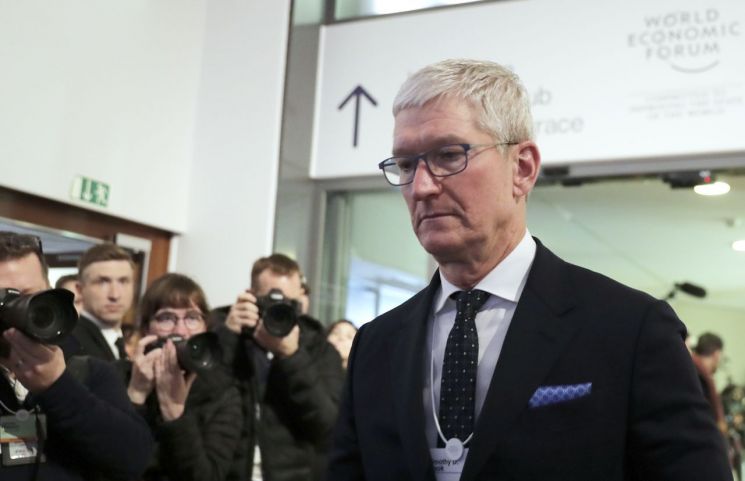
Apple CEO Tim Cook also appeared in court on the 21st, stating, "Consumers can choose between Android smartphones and iPhones," arguing that Apple's App Store does not hold a monopoly position in the app market. He further claimed that there are many free apps, and if Apple were to abandon the in-app payment system, it would mean forfeiting all revenue earned from intellectual property rights.
Another major issue in the trial is Apple's policy of allowing only its own App Store for app distribution. CEO Cook explained in court that banning other app stores and pre-screening and reviewing all applications registered on Apple's App Store are essential measures to provide security to users. On the other hand, Epic Games countered that Apple's policy aims to maximize app commission revenue by prohibiting third-party app stores and allowing only its own App Store.

If Epic Games wins this trial, Apple may have to forgo a significant portion of its App Store profits. Apple recorded sales of $72.3 billion (approximately 81 trillion KRW) from the App Store alone last year.
Conversely, if Apple wins, app developers worldwide may be forced to unilaterally comply with Apple's app commission and other contract terms.
The verdict for this trial is expected to be delivered within a few months after the final hearing.
© The Asia Business Daily(www.asiae.co.kr). All rights reserved.
![Clutching a Stolen Dior Bag, Saying "I Hate Being Poor but Real"... The Grotesque Con of a "Human Knockoff" [Slate]](https://cwcontent.asiae.co.kr/asiaresize/183/2026021902243444107_1771435474.jpg)













