Visit to the 'Gwanghwamun Square Excavation Site Scheduled for Public Display' Open to Citizens from 21st to 29th... Urging Creation of a Civic Space with 'Historical Significance' and 'Cultural' Vitality
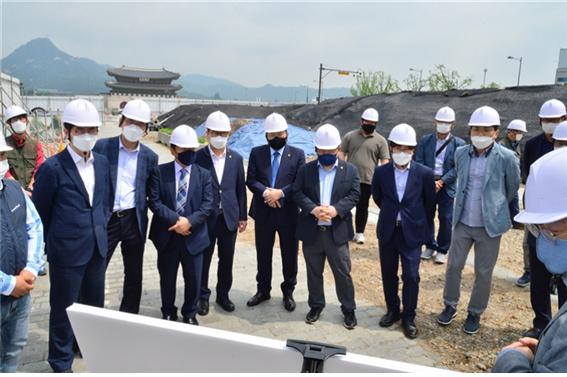
[Asia Economy Reporter Park Jong-il] The Seoul Metropolitan Council's Urban Planning and Management Committee (Chairman Kim Hee-geol) visited the excavation site related to the creation of 'Gwanghwamun Square' on the 18th, received reports on the progress of the excavation, and inspected the site.
Chairman Kim Hee-geol (Democratic Party, Yangcheon 4) and members of the Urban Planning and Management Committee visited 'Gwanghwamun Square' and received reports from the head of the Gwanghwamun Square Promotion Team on the current progress and development plans of Gwanghwamun Square, as well as the status of the buried cultural heritage excavation. They directly toured the sites where the foundations of major Joseon Dynasty government offices such as Samgunbu (overseeing military affairs) and Saheonbu (inspection and supervision) were discovered through relics.
The excavation of cultural heritage around Gwanghwamun Square has been ongoing since January 2019, covering approximately 10,100㎡ of the target area in a total of nine phases, and is scheduled to continue until the end of this month.
About 40% (4,000㎡) of the total 10,100㎡ investigation area revealed relics from the Joseon Dynasty, including the sites of government offices from the 15th to 19th centuries, as well as remains of private houses, walls, wells, and waterways.
The Seoul Metropolitan Government plans to open the excavated relics to the public from May 21 to 29 (9 days) this year, and considering the COVID-19 situation, will also provide online (video) access.
Kim Hee-geol, chairman of the Urban Planning and Management Committee, stated, "The excavation of major cultural heritage such as the traces of Yukjo Street discovered during the creation of Gwanghwamun Square is very meaningful as it can revive the historicity of Gwanghwamun Square and create a space where history and culture come alive." He added, "I hope that Gwanghwamun Square will be developed into a space loved by citizens where culture breathes through the preservation of cultural heritage and restoration of the Woldae (stone platform), and that everyone will do their best to achieve this."
© The Asia Business Daily(www.asiae.co.kr). All rights reserved.

















