CEO Musk Criticizes Bitcoin Environmental Issues Daily
Proof-of-Stake Emerging but Concerns Over Security and Decision-Making Transparency Remain
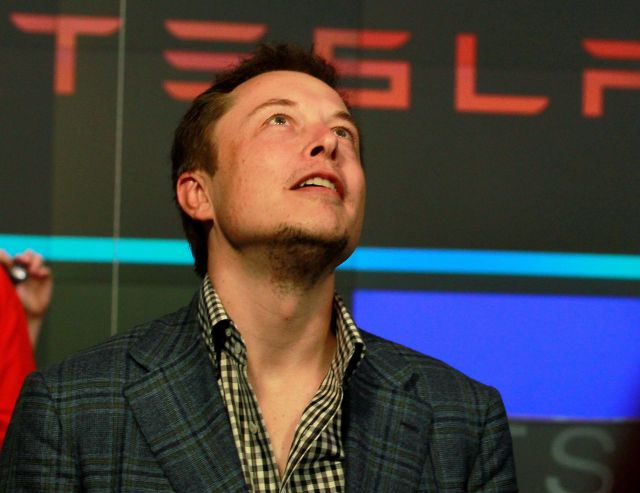
"Too much electricity is used for Bitcoin mining and trading." On the 12th (local time), Elon Musk, CEO of Tesla, pointed out the environmental issues of Bitcoin, the representative cryptocurrency, through Twitter. As a result, Bitcoin fell by 10.73% on that day alone. The impact continued, and according to the domestic cryptocurrency exchange Upbit, as of 8:30 a.m. on the 17th, Bitcoin recorded 56.73 million won, down 3.52% from the previous day.
In response, proof-of-stake, an eco-friendly cryptocurrency method, began to attract attention. It reduces energy waste through a streamlined decision-making process compared to Bitcoin. A representative cryptocurrency of this type is Ada. At the same time, Ada (Cardano) recorded 2,765 won, up 1.84% from the previous day.
The reason Bitcoin is criticized for harming the environment is that it verifies transactions using the proof-of-work method. Proof-of-work means that all participants solve a computational puzzle to generate the ‘block’ necessary to record transactions. The first person to solve the puzzle receives a reward. The reward is given in cryptocurrencies such as Bitcoin that we know.
Because everyone participates, security is excellent. It is difficult to compromise security through malicious actions by one or two individuals. However, this also means inefficiency. Only the person who solves the puzzle the fastest receives a reward, so the other participants spend costs without any income. Additionally, solving the puzzle requires a significant amount of electricity. According to the University of Cambridge in the UK, Bitcoin consumes 110 TWh (terawatt-hours) annually, which is comparable to Malaysia’s annual electricity consumption.
As a result, cryptocurrencies using the proof-of-work method are underperforming. On the 13th, the US cryptocurrency exchange Coinbase announced it would offer Dogecoin trading, but Dogecoin did not rise significantly compared to the past. It rose to 889 won ahead of CEO Musk’s appearance on the US entertainment show SNL on the 8th but only rose to 717 won this time and fell 8.23% on the 15th.
Instead, cryptocurrency market participants are focusing on proof-of-stake cryptocurrencies that consume less energy. The reason proof-of-stake consumes less electricity is that it drastically reduces the decision-making process. Proof-of-stake means granting data management authority to a small number of people who hold a large stake in the cryptocurrency. Charles Hoskinson, the developer of Cardano, explained, "As Bitcoin’s asset value grows, competition intensifies, increasing energy consumption," and "Proof-of-stake is 1.6 million times more efficient than Bitcoin because it does not consume large amounts of energy."
However, experts point out that proof-of-stake also has critical drawbacks. Professor Lee Byung-wook of Seoul School of Integrated Sciences and Technologies said, "Since a small number verify transactions, security inevitably weakens compared to proof-of-work," and "It is also problematic that if a few decision-makers make malicious decisions, the rest must follow."
Above all, there is an analysis that proof-of-stake is far from blockchain technology. Professor Lee emphasized, "Proof-of-work, where everyone participates, has the blockchain’s core feature of irreversibility, meaning transactions cannot be reversed, but proof-of-stake does not," and "It is illogical to create value without resource input such as electricity consumption."
© The Asia Business Daily(www.asiae.co.kr). All rights reserved.

















