From the 20th, 560,000 Elementary, Middle, and High School Students in Seoul
Lunchboxes Must Also Meet Calorie, Sodium, and Protein Content Standards
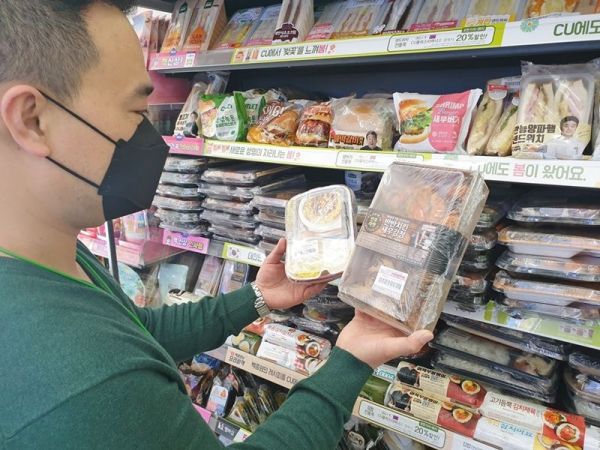
[Asia Economy Reporter Jo In-kyung] Starting from the 20th, elementary, middle, and high school students in Seoul will receive Hope Meal Vouchers worth 100,000 KRW each, which can be used to purchase lunch boxes or gimbap at convenience stores. The target group includes 560,000 students who have not been attending school daily and have been taking remote classes since COVID-19.
According to the convenience store industry on the 17th, these vouchers are intended to provide lunch so that students do not skip meals instead of school meals. Therefore, only lunch boxes, seasonal fruits, white milk, soy milk, vegetable sandwiches, fruit and vegetable juices, salads, spoonable yogurt, smoked eggs, gimbap, and similar items can be purchased.
Students cannot purchase items such as ramen, triangular gimbap, instant foods, snacks, caffeinated drinks, or carbonated beverages. Triangular gimbap was excluded from the eligible items because rice and added toppings alone lack sufficient nutrients. Processed milk such as strawberry milk or chocolate milk is also not allowed. Lunch boxes must meet the Seoul Metropolitan Office of Education’s school meal standards, with sodium content below 1067 mg, calories below 990 kcal, and protein content above 11.7 g to be eligible for purchase.
A Seoul Metropolitan Office of Education official explained, "As remote classes have been prolonged, there have been many requests, especially from dual-income families, to resolve students’ meal skipping issues. Only about ten food groups approved by the School Meal Advisory Committee, which includes nutritionists, the Ministry of Food and Drug Safety, and university professors, can be purchased."
The vouchers can be used at a total of 8,819 stores in Seoul, including GS25, CU, 7-Eleven, Emart24, Ministop, and C Space. The convenience of these stores being the most accessible places from students’ homes was taken into consideration. Although there were requests to allow meals at lunch box companies or restaurants, it was not feasible to meet the meal price set at 4,000 KRW per meal.
The convenience store industry notes that a total budget of 56 billion KRW is allocated only for meal replacement products such as lunch boxes and gimbap in Seoul. They expect a temporary increase in sales and the opportunity to attract students who have not previously tried convenience store lunch boxes as new consumers.
CU plans to promote its "One Meal Diet Lunch Box Series," launched earlier this month in line with daily nutrient intake standards, as the main product for the Hope Meal Voucher. The series includes healthy lunch boxes such as stir-fried pork, pork cutlet, and soy sauce braised chicken, designed with 600?800 kcal and sodium below 650 mg. GS25, 7-Eleven, and Emart24 are also upgrading existing lunch boxes to meet the education office’s standards and are intensively promoting them in stores while considering launching additional new products. In stores, special price tags and notices will be attached to make it easy for students to identify eligible Hope Meal Voucher products. Some convenience stores are also preparing promotional events where customers who pay a certain amount or more with the voucher will receive mobile gift certificates worth 1,000 to 2,000 KRW.
Convenience stores have also agreed at the association level with the education office to provide a 10% discount on voucher usage. This means students or parents can effectively spend up to 110,000 KRW at convenience stores. Additional discounts such as telecommunications membership benefits offered by each convenience store can also be combined.
The vouchers, issued as mobile Zero Pay points to the phones of students or parents, will automatically expire and be reclaimed if not used by July 16.
© The Asia Business Daily(www.asiae.co.kr). All rights reserved.

















