Gangwon, Daejeon, Busan, Jeju, Gyeongnam, Gwangju
6 Local Governments Established
Each Local Government Accelerates for Pilot Operation
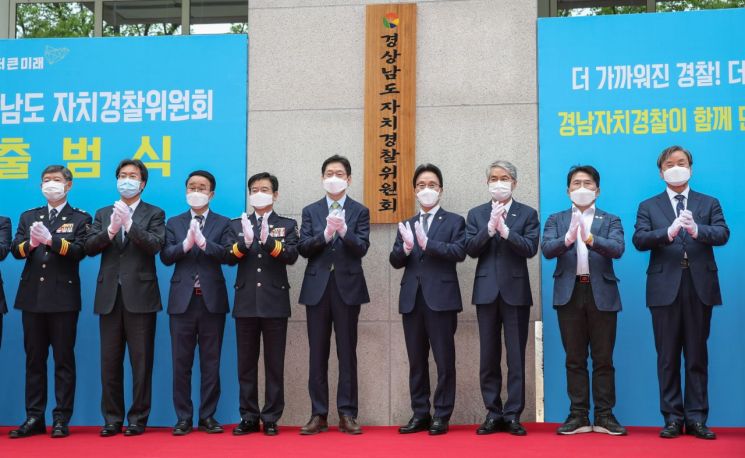 The inauguration ceremony of the Gyeongnam Provincial Autonomous Police Committee held on the 10th.
 [Photo by National Police Agency]
[Asia Economy Reporter Lee Gwan-ju] Ahead of the full implementation of the autonomous police system on July 1, local governments are accelerating the establishment of city/provincial autonomous police committees to command and supervise autonomous police. Although conflicts arose between the police and local governments over the initial ordinance drafts, stability has been gradually restored over time.
According to the police and various local governments on the 15th, six local governments?Gangwon, Daejeon, Busan, Jeju, Gyeongnam, and Gwangju?have launched autonomous police committees so far. Other local governments are also speeding up the formation of committee members and the enactment of ordinances, so the number of local governments launching autonomous police committees is expected to increase further.
Local governments that have formed autonomous police committees and completed the organization of their secretariats can conduct pilot operations of the autonomous police system until the end of June. Allowing sufficient pilot operation periods can reduce initial confusion during the introduction of the autonomous police system and enable improvements to any shortcomings. Accordingly, each local government has been accelerating the formation of autonomous police committees to secure as much pilot operation time as possible.
However, conflicts between the police and local governments and controversies related to committee members have caused ongoing friction. Many local governments attempted to change the mandatory clause requiring 'the opinion of the Commissioner General of the National Police Agency' regarding the adjustment of autonomous police affairs to a discretionary clause of 'may listen to,' which drew strong dissatisfaction from on-site police officers.
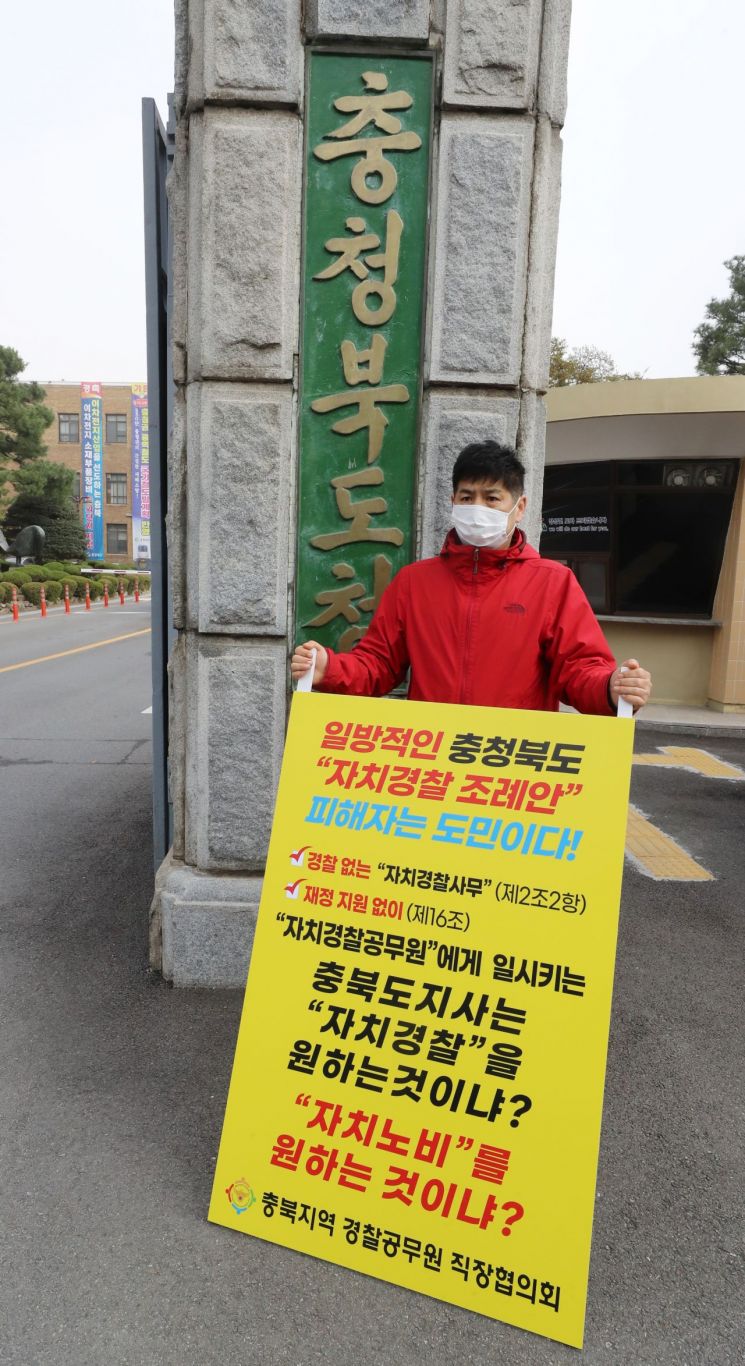 A police officer protesting against the Autonomous Police Operation Ordinance through a solo demonstration. March 29, 2021.
 [Image source=Yonhap News]
Additionally, the police requested that welfare support targets be defined as 'public officials performing autonomous police duties,' but local governments limited this to 'police officers belonging to the autonomous police committee secretariat,' causing controversy. This was pointed out as an inherent limitation arising from the sudden change from a fully separated 'dual autonomous police model' to a 'unified autonomous police model,' where the organization remains intact but only the affairs are separated.
As criticism poured in that the autonomous police system has 'autonomy' but lacks 'police,' most local governments accepted the police's opinions, but it is reported that a considerable number of local governments still oppose the ordinance drafts and related matters.
Controversies also arose surrounding recommended committee members. In Chungnam, the autonomous police committee inauguration ceremony scheduled last month was indefinitely postponed after Chairman Oh Yeol-geun resigned amid a 'police officer verbal abuse' controversy. In Incheon, the National Police Commission recommended Shin Du-ho, former Chief of Incheon Police Agency and responsible for the 'Yongsan Tragedy,' which sparked controversy, but the issue was settled after Shin voluntarily resigned.
Since a new system is being introduced, initial friction is inevitable. It is time for both local governments and the police to work together to resolve conflicts well and provide community-oriented security services in line with the purpose of the autonomous police system. Kim Chang-ryong, Commissioner General of the National Police Agency, recently responded to related inquiries during a report to the National Assembly's Public Administration and Security Committee, stating, "There were difficulties and friction during the early stages, but except for some cases, agreements were reached through close consultations," and added, "At present, no major problems are expected for the full implementation."
© The Asia Business Daily(www.asiae.co.kr). All rights reserved.
![Clutching a Stolen Dior Bag, Saying "I Hate Being Poor but Real"... The Grotesque Con of a "Human Knockoff" [Slate]](https://cwcontent.asiae.co.kr/asiaresize/183/2026021902243444107_1771435474.jpg)












