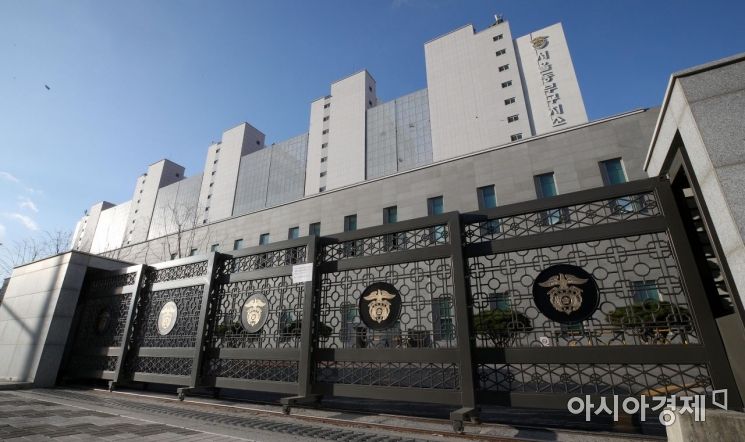
[Asia Economy Reporter Baek Kyunghwan] Visitation restrictions at correctional facilities, where cluster infections occurred due to the 3密 (dense, close-contact, enclosed) structure, will be eased. The number of visits, which had been kept to a minimum, will be increased, and the number of visitors allowed per visit will also be expanded. Rehabilitation and religious counseling with external correctional officers will also resume.
The new visitation system implemented by the Ministry of Justice from the 17th changes the previous four-stage regulation system to five stages.
First, the previously integrated Stage 1 and Stage 1.5 will be separated. Accordingly, the number of visits for pretrial detainees and S1-level inmates at correctional facilities in the Jeonnam area, where Stage 1 is applied according to the social distancing level operated by each local government, will increase from the previous two times to four times. In other regions where Stage 1.5 is applied, excluding Jeonnam and the metropolitan area, pretrial detainees and S1-level inmates can visit three times a week, and S2 to S4-level inmates can have differentiated visits ranging from 6 to 4 times per month.
In the metropolitan area including Seoul, which is operating under Stage 2, pretrial detainees and S1-level inmates can visit twice a week, and S2 to S4-level inmates can visit 5 to 3 times per month, respectively. Considering that previously visits were only allowed once a week or once every two weeks, this is a significant relaxation.
Lee Young-hee, Director of the Correctional Headquarters, explained, "Considering that 94% of staff have been vaccinated and quarantine measures have been well maintained during the difficult COVID-19 situation, and that no confirmed cases have occurred in correctional facilities since April 17, restrictions on inmate treatment have been eased. After herd immunity is formed through the second vaccination, we plan to further expand inmate treatment."
In fact, no new COVID-19 cases have occurred in correctional facilities for a month since the last case involving a newly transferred inmate at Jinju Prison on the 15th of last month. The staff member who tested positive two days later was responsible for that inmate. Newly transferred inmates after the Dongbu Detention Center incident are required to undergo a mandatory two-week quarantine period, significantly reducing the risk of cluster infections.
Additionally, 94% of eligible correctional facility staff and inmates nationwide have completed vaccination, which also influenced the easing of visitation restrictions. As of the end of last month, out of a total of 15,971 correctional officers and public workers nationwide, 15,314 consented to vaccination, and 377 inmates aged 75 or older, who are vulnerable to immunity, began vaccination. Among them, 14,971 staff members and 242 inmates have completed vaccination. The remaining unvaccinated individuals are due to leave of absence or concerns about side effects during the screening process.
However, considering that COVID-19 cases have not decreased nationwide, the Ministry of Justice has decided to further strengthen the quarantine system. Starting next week, the 'COVID-19 Correctional Facility Emergency Response Team' directly under the Vice Minister will begin full-scale operation. This team will take over COVID-19 quarantine measures, which were previously centered on the medical department, and will oversee the entire correctional facility quarantine system as well as vaccine management.
© The Asia Business Daily(www.asiae.co.kr). All rights reserved.
![Clutching a Stolen Dior Bag, Saying "I Hate Being Poor but Real"... The Grotesque Con of a "Human Knockoff" [Slate]](https://cwcontent.asiae.co.kr/asiaresize/183/2026021902243444107_1771435474.jpg)











