Seoul City Considers Designating Some Han River Parks as 'No Alcohol Zones'
10,000 KRW Fine for Drinking in No Alcohol Zones
"Reasonable for Quarantine and Safety" vs "Excessive Measure" Sparks Public Debate
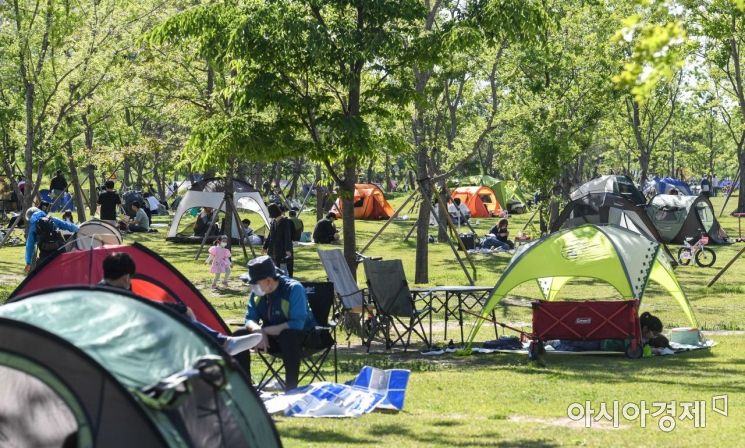 On the 9th, citizens who visited Yeouido Hangang Park in Seoul are enjoying a leisurely holiday afternoon. Photo by Jin-Hyung Kang aymsdream@
[Asia Economy Reporter Lim Juhyung] As Seoul City is considering designating part of Hangang Park as a 'no-alcohol zone,' opinions among citizens are divided. Some argue that excessive drinking should be regulated due to ongoing concerns about the resurgence of COVID-19 and incidents such as the 'Hangang university student death.' However, there are also counterarguments that premature regulations could lead to a 'balloon effect.'
On the 12th, Park Yumi, Director of the Seoul City Citizen Health Bureau, stated at a regular COVID-19 briefing, "With no decrease in confirmed COVID-19 cases and more people going outside recently, concerns about infection are growing," adding, "We are reviewing the scope and time frames related to the designation of no-alcohol zones with relevant departments."
The legal basis for Seoul City to designate 'no-alcohol zones' within Hangang Park comes from the 'National Health Promotion Act,' which will take effect on the 30th of next month. The core of this law allows local governments to designate certain places as no-alcohol zones through ordinances if deemed necessary for preventing alcohol-related harm and promoting residents' health. Those caught drinking alcohol in no-alcohol zones will be fined 100,000 KRW.
Previously, in 2017, Seoul City was able to designate 'alcohol-free zones' through the 'Ordinance on the Promotion of a Healthy Drinking Culture.' However, the scope of this ordinance was limited to 'urban parks' and 'places recognized as necessary by the mayor,' and fines were only imposed on those who caused severe noise, foul odors, or other nuisances to others due to drinking.
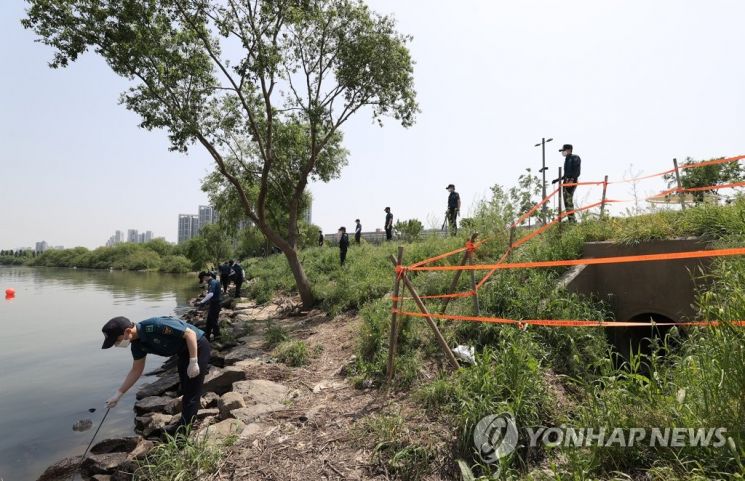 On the morning of the 13th, police are conducting a search of the late Son Jeong-min's friend's mobile phone near the taxi stand at Banpo Hangang Park in Seocho-gu, Seoul. / Photo by Yonhap News
Recently, as Seoul City's daily COVID-19 confirmed cases have hovered around 200, concerns have arisen about potential cluster infections among those gathering at Hangang Park to enjoy drinking activities such as 'chimaek' (chicken + beer).
Additionally, the case of university student Son Jungmin (22), who went missing after drinking from around 11 p.m. on the 24th of last month until early the next morning and was found dead five days later, has heightened awareness about excessive drinking. According to the police, Son and his friend A purchased nine bottles of alcohol and consumed most of them before Son went missing.
As a result, some citizens welcome the proposal to designate drinking zones within Hangang Park, arguing that it would allow for stricter COVID-19 prevention measures and help prevent accidents caused by excessive drinking.
B, a company employee in their 20s living in Seoul, said, "I sometimes go to Hangang Park to exercise, and I often see crowds having drinking parties. The COVID-19 situation is not over yet, and with hundreds of confirmed cases daily, if this leads to a cluster infection, it would be too late. Even if it's a bit inconvenient, I think it's right to refrain from drinking in the park."
Another office worker, C (28), pointed out, "What if someone gets hurt by stumbling while overly intoxicated? I'm also worried about drunk people causing loud noises or disturbances. The park is a space open to everyone, and it shouldn't become a drinking party."
On the other hand, some argue that the regulation is excessive.
D, a 30-something office worker, said, "Citizens have been frustrated with various COVID-19 measures for over a year. Restricting outdoor spaces as well is an excessively harsh measure. If excessive drinking is the problem, enforcement should target those individuals, not ban drinking throughout the entire park."
Concerns were also raised that designating no-alcohol zones could lead to side effects such as the 'balloon effect.' University student E (25) argued, "If outdoor drinking is banned, people won't just go home; they'll hide in less visible places. I think this could actually increase the risk of COVID-19 infection."
© The Asia Business Daily(www.asiae.co.kr). All rights reserved.
![Clutching a Stolen Dior Bag, Saying "I Hate Being Poor but Real"... The Grotesque Con of a "Human Knockoff" [Slate]](https://cwcontent.asiae.co.kr/asiaresize/183/2026021902243444107_1771435474.jpg)













