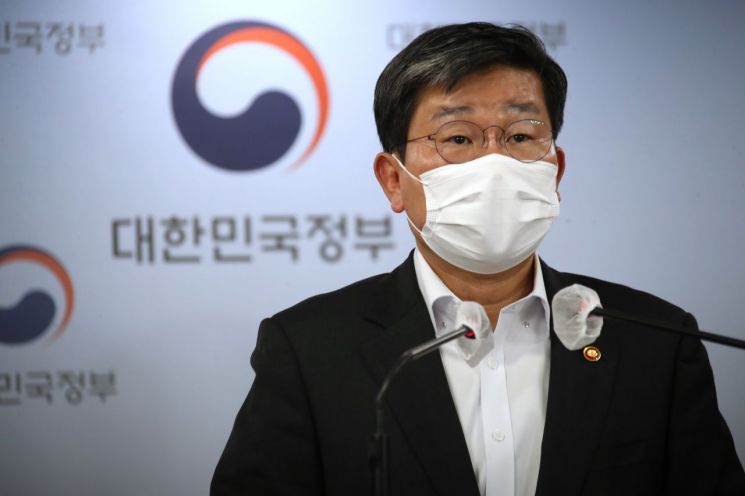
[Asia Economy Reporter Lee Chun-hee] Health authorities explained that the materials containing potential breaches of confidentiality agreements related to the Ministry of the Interior and Safety's leaked schedule for the introduction of AstraZeneca (AZ) and Pfizer COVID-19 vaccines were provided due to a mistake by the staff, but the data differed from the actual supply plan. They also stated that there were concerns raised by the related pharmaceutical companies and that internal security would be strengthened.
On the 12th, Son Young-rae, head of the Social Strategy Division at the Central Disaster and Safety Countermeasures Headquarters, said at the regular briefing of the Central Disaster and Safety Countermeasures Headquarters for COVID-19, "There was no response during the interview process with the Minister of the Interior and Safety, but later, during the provision of materials by the staff, data that could violate the agreement was provided," adding, "The content of the materials themselves differs from the currently confirmed supply plan."
In an interview article with Jeon Hae-cheol, Minister of the Interior and Safety, published by a media outlet the previous day, the introduction schedule of AZ and Pfizer vaccines for this month and next month was reported in detail by week. This contrasts with the health authorities' previous practice of only disclosing the total planned introduction volume due to confidentiality agreements and revealing detailed weekly schedules only when the actual introduction was imminent.
Son explained, "The confidentiality agreement is a contract that pharmaceutical companies supplying vaccines worldwide commonly require and sign," adding, "Most countries have signed it, and South Korea has also signed it."
This confidentiality agreement allows the disclosure of the total supply volume of vaccines, the initial introduction date, and the period, but prohibits the disclosure of specific prices, detailed vaccine introduction schedules, weekly vaccine volumes, and detailed quantities. Violating this agreement may result in suspension or delay of supply, but payment penalties require payment according to the contract.
Son added, "(The agreement) reflects the characteristics of a market where many countries want to purchase vaccines but few pharmaceutical companies supply them, and the pharmaceutical companies' request to minimize conflicts among the many countries competing for vaccine introduction," adding, "to avoid disadvantages, the current quarantine authorities do not disclose detailed introduction schedules and volumes, and release information at the time of confirmed introduction."
He also stated, "The relevant pharmaceutical companies have expressed concerns and raised issues regarding this," adding, "We are explaining the current situation, discussing improvement measures to strengthen information management and security within the government, and continuing to explain to the pharmaceutical companies involved."
© The Asia Business Daily(www.asiae.co.kr). All rights reserved.

















