Kim Nam-guk Proposes 'Portal Algorithm Regulation Act'
Ahn Cheol-soo "Reminds Me of Jeon Du-hwan's Reporting Guidelines"... Kim Nam-guk "Algorithm Unfairness"
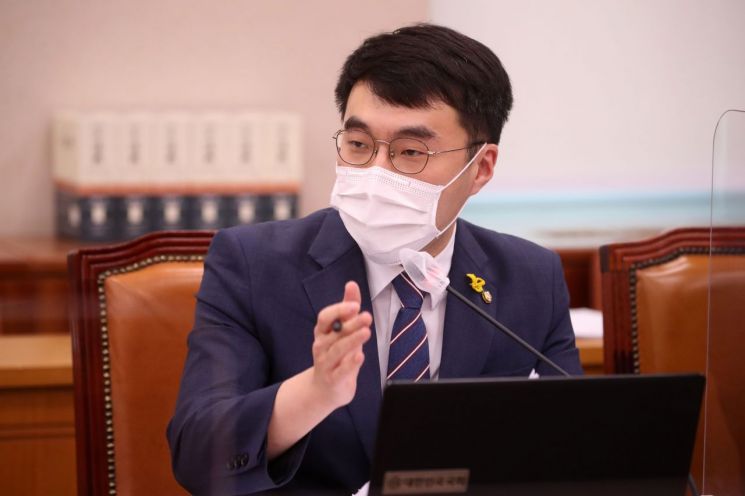
[Asia Economy Reporter Heo Midam] Controversy is brewing over the so-called 'Portal Algorithm Disclosure Act' proposed by the ruling party. The bill essentially requires portals like Naver and Daum to disclose the components of their article arrangement algorithms and the criteria for placement.
The ruling party welcomed the bill, arguing that it is difficult to trust the portals' claims that news is edited by artificial intelligence (AI) and algorithms. On the other hand, the opposition raised their voices against the bill, pointing out that if it passes, the government and ruling party could manipulate the arrangement of news on portal sites.
On the 6th, Kim Namguk, a member of the Democratic Party of Korea, introduced the 'Partial Amendment to the Act on the Promotion of Newspapers, etc.' as the main proposer. The bill includes establishing a 'News Portal User Committee' under the Ministry of Culture, Sports and Tourism, composed of nine members, which can present opinions or request corrections regarding the criteria for portal article arrangements.
Regarding this, Kim appeared on KBS1 Radio's 'Joo Jinwoo Live' on the 7th and said, "According to surveys, about 75% of our population reads articles through portal news. This means that people inevitably end up seeing news forced by portal algorithms rather than selecting the articles or news they want."
He continued, "The main content of the bill is to have the committee publicly verify the key composition criteria and contents of how this algorithm is structured."
Currently, portals like Naver and Daum use 'AI algorithms' instead of humans to edit news. Kakao introduced the personalized news recommendation algorithm 'RUBICS' on mobile in June 2015. Naver also applied the AI content recommendation algorithm 'AiRS' to mobile news in February 2017. At that time, amid controversies over news editing fairness such as the so-called 'Druking comment manipulation incident,' they chose AI instead of humans.
 In September of last year, Yoon Young-chan, a member of the Democratic Party of Korea, was exchanging messenger conversations with someone.
 [Image source=Yonhap News]
However, controversies over fairness have continued even after the introduction of the 'AI recommendation algorithm.' In particular, last July, a controversy over external pressure arose when Yoon Youngchan, a Democratic Party lawmaker and former Naver vice president, was caught sending a text message to his staff complaining about 'Daum' news editing, saying, "Tell them to bring in Kakao."
The text message contained a complaint about Kakao because the main screen of 'Daum' featured the floor speech of Joo Ho-young, the floor leader of the People Power Party at the time.
The ruling party points out that the arrangement of articles can vary depending on how the portal designs the algorithm and argues that algorithm verification should be strengthened.
Earlier, on the 3rd, Kim Yongmin, a Democratic Party lawmaker, appeared on KBS Radio's 'Choi Kyungyoung's Strong Current Affairs' and said, "Media reform is being discussed in two major directions. One is how to regulate or improve phenomena that distort public opinion through fake news, and the other is how to improve the bias problems of portals that are not media but have greater influence than the media, to create a level playing field. These are the two directions."
Meanwhile, Kim Seonghoe, spokesperson for the Open Democratic Party, also expressed skepticism about the portals' claim that they edit news using AI algorithms.
He appeared on 'Kim Eo-jun's News Factory' on the 7th and said, "To provide articles tailored to readers' tastes, Naver and Daum would have had to set their own standards for how progressive or conservative each media outlet is. But they don't do that," emphasizing, "If they are not matching articles according to individuals' news consumption tendencies (progressive or conservative), they should not lie about editing with AI and algorithms."
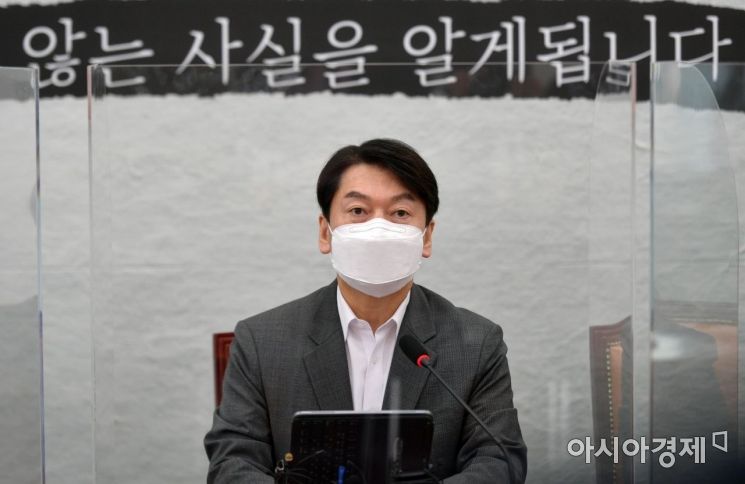
However, the opposition expressed concerns that if the bill passes, the government and ruling party could manipulate even the news arrangement on portal sites.
Ahn Cheolsoo, leader of the People Party, criticized the 'Portal Algorithm Disclosure Act' on his Facebook on the 9th, saying, "It reminds me of the 'press guidelines' during the Chun Doohwan regime," and added, "If the bill passes, the government will be able to directly decide the placement of articles praising President Moon Jae-in in the most visible positions on portals. I am at a loss for words at such a childish and anti-democratic idea."
In response, Kim Namguk posted again on Facebook, saying, "I don't know when Leader Ahn became a 'hollow politician' who neither studies nor has content," and rebutted, "The issue of algorithm bias has been pointed out over the past few years."
He added, "With 70-80% of the public consuming news through portals, if algorithms are built with bias, our perceptions and thinking will inevitably be thoroughly distorted, making healthy public opinion formation for democracy impossible."
Meanwhile, Naver temporarily operated a 'News Algorithm Review Committee' composed of 11 experts in computer science, information science, and journalism in 2018. After six months of analysis, the committee concluded that artificial intervention in the algorithm was impossible.
Professor Song Kyungjae of Sangji University, who participated in the Naver Article Arrangement Public Forum at the time, pointed out, "'When we talk about 'algorithm improvement,' it should be about enabling citizens to effectively see diverse and numerous news, not about selectively choosing specific media outlets,'" and added, "It is a shortsighted idea that traps users in a filter bubble (Filter Bubble: a phenomenon where users are confined to biased information filtered according to their interests), leading to consumption of homogenized news only."
© The Asia Business Daily(www.asiae.co.kr). All rights reserved.
![Clutching a Stolen Dior Bag, Saying "I Hate Being Poor but Real"... The Grotesque Con of a "Human Knockoff" [Slate]](https://cwcontent.asiae.co.kr/asiaresize/183/2026021902243444107_1771435474.jpg)


















