April Consumer Prices Rise 2.3%... Largest Increase in 3 Years and 8 Months
[Asia Economy Reporter Jang Sehee] South Korea's inflation rate is showing little sign of falling. Last year, there were concerns about COVID-19-induced deflation, but the situation has changed within a year.
According to Statistics Korea on the 9th, the consumer price index in April rose 2.3% compared to a year ago, marking the largest increase in 3 years and 8 months. The consumer price inflation rate had remained in the 0% range for four consecutive months from October last year due to the impact of COVID-19, but it recorded 1.1% in February this year, followed by increases of 1.5% in March and a further rise in April.
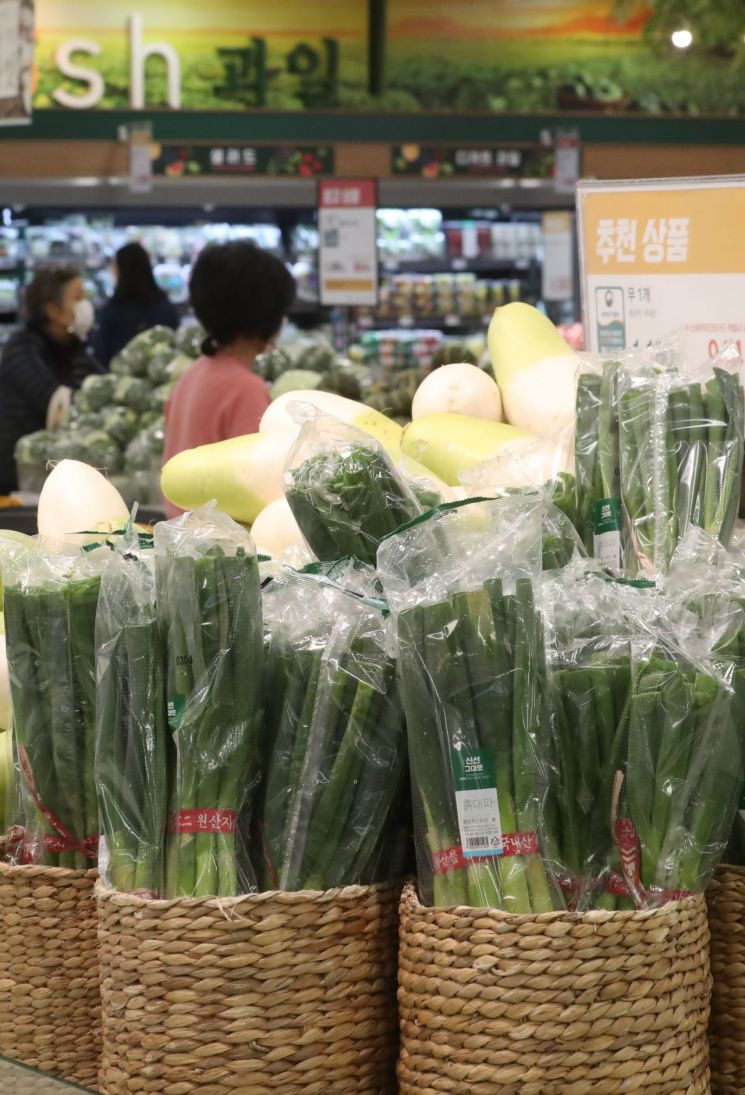
In particular, prices of agricultural, livestock, and fishery products rose sharply, with green onions (270.0%), eggs (36.9%), and red pepper powder (35.3%) increasing significantly, resulting in a 13.1% rise compared to a year ago.
Additionally, international oil prices, which had plummeted due to the COVID-19 crisis last year, have started to rise again, causing industrial products including petroleum products (2.3%) to increase at the largest rate since January last year (2.3%).
Considering the base effect and the rise in international oil prices due to global economic recovery, consumer prices are expected to continue rising. However, the government forecasts a slight slowdown in the second half of the year, with the annual average inflation rate expected to remain below 2%.
Lee Eokwon, First Vice Minister of Strategy and Finance, said, "Considering that the base effect will ease from the third quarter, the possibility of exceeding the annual inflation stabilization target of 2% is limited," adding, "We will strengthen efforts to stabilize prices so that temporary price increases do not spread into excessive inflation expectations."
The Bank of Korea also stated at the Monetary Policy Committee meeting held on the 15th of last month that "the consumer price inflation rate this year is likely to exceed the previous forecast level (1.3%) due to the expected expansion of international oil prices and agricultural, livestock, and fishery product prices."
Regarding this, Professor Ha Jun-kyung of Hanyang University’s Department of Economics said, "Especially in terms of international oil prices, demand is expected to increase significantly following the global economic recovery," and added, "Although the base effect may partially dissipate in the second half of the year, the level will remain elevated."
© The Asia Business Daily(www.asiae.co.kr). All rights reserved.
![Clutching a Stolen Dior Bag, Saying "I Hate Being Poor but Real"... The Grotesque Con of a "Human Knockoff" [Slate]](https://cwcontent.asiae.co.kr/asiaresize/183/2026021902243444107_1771435474.jpg)











