Opposition Deems Ministers Im Hye-suk, Park Jun-young, and Noh Hyung-wook Unfit... Cheong Waiting for National Assembly's Decision Amid Political Risk Concerns
[Asia Economy Reporter Ryu Jeong-min] The cabinet reshuffle carried out under the banner of reform following the defeat in the April 7 by-elections has emerged as a political risk tightening the Blue House. The Blue House is closely monitoring the National Assembly situation regarding the fate of the three ministerial candidates facing strong opposition from the opposition parties, stating that it has "not formed a separate opinion."
From the Blue House's perspective, with the Prime Minister nominee's confirmation hearing held on the 6th and the Prosecutor General's hearing upcoming, the burden of ignoring the opposition's objections and pushing through appointments is too great. However, withdrawing nominations or inducing voluntary resignations would also mean admitting personnel failure, leaving the Blue House in a dilemma.
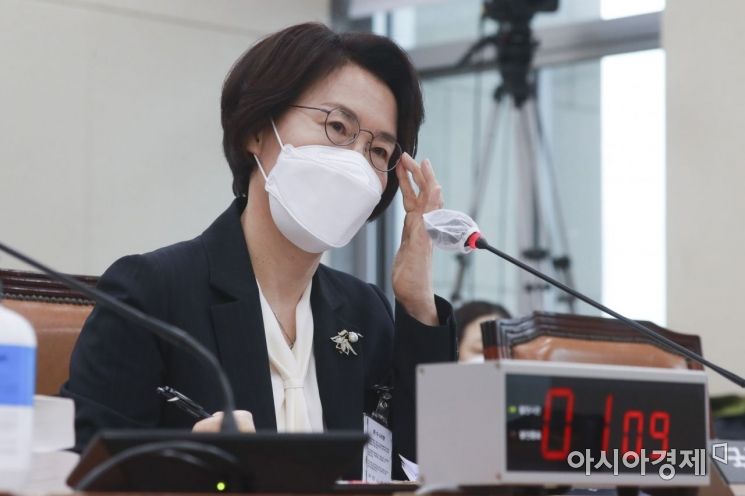 Minister of Science and ICT nominee Lim Hye-sook is adjusting her glasses while attending the confirmation hearing held at the National Assembly on the 4th. Photo by Yoon Dong-joo doso7@
The opposition has effectively labeled three of the five candidates?Im Hye-sook for the Ministry of Science and ICT, Park Jun-young for the Ministry of Oceans and Fisheries, and Noh Hyung-wook for the Ministry of Land, Infrastructure and Transport?as "unqualified." Therefore, the possibility of all candidates being appointed without any issues is close to zero. At least one candidate is likely to be rejected.
The Blue House made it clear that the reshuffle on the 16th of last month was a choice reflecting the public sentiment from the election. President Yoon Young-min's Chief of Staff said regarding the reshuffle, "We humbly accept the people's demands on the government and intend to renew our resolve."
This implies an attempt to regain momentum in state affairs through ministerial changes. The decision to promote bureaucrats to ministerial positions was also focused on policy continuity and stable management. However, issues such as real estate controversies, false address registrations, and plagiarism allegations surfaced during the confirmation hearings, creating a situation different from the original plan.
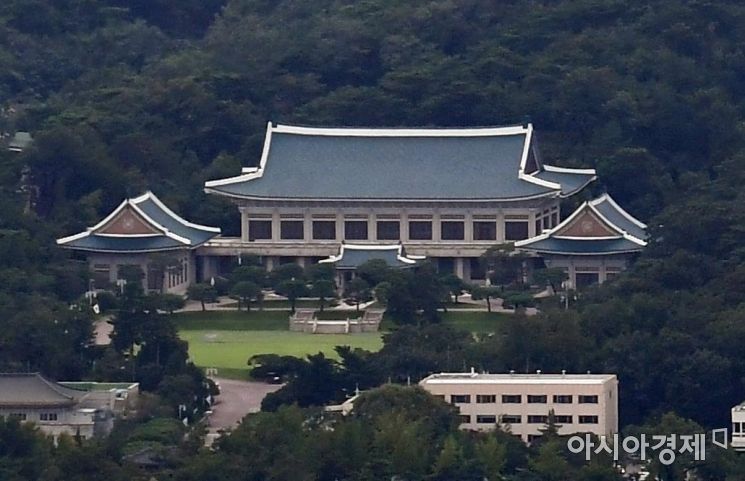
From the Blue House's standpoint, appointing all five ministerial candidates is burdensome, and even one or two rejections would inevitably cause shock. Although the ruling party can adopt the progress report in the standing committee through numerical superiority, if the appointment process is forced amid opposition party resistance, it could only amplify the image of "non-communication."
If some ministerial candidates are rejected, it would be an admission of personnel failure by the Blue House, leaving it in a no-win situation.
A Blue House official said, "As far as I know, the Blue House has not conveyed its views to the ruling party regarding the adoption of the ministerial candidates' progress report," adding, "At present, we are observing the National Assembly's judgment."
© The Asia Business Daily(www.asiae.co.kr). All rights reserved.
![Clutching a Stolen Dior Bag, Saying "I Hate Being Poor but Real"... The Grotesque Con of a "Human Knockoff" [Slate]](https://cwcontent.asiae.co.kr/asiaresize/183/2026021902243444107_1771435474.jpg)

















