If IP Waivers Are Applied, Pharmaceutical Companies Must Forfeit Patent Rights...Generic Drug Production Possible
Some Opposition from UK and Others May Delay Agreement...Pharmaceutical Companies Call It a "Wrong Answer"
Contract Manufacturers Say "No Effectiveness Without Disclosure of Core Raw Material Information"
[Asia Economy Reporters Seo So-jeong, Jo Hyun-ui, Kim Ji-hee] "This is a monumental moment in the fight against COVID-19."
The World Health Organization (WHO), which aims for equitable vaccine distribution, praised the Biden administration's decision to support the waiver of vaccine intellectual property rights on the 5th (local time). WHO Director-General Tedros Adhanom Ghebreyesus tweeted that "President Biden and the U.S. Trade Representative's (USTR) support for the vaccine IP waiver is a strong example of U.S. leadership in responding to the global public health crisis."
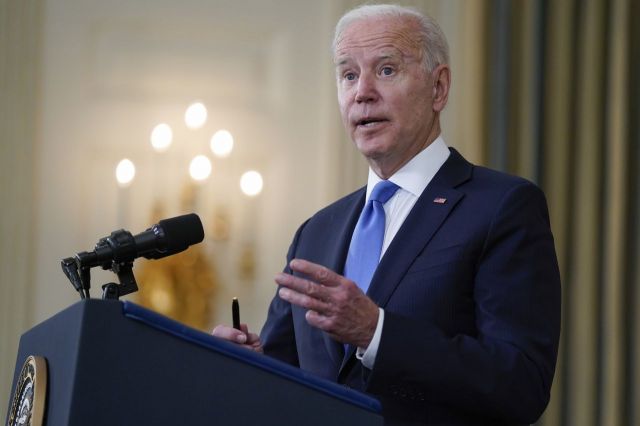
◆Will COVID-19 vaccine technology be disclosed?= COVID-19 vaccines are protected by patents for 20 years under the Agreement on Trade-Related Aspects of Intellectual Property Rights (TRIPS). If the IP waiver is implemented, pharmaceutical companies such as Pfizer, Moderna, and AstraZeneca would have to forgo exercising their patent rights, allowing other countries to produce generic versions of these vaccines. The U.S., which had previously ignored demands from developing countries like India and South Africa, shifted its stance due to domestic and international pressure to expand vaccine production targeting underdeveloped and severely affected countries, and because it has secured enough vaccines to the extent that booster shots (third doses) can be administered without issues.
However, related agreements are expected to take time. Some countries, including the UK, are likely to oppose the waiver to protect their domestic pharmaceutical companies. Bloomberg reported, "The European Union (EU), the UK, Japan, Switzerland, Brazil, and Norway maintain opposing positions," and "Since WHO decisions require unanimity, negotiations will not be easy." Some argue that even if the IP rights are temporarily waived, it will be ineffective. Developing countries may struggle to produce vaccines based on the new mRNA (messenger RNA) technology. The Washington Post pointed out, "The Biden administration also acknowledges that the IP waiver will not immediately increase global vaccine supply speed," adding, "Most countries lack the technology needed to produce mRNA vaccines, so even if an agreement is reached, whether they have such capacity is questionable."
Pharmaceutical companies criticized the IP waiver as the "wrong answer." The International Federation of Pharmaceutical Manufacturers & Associations (IFPMA) argued, "It may cause confusion without providing solutions necessary to increase vaccine production or respond to the international health crisis."
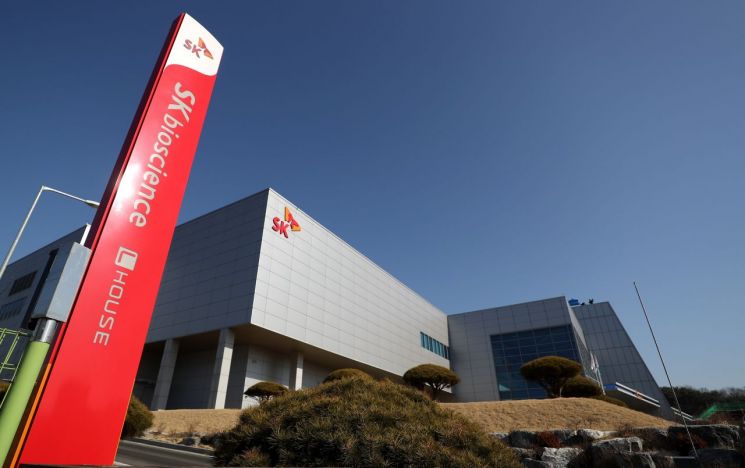
◆South Korea’s ‘Expectations for Supply Expansion and Technology Transfer’= The domestic bio industry is experiencing mixed feelings of hope and concern. Overall, it is seen as a positive decision in terms of curbing the sudden expansion of the pandemic. Lee Seung-gyu, Vice Chairman of the Korea Bio Association, said, "In the COVID-19 situation, for vaccines where South Korea already holds production technology (AstraZeneca, Novavax), domestic production is possible, which can help secure supply." However, he added, "For mRNA vaccines, since we do not possess the technology, if technology transfer is not secured, it will require significant costs and time," emphasizing, "More comprehensive support and policies are needed to secure domestic vaccine technology."
Contract Manufacturing Organizations (CMOs) are also calculating complex scenarios. A representative from a domestic CMO said, "Even if IP rights are waived, if critical information such as specific vaccine processes and raw materials is not transparently disclosed, there are concerns that the effectiveness will be limited." The current situation of SK Bioscience, which is contract manufacturing AstraZeneca and Novavax vaccines, is also being closely monitored. Since this company is already producing two types of vaccines, the disappearance of IP rights would enable independent production. Another CMO representative said, "For companies already producing vaccines, the benefits would be significant, but for CMOs that need to build new facilities for vaccine production, the gains may not be substantial."
Currently, five South Korean companies, including SK Bioscience, YuBioLogics, Cellid, Genexine, and GeneOne Life Science, are conducting clinical trials for COVID-19 vaccines. There are concerns that, with the large costs involved in Phase 3 clinical trials, the continuation of development may need to be reconsidered. However, since most companies currently developing vaccines are focusing on next-generation vaccines capable of responding to variants, differentiation is expected. A Genexine representative stated, "The IP waiver pertains to existing COVID-19 vaccines, so it may help extinguish the immediate fire of the outbreak, but it is a different issue in the mid-to-long term," adding, "With the possibility of COVID-19 becoming endemic continuously raised, we plan to continue developing next-generation vaccines targeting variants."
© The Asia Business Daily(www.asiae.co.kr). All rights reserved.
![Clutching a Stolen Dior Bag, Saying "I Hate Being Poor but Real"... The Grotesque Con of a "Human Knockoff" [Slate]](https://cwcontent.asiae.co.kr/asiaresize/183/2026021902243444107_1771435474.jpg)

















