
[Asia Economy Reporters Inho Yoo, Jieun Lee]
"The possibility of military provocations has increased."
VS
"It is a tactic to increase negotiating power, so it can be ignored."
Regarding North Korea's strong backlash against U.S. President Joe Biden's remarks about responding to the North Korean nuclear threat through "diplomacy and firm deterrence," diplomatic experts' analyses are divided. First, there is no disagreement that the exploratory exchanges between North Korea and the U.S. over the past 100 days have entered a tense mode following the announcement of the U.S. North Korea policy stance. However, opinions differ on whether North Korea will actually take "action."
Professor Park Won-gon of Ewha Womans University’s Department of North Korean Studies analyzed in a phone interview on the 3rd, "North Korea seems to have judged that the level they desire is not at all met and has started pressure to obtain concessions from the U.S." Earlier, on the 28th of last month (local time), President Biden emphasized firm deterrence in his congressional speech but did not offer any carrots such as sanctions relief.
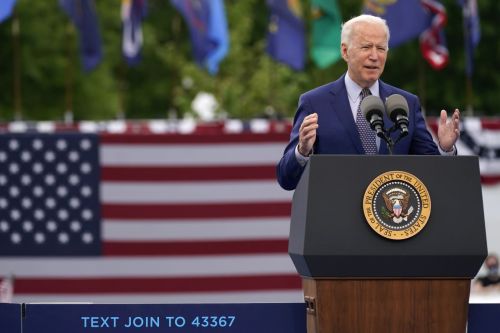
Additionally, State Department spokesperson Ned Price directly addressed North Korea’s human rights issues. In response to this series of developments, North Korea predictably issued a "strong-for-strong" reaction. Kwon Jung-geun, North Korea’s Foreign Ministry official in charge of the U.S., warned, "The U.S. will face a very serious situation," and Kim Yo-jong, Deputy Director of the Workers' Party, warned, "Whatever decisions and actions we take, the responsibility for the consequences will lie entirely with the South Korean authorities who failed to properly control the filthy trash."
Some express concerns that if North Korea takes "corresponding measures" against South Korean leaflets, it could shake the foundation of inter-Korean relations by abolishing the Committee for the Peaceful Reunification of the Fatherland (CPRF), dismantling the Mount Kumgang Tourism Bureau, or nullifying the September 19 inter-Korean military agreement. Kim Yo-jong had already issued a preemptive warning about such matters in a statement last March. Shin Beom-chul, Director of the Center for Diplomacy and Security at the Korea Institute for National Strategy, said, "Regardless of the outcome of the U.S. review of its North Korea policy, North Korea had no choice but to express dissatisfaction initially to increase its negotiating power," adding, "While conducting close consultations between South Korea and the U.S. on conditions for resuming dialogue, it is also necessary to ignore North Korea’s interference in internal affairs."
There is also an analysis that North Korea’s simultaneous pressure on South Korea and the U.S. is a strategy keeping in mind negotiation cards with China. Professor Kim Hyun-wook of the Korea National Diplomatic Academy predicted, "Based on the cards obtained from the U.S., North Korea may act by negotiating with China to receive support."
© The Asia Business Daily(www.asiae.co.kr). All rights reserved.
![Clutching a Stolen Dior Bag, Saying "I Hate Being Poor but Real"... The Grotesque Con of a "Human Knockoff" [Slate]](https://cwcontent.asiae.co.kr/asiaresize/183/2026021902243444107_1771435474.jpg)












