Endangered Due to Food Shortage and Habitat Destruction... Last Spotted in DMZ in 1979
Restored in China, Donated to Korea by Hu Jintao and Xi Jinping... Population Increased to 402
Efforts of Upo Ttogi Restoration Center Bear Fruit... Released into Upo Wetland Every May Since 2019
63% Survival Rate, First Wild Hatch in April... Avian Influenza and Migratory Instincts Threaten Natural Settlement
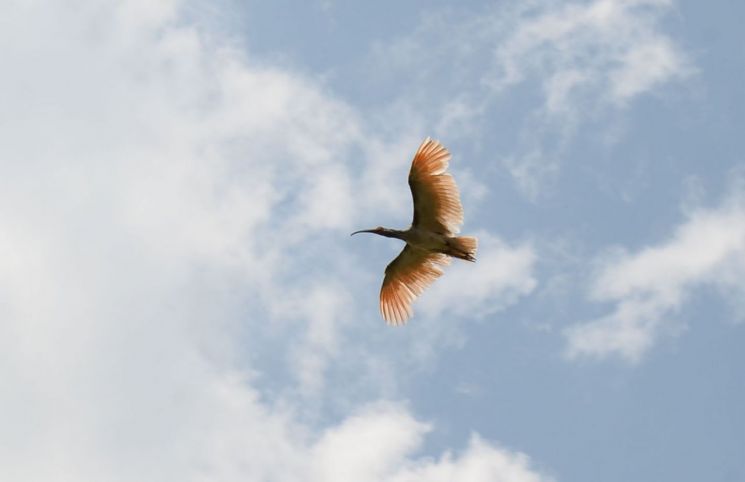
"Visible yet invisible / Ttaok ttaok ttaok, a pitiful sound / Where does one go after leaving? / The land where my mother went, the land where the sun rises."
This is a verse from the children's song ‘Ttaoki’. It carries the poignant emotions of the Japanese colonial period. Due to the Japanese ban on singing, it could only be sung after liberation. Most people learned the sound of the Ttaoki through this song. Few have actually heard it in real life because it disappeared from Korea for a time.
The Ttaoki was common in rice paddies and wetlands until the 1950s. However, after George Archibald, chairman of the International Crane Foundation, filmed it in the Demilitarized Zone (DMZ) in January 1979, it vanished. This was due to indiscriminate hunting, habitat destruction, and food scarcity.
Dr. Kim Seong-jin of the Upo Ttaoki Restoration Center in Changnyeong-gun, Gyeongnam Province, said, "It is a migratory bird that breeds in the north and winters in the south," adding, "The Korean War devastated the Korean Peninsula, a stopover site, making normal activity difficult." In fact, the Ttaoki faced extinction threats not only in Korea but also in China and Japan during the same period.
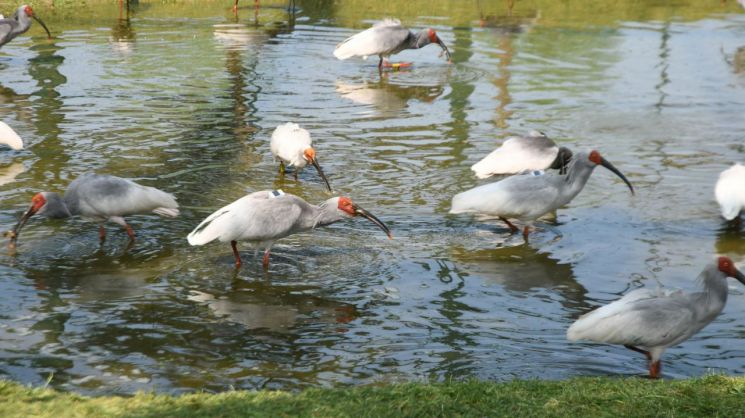
After the war, the use of organochlorine pesticides tightened the noose on the remaining population. Rivers were polluted, drastically reducing prey such as frogs, crayfish, and small fish. The Ttaoki is large and slow-moving, making it vulnerable to many predators. Dr. Kim explained that the Ttaoki "is easily preyed upon by animals like martens, leopard cats, and goshawks," and "it tends to lose out in nesting territory competition to crows and magpies."
The Cultural Heritage Administration designated the Ttaoki as Natural Monument No. 198 in May 1968 but failed to secure protected individuals. It was so rare that the International Union for Conservation of Nature (IUCN) classified it as an endangered species. China succeeded in restoration based on seven individuals found in Yang County, Shanxi Province, in 1981. Currently, over 3,000 live around Shanxi Province. Japan bred more than 200 birds in 1999 through a loan from China.
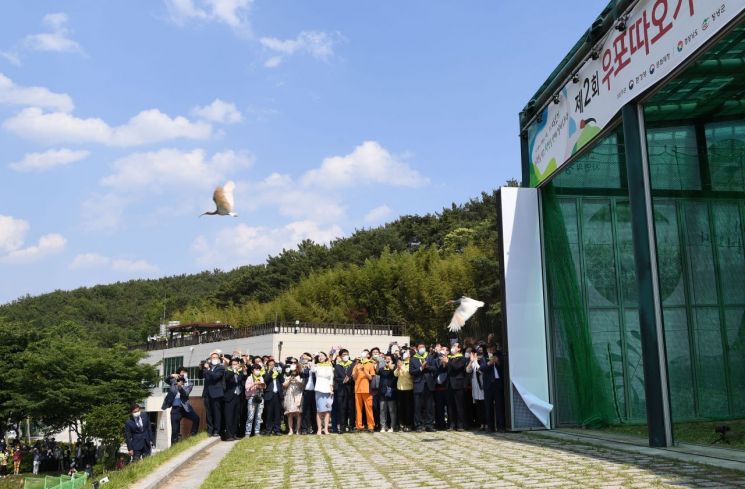
Korea was able to attempt restoration in 2008 with a pair of Ttaoki donated by Chinese President Hu Jintao. The process accelerated with an additional donation from Chinese President Xi Jinping in 2013, increasing the population to 402. Among them, ninety live in the wild. Since 2019, the Upo Ttaoki Restoration Center has been releasing birds every May around Upo Wetland. On the third release on the 6th, forty birds were returned to nature.
The Ttaoki exited the wild adaptation training area through wide-open doors on their own. Dr. Kim explained, "If they are confined in a dark box for a long time and then forced out or released, they can become stressed."
Until last year, more males were released than females because males have higher site fidelity (the tendency to stay in one place). This year, the ratio of males to females was balanced. Dr. Kim said, "The Ttaoki released over the past two years have formed a certain population," and "Last month, we succeeded in the first wild hatching."
The pairs born in 2016 (male and female) and a female born in 2019 with a male born in 2016 hatched two and one chicks respectively. The Cultural Heritage Administration stated, "The release of superior individuals, habitat creation aimed at restoring naturalness, and the efforts of local residents combined to accelerate natural settlement."
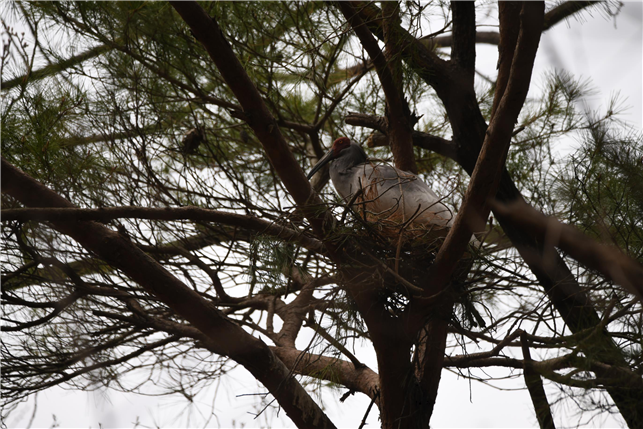
The survival rate of released Ttaoki so far is 62.5%. Twenty-eight birds have died. Over 80% were preyed upon by predators. The rest died from unknown accidents. There were also two rescue cases. Thanks to location trackers attached to the Ttaoki, they were quickly found and treated. Dr. Kim explained, "One had a dislocated wing, and the other suffered from malnutrition," adding, "They were judged unlikely to survive in the wild and are being raised at the restoration center."
Avian influenza (AI) is another threat to the natural settlement of the Ttaoki. Upo Wetland is a place where migratory birds, which play a key role in spreading AI every winter, stay. Ttaoki infected with AI must be culled. Therefore, the Upo Ttaoki Restoration Center established a quarantine center last year, where 192 birds are raised separately.
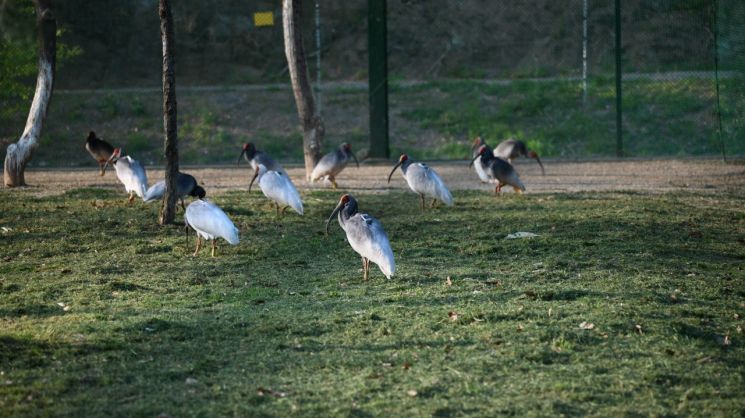
The Ttaoki’s instinct as migratory birds is also a challenge. So far, none have left the Changnyeong-gun area. However, some individuals show abnormal behavior during seasonal changes. Dr. Kim explained, "Some birds become startled by small noises or fly around in the air for a long time during the migration periods of January to February and September to November." He emphasized, "Increasing the population is important, but careful attention is required for effective natural settlement."
© The Asia Business Daily(www.asiae.co.kr). All rights reserved.
![User Who Sold Erroneously Deposited Bitcoins to Repay Debt and Fund Entertainment... What Did the Supreme Court Decide in 2021? [Legal Issue Check]](https://cwcontent.asiae.co.kr/asiaresize/183/2026020910431234020_1770601391.png)


















