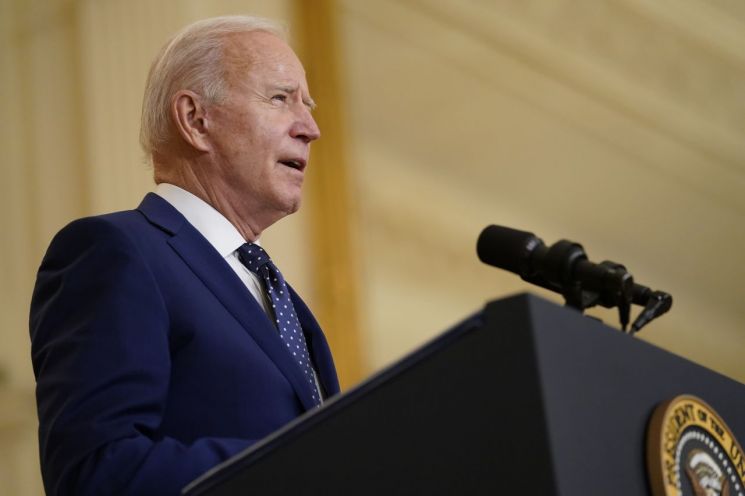
[Asia Economy Reporter Kim Bo-kyung] As U.S. President Joe Biden announced plans to revive the economy through wealth tax increases, heated debates over pros and cons are taking place in the U.S. political arena.
On the 28th (local time), President Biden revealed detailed plans for the $1.8 trillion (approximately 2,000 trillion won) 'American Families Plan' aimed at expanding social safety nets such as education and childcare during his first joint session address to Congress since taking office.
In particular, President Biden stated, "It is time for American businesses and the top 1% wealthiest to pay their fair share," expressing his intention to fund the 'American Families Plan' through tax increases on high-income earners.
The plan includes raising the federal income tax rate for 'super-rich' individuals from the current 37% to 39.6%, and nearly doubling the capital gains tax rate for those earning over $1 million annually from 20% to 39.6%.
The ruling Democratic Party argues that wealthy individuals must accept paying more taxes for the overall development of society. According to The Wall Street Journal (WSJ), Senator Richard Blumenthal, a Democrat, expressed confidence that voters would support the tax hikes.
He said, "They (the wealthy) will willingly pay higher taxes for overall fairness."
However, Biden's wealth tax increase faces opposition from the Republican opposition party and some dissent within the Democratic Party. Concerns exist that raising the capital gains tax rate could hinder the U.S. economic recovery from the COVID-19 crisis.
Senator Bob Menendez, a Democrat and member of the Senate Finance Committee, spoke negatively about Biden's wealth tax plan, saying, "We are assessing how it will affect (economic) growth. For now, it seems somewhat high to me."
Independent Senator Angus King also took a cautious stance on Biden's wealth tax, stating, "I want to investigate how it will affect stock ownership."
There is also a viewpoint that the Biden administration's plan could face setbacks as wealthy individuals seek ways to avoid paying taxes.
U.S. CBS News cited research from the Wharton School of the University of Pennsylvania, reporting that if the proposed capital gains tax increase bill passes, wealthy individuals are likely to avoid selling stocks and investing.
© The Asia Business Daily(www.asiae.co.kr). All rights reserved.

















