Representative Choi Kang-wook's Proposed Amendment Contradicts Content
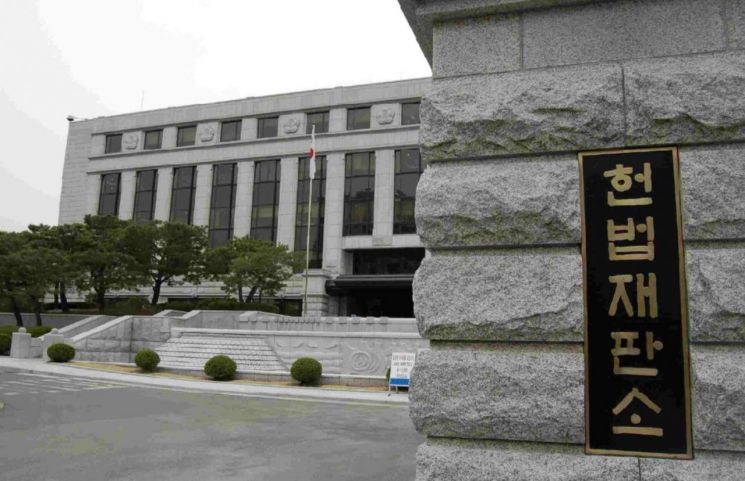
[Asia Economy Reporter Seongpil Cho] The Constitutional Court has ruled that the provision of the Information and Communications Network Act, which allowed a third party to file a defamation charge, does not violate the Constitution.
On the 29th, the Constitutional Court announced a unanimous decision by all justices that Article 70, Paragraph 3 of the "Act on Promotion of Information and Communications Network Utilization and Information Protection, etc. (Information and Communications Network Act)," which defines defamation as a quasi-official prosecution offense, does not violate the principle of proportionality or other constitutional principles. Article 70, Paragraph 3 of the Information and Communications Network Act prohibits prosecution against the will of the victim explicitly stated. This means that if the victim does not wish to punish the offender, prosecution cannot proceed. This is known as a quasi-official prosecution offense. This provision also served as the basis for allowing not only the victim but also a third party to file a defamation charge under the Information and Communications Network Act.
The constitutional complaint was filed by Mr. A, who was fined 700,000 won by the court after being reported by fans for defaming a celebrity. Mr. A argued that the provision, which allows prosecution unless the victim expresses a refusal to punish, violates the right to equality and is unconstitutional. He claimed that, like the criminal defamation of the deceased under the Criminal Act, prosecution should only be possible with the victim's complaint, i.e., it should be a "complaint offense."
The Constitutional Court ruled, "It is difficult to see that the provision defining defamation under the Information and Communications Network Act as a quasi-official prosecution offense violates the principle of equality by losing balance in the penal system." The Court stated, "If the scope of complaint offenses is broadly set, there is a concern that victims may not file complaints due to fear of retaliation by the offender or damage to social reputation," and added, "The legislature comprehensively balanced the interests related to the restriction of prosecution rights and accordingly differentiated between complaint offenses and quasi-official prosecution offenses."
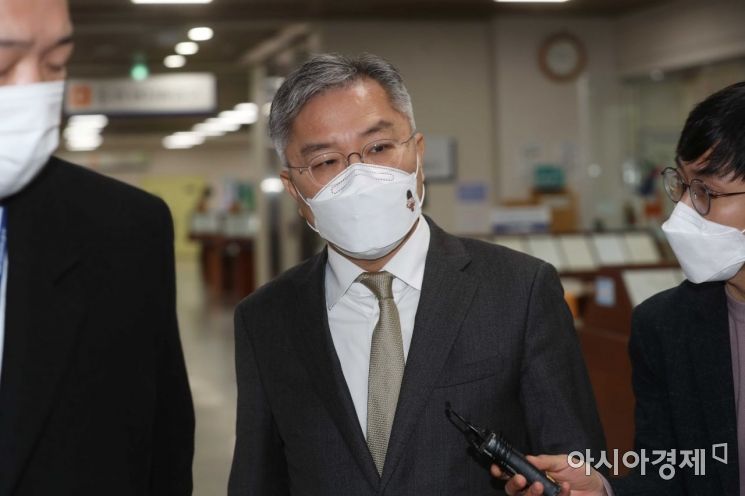 Choi Kang-wook, leader of the Open Democratic Party, who was indicted last year for spreading false information during the general election, is seen attending a trial held last month at the Seoul Central District Court in Seocho-gu, Seoul. Photo by Moon Ho-nam munonam@
The Constitutional Court's decision on this day somewhat contrasts with the proposed amendment to the Information and Communications Network Act submitted to the National Assembly. The amendment mainly aims to revise defamation under the Information and Communications Network Act into a complaint offense. The bill was introduced earlier this month by Choi Kang-wook, leader of the Open Democratic Party. Currently, Leader Choi is undergoing a criminal trial for defamation under the Information and Communications Network Act following a complaint by a civic group.
© The Asia Business Daily(www.asiae.co.kr). All rights reserved.


















