Dr. Jung Yoon-gi's Team at KIST Develops Material That Reduces Side Effects by Accumulating Pericellular Substances on Surface
[Asia Economy Reporter Kim Bong-su] Medical materials implanted in the body, such as stents that expand blocked blood vessels and implants that replace teeth or bones, have been used for decades in the field of regenerative medicine. However, long-term use is difficult due to serious side effects and loss of function, such as inflammatory reactions, fibrous tissue encapsulation around the material, and thrombosis causing blood vessel blockage.
Recently, a domestic research team has attracted attention by developing a technology that reduces side effects by layering cell surrounding substances on the surface of medical materials. On the 29th, the Korea Institute of Science and Technology (KIST) announced that Dr. Jung Yoon-gi’s research team at the Center for Biomaterials Research, in collaboration with Professor Han Dong-geun’s team at CHA University, developed a material layered with substances that make up the cell surroundings on the surface of implantable medical materials. This material can be loaded with therapeutic cells such as stem cells, enabling the delivery of cell therapies to targeted areas.
The researchers coated the surface of the material with a compound (polydopamine) and a protein (fibronectin) that strongly bind to biomolecules, then cultured cells on top. The cultured cells produced extracellular matrix (ECM), which constitutes the cell’s surrounding environment. Afterward, only the cells were removed, leaving the ECM intact to create a material with spaces where medically necessary cells can attach. The ECM has high affinity with cells, allowing cell adhesion and survival in any in vivo environment, enabling the delivery of required cells to treatment sites while minimizing side effects between the medical material and body tissues.
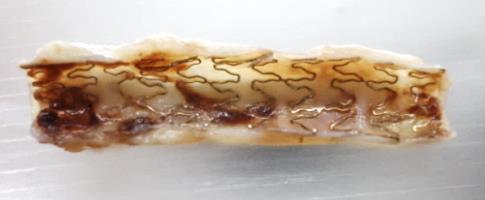
The research team applied the developed material to the surface of stents, medical devices used in procedures to expand blocked blood vessels. Since stents physically widen blood vessels, wounds occur around the treatment site, posing risks of inflammation or thrombosis that can re-block the vessels. When the material was used to deliver vascular progenitor cells capable of regenerating blood vessels, the procedure not only showed excellent vessel expansion effects but also regenerated the damaged vascular inner wall, reducing the rate of side effect-related neointimal formation by more than 70%.
Dr. Jung Yoon-gi of KIST said, “This technology can be applied to various materials implanted in the human body, and is expected to be used as a universal platform core technology in fields such as implantable diagnostic and therapeutic devices, which are future technologies attracting attention, as well as medical devices like stents and long-term implantable grafts.”
The research results were published in the latest issue of the international journal in materials science, Advanced Functional Materials (IF:16.836, top 3.98% in JCR category).
© The Asia Business Daily(www.asiae.co.kr). All rights reserved.

















