China Releases Geological Survey Report on Diaoyudao... Chinese Territory Since 1403 During Ming Emperor Yongle's Reign
China Warns Japanese Political Circles of Consequences if Diaoyudao Dispute Provoked
[Asia Economy Beijing=Special Correspondent Jo Young-shin] The Chinese government has released a report on the terrain of the Senkaku Islands (called Diaoyudao in Chinese), which are currently under Japan's effective control. Chinese media had previously warned that a military conflict could occur among China, the U.S., and Japan over Diaoyudao.
China's state-run Xinhua News Agency and Global Times reported on the 27th that the Ministry of Natural Resources of China has made public a survey report on the terrain and geographical characteristics of Diaoyudao Island and its affiliated islets at the Diaoyudao Digital Museum. The report, available in eight languages including English, Japanese, Spanish, and Arabic, contains information about the island's terrain and the surrounding water depths, detailing the natural features of Diaoyudao.
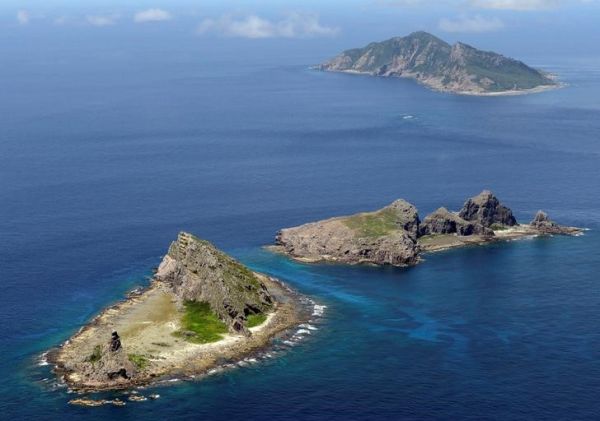 The Senkaku Islands (Chinese name Diaoyu Islands), over which Japan and China are engaged in a territorial dispute and which are currently under Japan's effective control.
 [Image source=Yonhap News]
Regarding the recent disclosure of Diaoyudao's terrain, Chinese experts emphasized that it reaffirmed that sovereignty belongs to China, not Japan. They explained that the publication of the survey results is not merely a scientific investigation but a political and diplomatic signal to the world, including Japan and the United States, reaffirming China's sovereignty over Diaoyudao.
Professor Li Haidong of the Institute of International Relations at the China Foreign Affairs University stated, "Japan is colluding with the United States to distort international consensus and claim sovereignty over the Diaoyudao Islands," adding, "Diaoyudao is an inalienable part of Chinese territory, and this Chinese survey report was released to build international consensus."
Ryu Jang-yong, deputy director of the Institute of International Relations at Tsinghua University, said, "Recent actions by Japan have seriously damaged China-Japan relations," and added, "The Japanese political circles are providing incorrect information to Japanese people who do not understand the essence and truth of the issue." He further warned, "The Japanese political circles' words and actions that provoke disputes over Diaoyudao will only result in increased tensions between the two countries."
Chinese experts warned again that if a conflict arises between China and Japan over Diaoyudao, the likelihood of the United States assisting Japan is low. They cautioned that if Japan provokes in the waters surrounding the Diaoyudao Islands, the Chinese People's Liberation Army Navy as well as the Air Force will demonstrate China's resolve.
Chinese media expressed strong hostility toward Japan and the United States, stating that the joint U.S.-Japan statement released on the 16th reaffirmed Japan's administrative rights over Diaoyudao and confirmed that it falls under the jurisdiction of Article 5 of the U.S.-Japan Security Treaty.
Earlier, in February, the Chinese government amended the Coast Guard Law to allow the maritime police to use force against foreign vessels in Chinese jurisdictional waters.
Meanwhile, the Chinese government opened the "Diaoyudao Digital Museum" during the National Day holiday last October. The government presented historical documents showing that the name "Diaoyudao" was first used during the reign of Emperor Yongle of the Ming Dynasty in 1403.
Documents from the Qing Dynasty era, which managed Diaoyudao, were also disclosed. Historical materials (maps) published in 1579 and 1629, indicating that Diaoyudao was part of Chinese territory, were exhibited.
Regarding Japan's territorial claims over the Senkaku Islands, it was stated that Japan slyly incorporated them into its territory during the Sino-Japanese War (Treaty of Shimonoseki).
In particular, it was pointed out that although Diaoyudao and other Chinese affiliated islands were returned to China after World War II under the Cairo Declaration and Potsdam Declaration, the United States arbitrarily transferred jurisdiction over Diaoyudao to Japan in 1952, openly expressing displeasure toward the U.S.
© The Asia Business Daily(www.asiae.co.kr). All rights reserved.
![Clutching a Stolen Dior Bag, Saying "I Hate Being Poor but Real"... The Grotesque Con of a "Human Knockoff" [Slate]](https://cwcontent.asiae.co.kr/asiaresize/183/2026021902243444107_1771435474.jpg)















