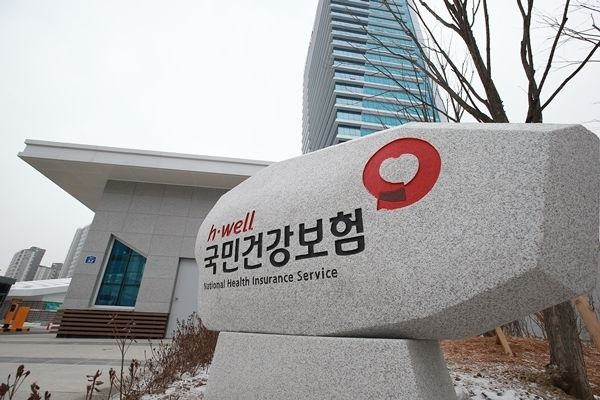
 National Health Insurance Service
[Asia Economy Reporter Chunhee Lee] Office worker Kim experienced a sudden decrease of about 130,000 KRW in his monthly salary this month. The payslip sent by the company's general affairs team showed a deduction labeled "Health Insurance Adjustment Fee" corresponding to the reduced amount. The general affairs team explained, "This is the additional health insurance premium that must be paid this year based on last year's increased salary as well as the extra management performance bonus paid," adding, "Not only this month but a total of five installments amounting to about 670,000 KRW will be additionally settled."
For office workers, there is an adjustment process they must go through once again after the year-end tax settlement every year. This is the National Health Insurance premium adjustment. If your salary increased last year due to factors such as step increases, you must pay more insurance premiums through the adjustment; if your salary was reduced, you will receive a refund.
Recently, the National Health Insurance Service confirmed the 2020 health insurance premium adjustment amounts for employed subscribers and notified each workplace. This year, 8.82 million workers, like Mr. Kim, must pay additional health insurance premiums. This accounts for 58.1% of all employed subscribers.
The total additional adjustment premiums these workers must pay amount to 288.9 billion KRW. This averages to 327,266 KRW per person. These additional premiums are calculated by multiplying the increased annual income from last year by last year's insurance rate of 6.67%. For example, if the annual income increased by 4.5 million KRW last year, an additional 301,400 KRW must be paid. This equates to 66,700 KRW per 1 million KRW.
However, since the health insurance premium is split equally between the subscriber and the employer, the actual additional burden on the employee is half of that amount. This means 33,350 KRW per 1 million KRW.
It is important to remember that not only simple salary increases but also performance bonuses are subject to this adjustment. The National Health Insurance Service explains, "The year-end health insurance adjustment is a payment of the amount that should have been paid last year based on actual wages, so it does not mean the insurance premium is increasing. It is due to unexpected wage occurrences such as performance bonuses." If such wage changes were reported immediately to the NHIS by the workplace, the post-adjustment amount would be reduced; otherwise, the health insurance premium is recalculated through the adjustment conducted the following year.
In Mr. Kim's case, since his wages temporarily increased by nearly 20 million KRW last year due to both salary raises and management performance bonuses, a total of 1,334,000 KRW in health insurance premiums was adjusted, and he must pay half of that, about 670,000 KRW, additionally this year.
However, since bearing such a large amount at once can cause financial difficulties, the NHIS operates an installment payment system. If the additional payment exceeds the regular monthly premium, installment payments are possible.
Previously, these installments were made over five payments, but this year, to support economic recovery amid the COVID-19 pandemic, the NHIS increased the number of installments to 10 and made it so that if the additional payment is at least 9,570 KRW, the minimum insurance premium for employed subscribers this year, the installment payment is automatically applied.
If subscribers wish to make a lump-sum payment or change the number of installments, they can do so within 10 installments upon the employer's application.
Conversely, those whose salaries were reduced will receive a refund. The refund rate is the same as the additional adjustment rate of 6.67%. According to the NHIS, 3.64 million employed subscribers (24.0%) will receive refunds this year. The average refund per person is 203,152 KRW, with both the subscriber and employer each receiving 101,576 KRW.
The remaining 2.72 million people (17.9%) have no changes in reported wages, so no adjustment is made.
© The Asia Business Daily(www.asiae.co.kr). All rights reserved.
![Clutching a Stolen Dior Bag, Saying "I Hate Being Poor but Real"... The Grotesque Con of a "Human Knockoff" [Slate]](https://cwcontent.asiae.co.kr/asiaresize/183/2026021902243444107_1771435474.jpg)















