
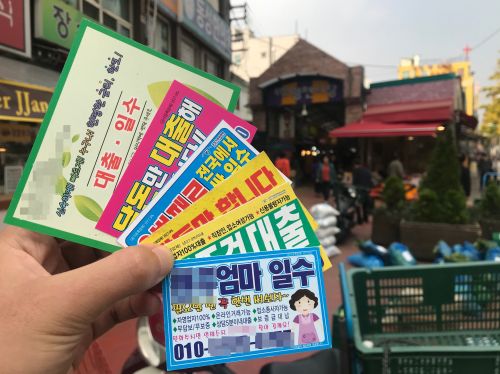
[Asia Economy Reporter Song Seung-seop] A study has revealed that financially vulnerable groups still turn to illegal private loans despite the reduction of the legal maximum interest rate. Meanwhile, lending companies, whose profits were hit by the interest rate cut, were found to have suffered losses in both customers and revenue. Concerns have been raised that both ordinary citizens and lending companies could be adversely affected when the maximum interest rate is lowered to 20% in July.
According to a recent study published by the Korea Inclusive Finance Agency, 69.9% of borrowers who were rejected by lending companies ended up borrowing from illegal private lenders at rates exceeding the legal maximum interest rate. Additionally, 30% of borrowers paid interest exceeding the principal amount. It is estimated that 12.3% paid interest rates of 240% or higher annually.
The study was conducted to understand the financial difficulties of low-credit borrowers and changes in the management of lending companies following the reduction of the maximum interest rate from 27.9% to 24% in 2018. The survey included 10,787 low-credit borrowers (grade 6 or below) who used lending or illegal private loans, and 187 lending companies.
When asked about their response after borrowing from illegal private lenders, 43.4% said they were "bearing high interest rates." The proportion who resolved their situation with help from acquaintances such as parents or siblings was 18.5%, and 12.2% used policy finance. Compared to the previous year, the rates of enduring interest or using policy finance decreased, but the number of personal rehabilitation or bankruptcy filings in court increased.
Among respondents who admitted borrowing money despite knowing the lender was illegal, 73.5% were older and had higher incomes, with response rates increasing with age and income.
Lending Companies Face Business Deterioration... "Flexible Application of Maximum Interest Rate Needed"
For lending companies, overall business conditions worsened after the maximum interest rate was lowered. The proportion of companies reaching the break-even point or operating at a loss increased by 3.2 percentage points from the previous year to 61.0%. Among them, 20.9% were "already operating at a loss," and 13.9% reported "no net profit at all."
Accordingly, the percentage of companies that said they would continue their business if the interest rate remained unchanged was 27.8%, down 7.8 percentage points from the previous year. If the maximum interest rate is lowered to 20% in the future, 36.4% said they would sell or close their business, and 26.2% planned to reduce staff and restructure.
The Korea Inclusive Finance Agency advised, "We need to change perceptions about the role of the short-term small loan market and foster it," adding, "It is necessary to increase financial accessibility for as many people as possible and maintain a stable exit strategy."
It further emphasized, "The interest costs borne by illegal private loan users involve not only economic costs but also significant social costs," and stressed, "There is a need to introduce a flexible application method for the maximum interest rate, which has been unilaterally lowered, in accordance with economic conditions."
© The Asia Business Daily(www.asiae.co.kr). All rights reserved.
![Clutching a Stolen Dior Bag, Saying "I Hate Being Poor but Real"... The Grotesque Con of a "Human Knockoff" [Slate]](https://cwcontent.asiae.co.kr/asiaresize/183/2026021902243444107_1771435474.jpg)











