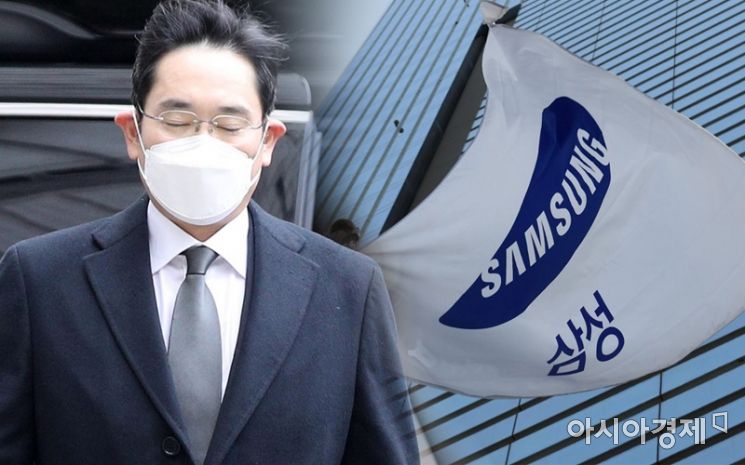
[Asia Economy Reporter Kim Heung-soon] Recently, not only the business and political circles but also the religious community have been appealing for a pardon for Samsung Electronics Vice Chairman Lee Jae-yong, who is currently imprisoned. Public opinion calling for a pardon continues to grow through platforms such as the Blue House's national petition board. There are also concerns that South Korea could fall behind in the global power struggle among countries like the U.S., China, and Europe over key sectors of the 4th Industrial Revolution, including the semiconductor industry, mobile communications, and biotechnology. It is argued that the role of a head of the group who can lead major decision-making is necessary so that Samsung can grasp global trends and contribute to national interests through investments and other means.
Economic Revival through Pardons and Releases of Business Leaders after the 'MERS Crisis'
"Need for Aggressive Investment Amid the COVID-19 Crisis"
According to economic organizations and related industries on the 24th, the business and academic sectors emphasize the importance of noting that major companies expanded investments with the goal of 'economic revival' after the 2015 MERS (Middle East Respiratory Syndrome) crisis. This coincided with the timing when imprisoned business leaders such as Chey Tae-won, Chairman of SK Group; Lee Jae-hyun, Chairman of CJ Group; and Shin Dong-bin, Chairman of Lotte Group, were released through pardons and releases.
These heads of groups consistently strengthened investments immediately after their release, citing employment and securing future growth engines as reasons for national economic recovery. A representative example is SK's declaration to invest 46 trillion won by 2024 in building domestic semiconductor factories. Accordingly, SK Hynix established the state-of-the-art semiconductor factory M14 in Icheon, Gyeonggi Province in 2015, followed by the M15 in Cheongju in 2018, and the Icheon M16 production facility in February this year.
Lotte Group declared in 2018 that it would invest 50 trillion won over five years across all domestic and overseas business sectors and hire 70,000 new employees, and it is currently fulfilling this commitment. CJ Group also accelerated all-around investments after Chairman Lee Jae-hyun returned to management in 2017. Notably, the cultural industry, which is gaining attention as K-content, showed remarkable results. The film "Parasite," which swept four awards at last year's Academy Awards, is a fruit supported by CJ's investment.
Additionally, the late Samsung Chairman Lee Kun-hee contributed to the national aspiration of hosting the Pyeongchang Winter Olympics as an International Olympic Committee (IOC) member after a special pardon in 2009. A business community official said, "With the industrial ecosystem rapidly changing due to COVID-19 and concerns about economic downturns such as worsening employment and rising unemployment rates, if the government and companies unite once again through a business leader pardon to focus on economic recovery, a synergistic effect can be expected."
From Semiconductors and 6G to Bio... Threatened Korean Industries
Expectations for Comprehensive Diplomacy Including 'Responding to Hegemony Competition and Vaccine Supply' through Pardons
The Korea Employers Federation, Korea Chamber of Commerce and Industry, Korea Federation of Small and Medium Business, Korea International Trade Association, and Korea Federation of Medium-sized Enterprises?five major economic organizations?plan to formally request the government next week to pardon Vice Chairman Lee Jae-yong. The pardon proposal has also been raised in the National Assembly as well as in the religious community, including the Council of Head Priests of 25 districts of the Jogye Order of Korean Buddhism.
This is due to a sense of crisis facing Korea's key domestic industries such as semiconductors. While major semiconductor countries like the U.S., Europe, and Taiwan are competitively announcing investment plans, South Korea, led by Samsung, has not finalized large-scale support measures. Furthermore, the international situation is shifting, with the U.S. and Japan, which lagged behind South Korea in the 5th generation (5G) mobile communication competition, strengthening alliances to take the lead in the 6G field. There are also criticisms that domestic competitiveness is falling behind in the K-bio industry, including COVID-19 vaccines.
Some expect that Vice Chairman Lee's powerful global network could help respond to the semiconductor and telecommunications industry hegemony competition and assist in vaccine supply. Previously, at the end of last year when the Korean government was struggling to introduce Pfizer vaccines, Lee mobilized his global connections to arrange a meeting between senior Pfizer officials and the government delegation, which reportedly accelerated the domestic introduction of Pfizer vaccines.
Professor Hong Ki-yong of the Department of Business Administration at Incheon National University said, "In a situation where the concept of 'super-gap' is key, it is impossible for anyone other than the head of the group to grasp global corporate trends and strategies and make timely decisions," adding, "Considering the urgent national economic situation and public opinion, a decisive decision (by those responsible) is needed to allow Vice Chairman Lee to return to management activities."
© The Asia Business Daily(www.asiae.co.kr). All rights reserved.
![Clutching a Stolen Dior Bag, Saying "I Hate Being Poor but Real"... The Grotesque Con of a "Human Knockoff" [Slate]](https://cwcontent.asiae.co.kr/asiaresize/183/2026021902243444107_1771435474.jpg)

















