$568 Billion Budget Bill Unveiled
[Asia Economy Reporter Park Byung-hee] The U.S. Republican Party, which had opposed President Joe Biden's $2.3 trillion infrastructure bill, unveiled a $568 billion infrastructure bill on the 22nd (local time). This was a counterproposal to reduce President Biden's infrastructure bill budget to about one-quarter of the original amount.
According to major foreign media, the Republicans sent the $568 billion infrastructure bill materials to the White House on the same day and disclosed specific investment plans. Earlier, there were talks among Republican lawmakers that the proposed scale would be between $600 billion and $800 billion, but the actual disclosed investment amount fell short of even that.
President Biden proposed the infrastructure bill emphasizing the need to expand eco-friendly infrastructure to respond to climate change and to increase human services such as elder care. However, the Republicans suggested focusing on traditional infrastructure such as roads and ports, as well as expanding communication networks. For example, Biden included a $174 billion investment plan for electric vehicles within the $650 billion investment plan for roads, railroads, and transportation sectors. The electric vehicle investment applied the concept of expanding eco-friendly infrastructure. However, the Republicans reduced the overall budget by excluding the $174 billion electric vehicle investment plan.
The Republicans decided to allocate the largest amount, $299 billion, to roads and bridges, the most basic infrastructure. This was followed by $65 billion for broadband communication networks, $61 billion for public transportation systems, $44 billion for airports, $35 billion for water supply and sewage systems, $20 billion for railroads, $17 billion for ports and inland waterways, and $13 billion for transportation and pipeline safety facilities.
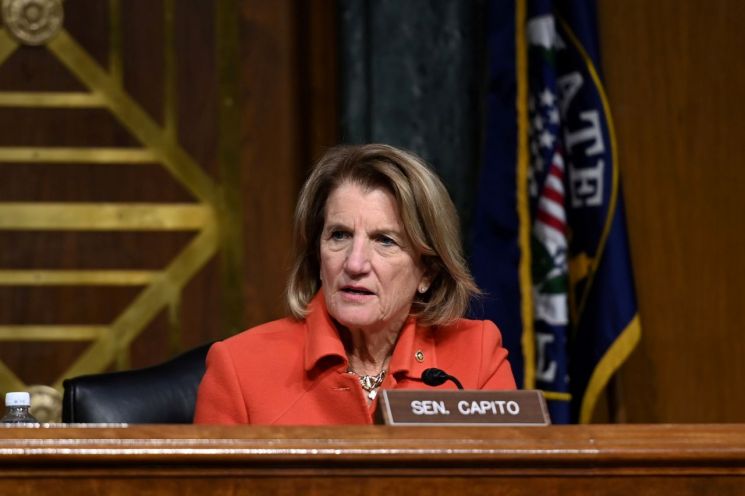
Senator Shelley Moore Capito, who led the bill preparation, emphasized that it was "the largest infrastructure investment proposed by the Republican Party." Senate Minority Leader Mitch McConnell said, "The new proposal is reasonable and could be an alternative that draws bipartisan agreement," adding, "I hope the Democrats show a lot of interest." The Republicans stressed that by reducing the budget size, they could secure funding without raising taxes, instead increasing road tolls and other fees.
Senate Majority Leader Chuck Schumer of the Democratic Party argued, "Any infrastructure bill must be eco-friendly and should not shift the burden onto workers."
While both the Democratic and Republican parties are expected to enter negotiations, it is uncertain whether they will find common ground. Regarding the $1.9 trillion economic stimulus bill passed last month, the Republicans also counterproposed a $618 billion bill, arguing that the budget was too large. However, the Democrats used their majority status in both the House and Senate to disregard Republican opinions and pass the bill. In the Senate, including independent senators leaning Democratic, the Democrats and Republicans are evenly split with 50 members each, but Vice President Kamala Harris can cast the deciding vote.
© The Asia Business Daily(www.asiae.co.kr). All rights reserved.
![Clutching a Stolen Dior Bag, Saying "I Hate Being Poor but Real"... The Grotesque Con of a "Human Knockoff" [Slate]](https://cwcontent.asiae.co.kr/asiaresize/183/2026021902243444107_1771435474.jpg)
















