Creating a Safe Living Environment with Safety Design in Namsancho Area and Gwanghui-dong Central Asia Street
[Asia Economy Reporter Jongil Park] Jung-gu, Seoul (Mayor Seoyangho) has introduced Crime Prevention Through Environmental Design (CPTED) in key areas to create an environment where residents can live with peace of mind.
Crime Prevention Through Environmental Design is a design approach that deters criminal psychology and prevents crime opportunities in advance. The district prioritized reorganizing the area around Namsan Elementary School and the Central Asia Street in Gwanghui-dong.
The area around Namsan Elementary School had a traffic network vulnerable to accidents, raising strong concerns about the safety of children's commuting routes.
Before implementing the project, thorough field surveys, interviews, and questionnaires were conducted to reflect the opinions of residents, parents, and local merchants.
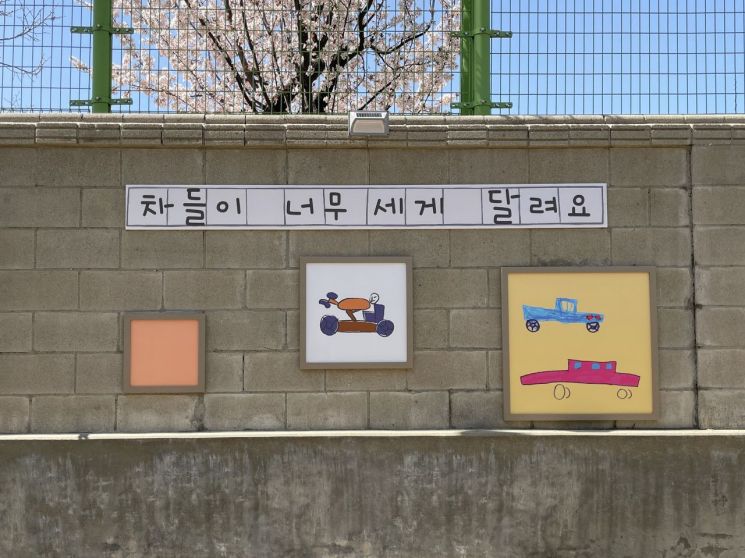
In particular, a workshop was held for children using the after-school program at Namsan Elementary School, focusing on safe commuting routes, where children expressed their discomforts and wishes through drawing, allowing their opinions to be actively incorporated.
To address local issues such as the risk of vehicle accidents on main commuting routes, secondhand smoke exposure, and difficulty recognizing the elementary school due to old fences, the design concept aimed to raise awareness among drivers and adults and create a fun school route for children, starting with transforming the alleys in front of the school.
Visibility of crosswalks was enhanced through road markers and gobo lighting, and effective no-smoking zone signs were installed to raise smokers' awareness and prevent smoking-related harm. Additionally, using children’s charming hand-drawn pictures and writings, the back gate fence and pedestrian paths were decorated, resulting in clearer commuting route markings.
Gwanghui-dong Central Asia Street, selected through the Seoul Metropolitan Government’s contest for creating safe environments in foreigner-dense areas, is a street with many foreigners from Russia, Mongolia, and other countries, creating an exotic atmosphere. The CPTED technique, an environmental design method to prevent crime, was introduced here to fully realize the project’s purpose.
First, thorough site analysis was conducted through nighttime field surveys, interviews with merchant associations, and questionnaires.
The area’s main issues include signs with multilingual text attached irregularly and difficult to understand, littering and illegal dumping harming aesthetics, and a lack of trust between locals and foreigners causing anxiety higher than actual crime rates. The design strategy was developed reflecting these local characteristics.
▲ Alleyway rest areas were created ▲ Night lighting and emergency bells were installed to enable natural surveillance ▲ Old walls and shutters were painted with exotic patterns, resulting in safe alleys where foreigners, locals, visitors, and residents can communicate.
Also, signs with a higher proportion of pictograms easily recognized by visitors from various countries and safety maps were installed to improve information delivery.
The district plans to improve the environment and facility designs around Jangchung Elementary School and Cheonggu Elementary School to create safe commuting routes.
Seoyangho, Mayor of Jung-gu, said, "Through the Crime Prevention Through Environmental Design project, we are creating neighborhood environments where residents can walk safely," adding, "We will continue to expand public design projects that residents can feel by collecting diverse opinions."
© The Asia Business Daily(www.asiae.co.kr). All rights reserved.
![Clutching a Stolen Dior Bag, Saying "I Hate Being Poor but Real"... The Grotesque Con of a "Human Knockoff" [Slate]](https://cwcontent.asiae.co.kr/asiaresize/183/2026021902243444107_1771435474.jpg)
















