Gold-Plated Shoes Excavated from Gochang Bongdeok-ri Tomb No. 1 and Naju Jeongchon Tomb
Revealing Ancient Funeral Culture and Baekje Metal Craftsmanship
Jangseong Baekyangsa Amitabha Preaching Painting and Burial Artifacts Designated as Treasures
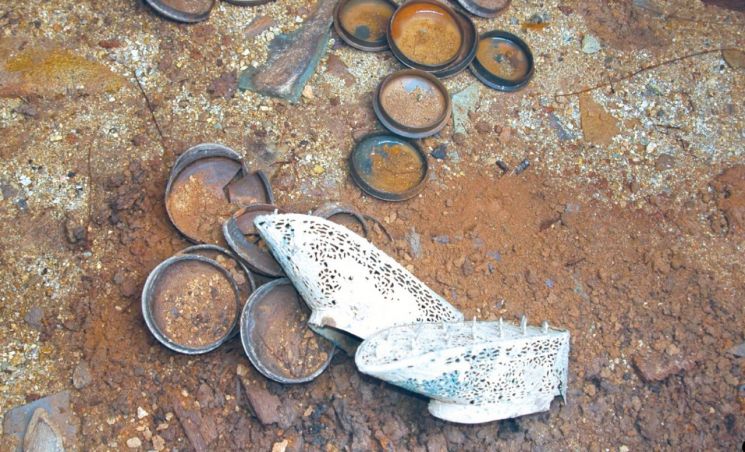
Gilt-bronze shoes from the Three Kingdoms period have been designated as national treasures for the first time. On the 21st, the Cultural Heritage Administration announced that two gilt-bronze shoes from the Baekje Kingdom, excavated from the Bongdeok-ri Tomb No. 1 in Gochang, Jeonbuk, and the Jeongchon Tomb in Naju, Jeonnam, as well as the Amitabha Buddha Preaching Painting and associated burial artifacts from Baekyangsa Temple in Jangseong, have been designated as treasures.
The gilt-bronze shoes from Bongdeok-ri Tomb No. 1 provide insight into the ancient Korean funeral rites culture, while those from Jeongchon Tomb demonstrate Baekje's metalcraft techniques. Both were excavated as pairs and are estimated to have been made in the 5th century. They are considered rare examples of gilt-bronze shoes found in complete form from tombs of the Three Kingdoms period.
Many earrings, necklaces, and bracelets excavated from tombs of the Three Kingdoms period have been designated as national treasures or treasures. However, this is the first time gilt-bronze shoes have been registered as nationally designated cultural properties. Nineteen gilt-bronze shoes have been found in tombs within the Mahan-Baekje region, including those from King Muryeong’s Tomb in Gongju, Yori in Hwaseong, Beopcheon-ri in Wonju, and Songsan-ri and Suchon-ri in Gongju.
The Cultural Heritage Administration explained, "Gilt-bronze shoes are unique ancient metalcraft artifacts found only in sites from the Three Kingdoms period in Korea. Similar items are rarely found in Chinese sites from the same era, and although similar-shaped shoes have been excavated from Japanese tombs such as Edafunayama, Ichisaka, Kamoinariyama, and Fujinoki tombs, they are believed to have originated from Korea."
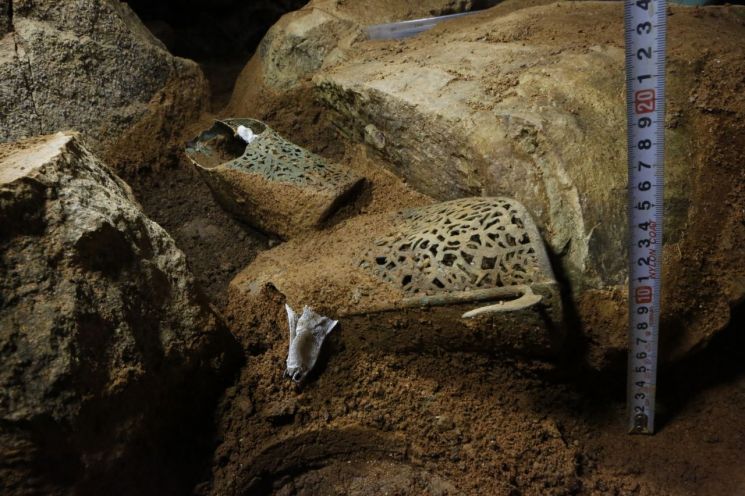
The gilt-bronze shoes from Bongdeok-ri Tomb No. 1 were excavated in 2009 from the fourth stone chamber of the largest of four large mound tombs (a burial style where a mound is constructed and burial facilities are installed inside), worn on both feet of the tomb owner. These shoes were used ceremonially in funerals and exhibit typical Baekje shapes and patterns.
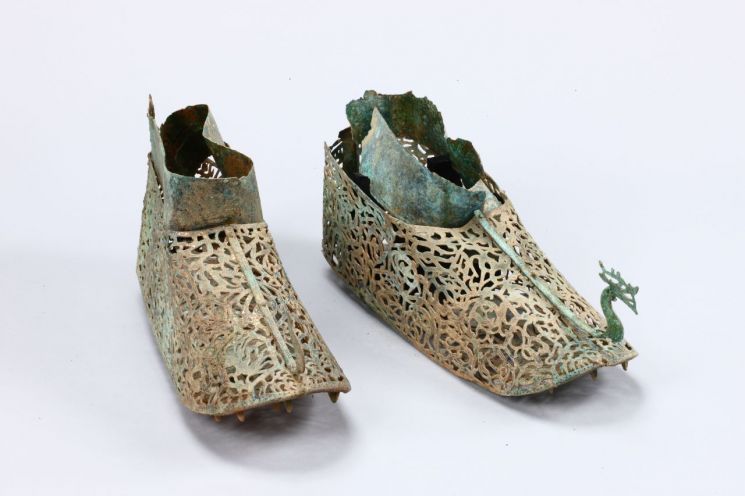
The overall shape resembles a boat. They have ankle flaps, and the front is pointed and slightly raised. The middle sole is flat, and the back narrows slightly and is rounded. Inside hexagonal openwork carvings are elaborately decorated with various motifs such as dragons, anthropomorphic bird creatures (human-faced bird-bodied mythical animals), paired bird patterns, mythical beasts, and lotus flowers. The sole has eighteen pointed nails, each 1.7 cm high, attached in a regular pattern. The interior is finished with a silk fabric lining.
The Cultural Heritage Administration stated, "Among the nineteen gilt-bronze shoes excavated from tombs of the Three Kingdoms period, these are the most perfectly preserved in form. Early Three Kingdoms period motifs such as fish eggs have been identified, suggesting they are chronologically earlier than the gilt-bronze shoes from Jeongchon Tomb." They added, "Like the shoes of King Muryeong and his queen, these shoes consist of a sole plate, left and right side plates, and ankle flap plates, showing typical Baekje gilt-bronze shoe features with studs embedded in the sole. They are presumed to be prestige items bestowed upon local influential rulers to demonstrate royal power and elevate their status."
The gilt-bronze shoes from Jeongchon Tomb were excavated in 2014 from the third wooden coffin in the first stone chamber of the large mound tomb. Jeongchon Tomb is considered to comprehensively represent Baekje culture among large tombs built in the 5th to 6th centuries in the Yeongsan River basin, including the Bogeum-ri and Yeongdong-ri tomb clusters. Notably, the gilt-bronze shoes feature a dragon head decoration attached to the instep, the only known example among surviving gilt-bronze shoes from the Three Kingdoms period, attracting significant attention. Recent scientific analysis by the National Naju Cultural Heritage Research Institute estimated the owner of these shoes to be a woman in her 40s.
The shape, manufacturing techniques, and patterns are very similar to those of the gilt-bronze shoes from Bongdeok-ri Tomb No. 1. Four thin gilt-bronze plates were used to make the sole plate, left and right side plates, and ankle flap plate, connected with small nails, and the patterns were depicted in detail through openwork carving. Hexagonal patterns, dragon motifs, anthropomorphic bird creatures, mythical beasts, and lotus flower patterns, reflecting ancient views of the afterlife, were intricately expressed. The Cultural Heritage Administration explained, "These shoes were made in the late 5th century and represent a transitional stage leading to the gilt-bronze shoes excavated from King Muryeong’s Tomb in the 6th century. They are important for understanding Baekje thought and art in the 5th to 6th centuries."
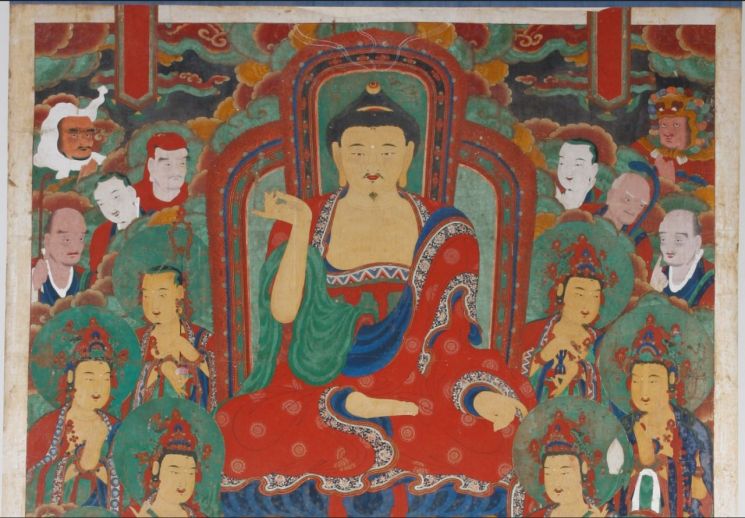
The Amitabha Buddha Preaching Painting and associated burial artifacts from Baekyangsa Temple are Buddhist cultural properties passed down for over 300 years. They were created during the restoration of the Amitabha Buddha statue in the Geungnakjeon Hall of Baekyangsa Temple in the 51st year of King Yeongjo’s reign (1755). The painting was stolen in September 1994 but was returned to its original place in September 2006.
The Buddhist painting depicts the principal Amitabha Buddha preaching Buddhist doctrines to his disciples. Surrounding Amitabha Buddha are the Eight Great Bodhisattvas, six disciples, the Four Heavenly Kings, and two groups of the Eight Legions. The Cultural Heritage Administration explained, "The painting reflects the style of the monk painter Saekmin well, with a stable and well-organized composition, concise brushwork, dignified colors, and harmonious figure expressions." They added, "The painting’s creation date, list of participants, and six burial artifacts including the burial pouch (a pouch containing Buddhist scriptures and burial items placed after the painting’s creation) are all well preserved, providing great help for the study of Buddhist painting burials in the late 18th century."
© The Asia Business Daily(www.asiae.co.kr). All rights reserved.
![Clutching a Stolen Dior Bag, Saying "I Hate Being Poor but Real"... The Grotesque Con of a "Human Knockoff" [Slate]](https://cwcontent.asiae.co.kr/asiaresize/183/2026021902243444107_1771435474.jpg)


















