Ministry of Education "Will reconsider measures to delete school violence perpetrator records"
"Irreparable wounds to victims should not be erased"
"Young age, should be given a chance to reflect"
Experts "Recording perpetrator history is effective in preventing school violence"
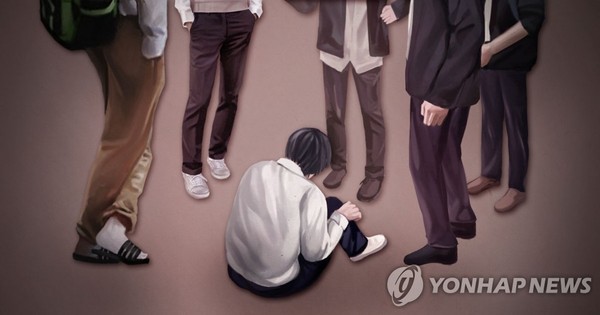 As the seriousness of school violence issues emerges, criticisms continue regarding the policy that allows the deletion of 'disciplinary records of students who committed school violence.'
 [Image source=Yonhap News]
[Asia Economy Reporter Joo-mi Lee] As the Ministry of Education reconsiders measures to delete records of school violence perpetrators from student records, debates continue over the issue. While some argue that records of perpetrators should remain to prevent victims from suffering lifelong pain, others claim that labeling children as perpetrators from a young age is inappropriate from an educational guidance perspective.
On the 15th, the Ministry of Education announced plans to either prohibit the deletion of perpetrator records from student records upon graduation or to strengthen the conditions for deletion. According to the plan, the ministry will collect opinions from metropolitan and provincial education offices, students, parents, and teachers during the first half of this year to improve the system.
Currently, disciplinary measures against students who commit school violence can be deleted either after graduation or immediately upon graduation. Among the nine types of measures, numbers 4 (community service), 5 (special education/psychological treatment), 6 (suspension), and 8 (transfer) are recorded in the student record but are automatically deleted two years after graduation.
With the review of the school's dedicated committee, records can be erased upon graduation. Only expulsion, which corresponds to number 9, cannot be deleted. Minor measures corresponding to numbers 1 to 3 can have their recording deferred once.
◆ "Victims suffer lifelong pain... Records must remain"
The deletion of perpetrator records, implemented since 2014, has recently come under scrutiny amid the so-called 'school violence Me Too' movement centered around the entertainment and sports industries. Incidents such as the 'Cheonghakdong Seodang' violence case have fueled the controversy. Critics argue that deleting records, despite the increasing severity of school violence and the indelible scars it leaves on victims, amounts to a kind of pardon.
Three petitions requesting improvements to deletion measures have been submitted to the Blue House's national petition platform this year. One such petition, titled "Please abolish the rule that deletes school violence committee records of perpetrators immediately upon graduation," was posted on February 25.
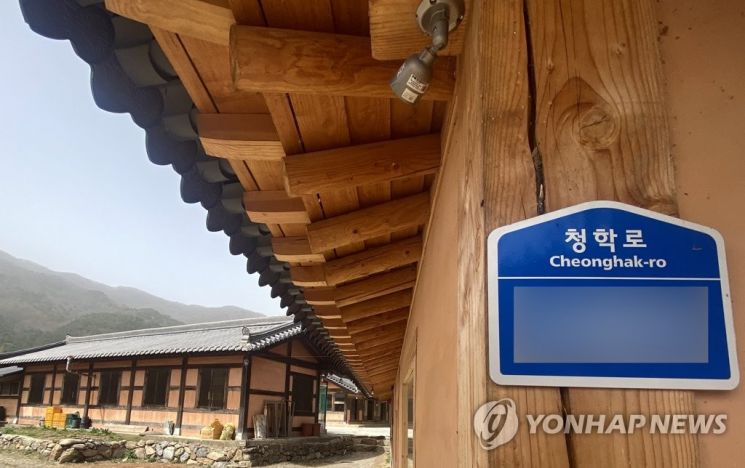 Cheonghakdong Seodang in Hadong, Gyeongnam, where student violence issues have emerged. [Image source=Yonhap News]
The petitioner criticized, "If someone commits school violence, shouldn't there at least be a trace in their student record? Victims' families live in lifelong pain filled with resentment and bitterness, so why delete the perpetrator's school violence committee punishment record?" They appealed, "Please enact a law that prevents deletion of school violence committee punishment records above a certain level from student records after graduation."
Among students involved in school violence, opposition to the deletion of perpetrator records existed even before the recent controversy. According to a 2019 survey by the National Human Rights Commission of Korea (NHRCK) titled 'Investigation on Procedures and Processes of Handling School Violence Cases,' about 74% of students opposed erasing disciplinary records of perpetrators from student records.
◆ "Concerns about stigma... Educational responses needed instead of leaving records"
Some argue that such regulations are uneducational, as they brand individuals as perpetrators from the start of their social lives, depriving them of opportunities for reflection. Since these records can affect future prospects such as college admission and employment, there are calls for proactive educational responses within schools.
Lee (57), a current vice-principal of a middle school, said, "If you brand a young person as a perpetrator during their growth period, they may lose hope in life and fall into worse paths. Education and schools should provide opportunities for reflection and guidance to children who have made mistakes. While leaving records for very serious cases can serve as a warning, I believe it is wrong to keep all disciplinary records."
Such voices have been raised since March 2012, when the policy to record school violence perpetrator measures in student records was announced. At that time, some metropolitan and provincial education offices refused to record such information around the early admission period, and the Korean Teachers and Education Workers Union filed a complaint against former Minister of Education, Science and Technology Lee Ju-ho for abuse of power, escalating the controversy.
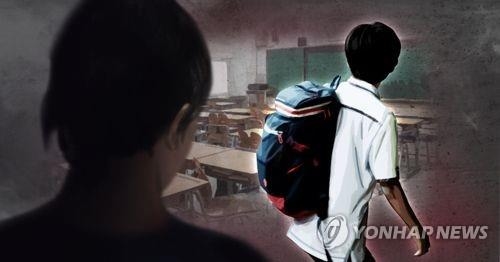 The Ministry of Education has begun reconsidering measures that allow the deletion of school violence perpetrator records from student records.
 [Image source=Yonhap News]
In August of the same year, the NHRCK also ruled that the policy to record such information in student records violated students' fundamental rights. The commission pointed out that "recording school violence perpetration in student records and preserving it for five years after graduation for elementary and middle schools, and ten years for high schools, can affect college admissions and employment." It also stated, "Social stigma can be attached due to one or two temporary behavioral problems, which is excessive," and suggested introducing a review system for deletion before graduation or a mid-term deletion system.
As conflicts continued with opposition from the education sector and the NHRCK's decision, the Ministry of Education reduced the record retention period from the original five years to the current two years in March of the following year. The deletion measure after graduation was also introduced at that time. If the deletion guidelines are changed to prohibit deletion or strengthen conditions this time, the revised measures will be changed again.
Experts expect that leaving records in student records will be effective in reducing school violence. Lee Jong-ik, Secretary-General of the Pureunamu Youth Violence Prevention Foundation, said, "A system that instills the social awareness that 'school violence must not be committed and bullying others is wrong' is necessary. If perpetrator records are preserved in student records, it can affect college admissions and employment, leading to a reduction effect."
Lee emphasized, "Victims of school violence suffer lifelong pain from wounds inflicted in childhood, so from the victim's perspective, it is necessary to keep records. However, programs that guide perpetrators onto the right path should also be implemented in parallel."
© The Asia Business Daily(www.asiae.co.kr). All rights reserved.



















