CDU Leadership Supports Laschet as Chancellor Candidate
Candidate's Camp States "Accepting CDU Decision" Before Vote
Green Party Leadership, Ranked 2nd in Polls, Also Nominates Chancellor Candidate
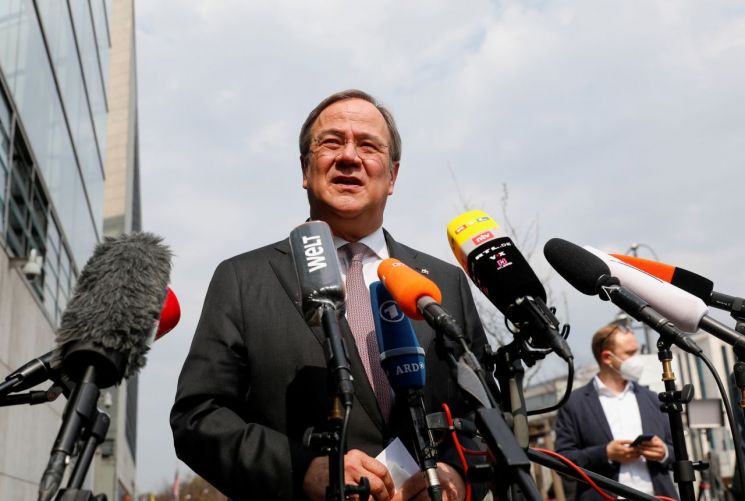
[Asia Economy Reporter Kim Suhwan] Armin Laschet, leader of Germany's ruling Christian Democratic Union (CDU), has gained the support of the CDU leadership, increasing the likelihood that he will become the single chancellor candidate for the conservative coalition in the upcoming September general election. This comes after a two-way race for the chancellor candidacy began with Markus S?der, governor of Bavaria and member of the CDU's sister party, the Christian Social Union (CSU), entering the race. Laschet is now widely regarded as having effectively won the contest.
According to local media Deutsche Welle on the 19th (local time), the CDU executive committee held a marathon six-hour meeting to vote on the chancellor candidate nomination and ultimately decided to nominate Laschet. Laschet received the support of 31 out of 46 committee members. In contrast, Governor S?der received 9 votes, and there were 6 invalid votes.
Previously, the chancellor candidacy was contested between the CDU and CSU, both members of the conservative coalition. Traditionally, the CDU, as the majority party in the CDU-CSU alliance, would select the chancellor candidate, making candidate unification straightforward. However, this time, a CSU politician entered the race, leading to an unusual competition for the candidacy.
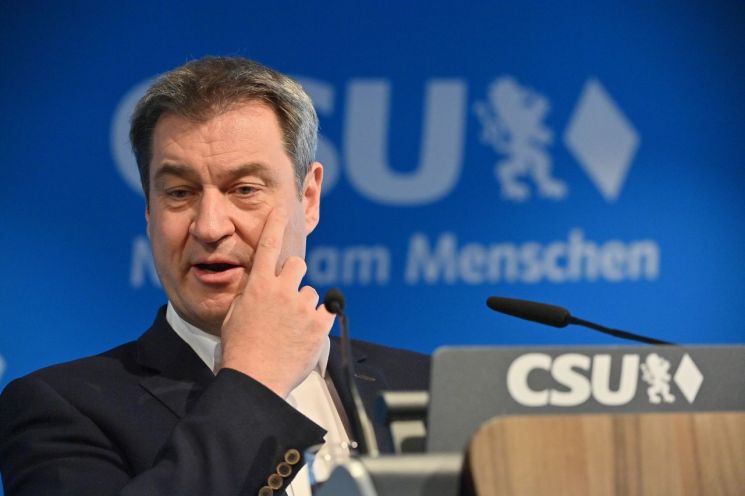
The reason Governor S?der of the CSU entered the race was that opinion polls showed his support rate was overwhelmingly higher than that of Laschet. Along with support from CSU party members, voices backing S?der also emerged within the CDU, leading S?der to break the conservative coalition's tradition of the CDU nominating the chancellor candidate and decide to run on the 11th.
However, with coalition support ratings sluggish and no decision on unification for over a week, concerns grew that the conservative coalition would suffer greater political damage. Consequently, on the 19th, Governor S?der expressed his intention to leave the decision on the single candidate nomination to the CDU leadership. Before the vote, S?der stated, "We will not show any cracks between the CDU and CSU."
With the CDU leadership nominating Laschet as the chancellor candidate on this day, if Governor S?der accepts this, Laschet will become the single candidate for the conservative coalition.
Chancellor Merkel attended the meeting via video conference but did not participate in the discussion process.
Although the conservative coalition's candidate unification has become visible, the outcome of the upcoming election remains uncertain. Recently, public backlash against lockdown measures due to the resurgence of COVID-19 has caused the coalition's support ratings to decline. Earlier this year, a mask scandal involving ruling party figures was exposed, accelerating the drop in support. The scandal revealed that conservative coalition members profited by receiving large commissions while mediating the supply of COVID-19 protective masks to the government.
Deutsche Welle reported, "Amid declining support for the conservative coalition, the failure to present a unified candidate for a week caused significant political damage, further reducing the coalition's chances of winning the upcoming September general election."
Until mid-January this year, the CDU-CSU alliance's support stood at 36%, but following Laschet's appointment as party leader, a Kantar poll on the 11th showed it had fallen to 27%. Meanwhile, the Green Party, a minor party that has never formed a government, saw a surge in support, rising to second place behind the conservative coalition.
A survey on the 18th showed the CDU-CSU alliance at 29% and the Green Party at 22%. If the progressive Green Party wins the election, it is expected that through a coalition with similarly aligned parties such as the Social Democrats (15%), Free Democrats (9%), and The Left (8%), they could produce the next chancellor.
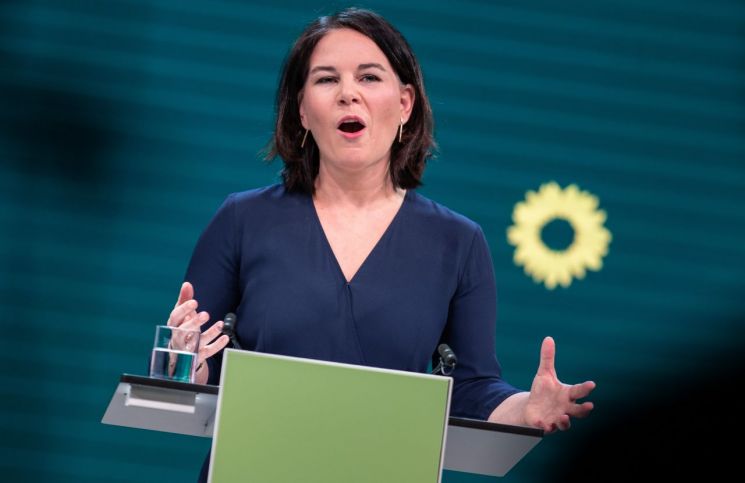
On the same day, the Green Party also nominated co-leader Annalena Baerbock as their chancellor candidate through a leadership meeting, marking the party's first-ever chancellor candidacy. At a press conference, Baerbock said, "I am running for reform," and added, "I am convinced this country needs a new beginning." Baerbock's final confirmation as the chancellor candidate is scheduled for the Green Party's national convention in June.
Meanwhile, Angela Merkel, who has led Germany for 16 years with four consecutive terms as chancellor, announced at the end of 2018 that she would not run for chancellor again and would resign as CDU leader.
© The Asia Business Daily(www.asiae.co.kr). All rights reserved.



















