[Asia Economy Reporter Junhyung Lee] A court ruling has determined that performance bonuses in private companies can be considered wages that count toward severance pay calculation under certain conditions.
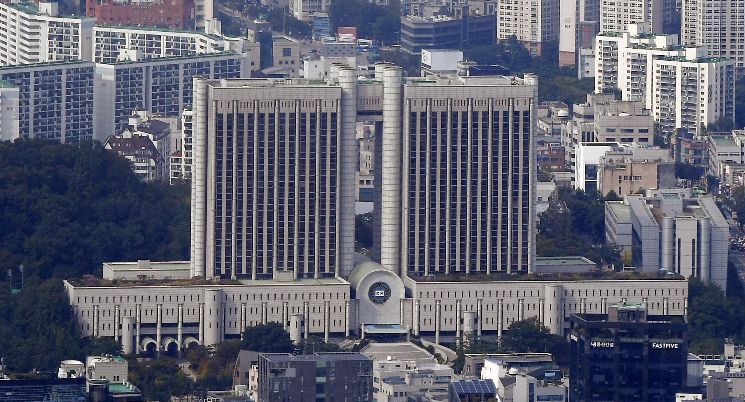
According to the Legal Department of the Korean Confederation of Trade Unions (KCTU) on the 19th, the Seoul Central District Court made this ruling on the 15th in a lawsuit filed by employees of Company A against their employer.
Company A argued that the performance bonuses were rewards rather than compensation for labor, and that the company decided on whether to pay and the payment rate, so they should not be considered wages. Accordingly, Company A calculated the total annual wages excluding the performance bonuses and paid the severance pension contributions based on that amount.
The employees of Company A filed a lawsuit claiming the difference based on severance pension contributions calculated by including the performance bonuses in the average wage. Since 2003, Company A had set the criteria for performance bonus payments annually through labor-management agreements and internal approvals, and if the net profit for the business year met the payment criteria, the performance bonuses were paid without exception.
The court focused on the fact that except for 2005 and 2006, when the net profit did not meet the payment criteria, performance bonuses were paid every year from 2007 onward, and ruled that these bonuses could not be considered "incidental and temporary payments."
Furthermore, since the performance bonuses were paid without exception when the net profit met the criteria, the court judged it difficult to regard them as "gratuities." The court concluded that Company A’s performance bonuses are a "living wage" necessary for the workers’ ordinary livelihood and therefore should be included in the average wage, which is the basis for calculating severance pay.
The court also stated that if an employer pays performance bonuses to motivate workers, it can be seen as compensation for improving the quality of labor. Therefore, the court pointed out that it cannot be definitively stated that Company A’s performance bonuses are unrelated to labor provision.
In 2018, the Supreme Court ruled that performance bonuses from public institutions’ management evaluations are wages that form the basis for calculating average wages. However, the KCTU Legal Department explained that this recent ruling is significant because it recognizes performance bonuses in private companies as wages as well. The Legal Department stated, "Performance bonuses that vary according to the business performance of private companies are paid continuously and regularly, and since the employer has an obligation to pay them based on collective agreements, employment rules, and labor practices, it is clear that these bonuses are wages paid as compensation for labor."
© The Asia Business Daily(www.asiae.co.kr). All rights reserved.

















