Reflecting Residents' Opinions on Vacant Houses in 10 Districts, Expanding Lacking SOC, Creating Community Gardens
'Infant Experience' Park in Jangwi-dong and Walking, Planting Areas in Dongsomun-dong to Address Children's Park Shortage
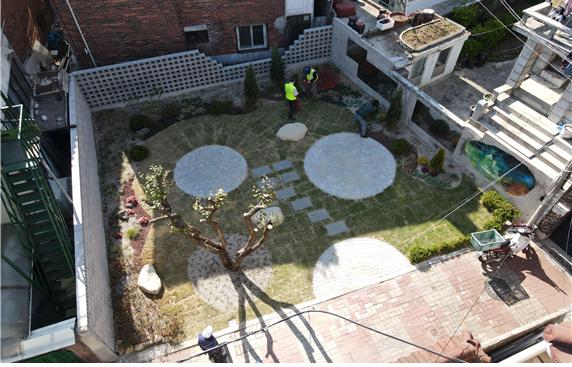
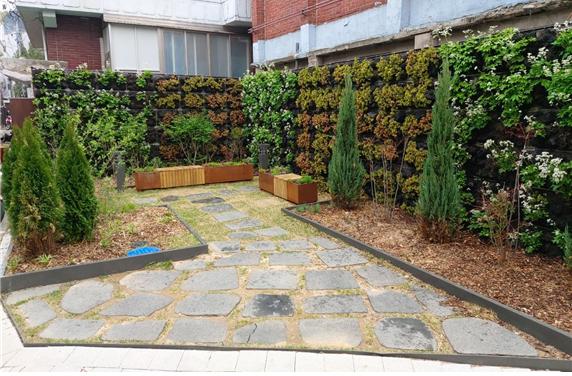
[Asia Economy Reporter Lim Cheol-young] The Seoul Metropolitan Government announced on the 20th that it will transform 17 vacant houses in 10 autonomous districts, including Gangbuk-gu, Seongbuk-gu, and Jung-gu, into living gardens this year.
Seoul plans to actively reflect the opinions of local residents and expand the insufficient living SOC in the area by creating gardens with unique characteristics in each neighborhood. Seven sites are targeted for development in the first half of the year, and ten sites in the second half.
Two vacant houses in Jangwi-dong, Seongbuk-gu, will be demolished and combined into one to become a "child experience-type living garden." This reflects residents' requests to create a garden for children, as there is no children's park nearby. Utilizing the existing terrain on the hill, slides and inclined play structures will be installed, along with basket swings. Various flowers and trees such as pine trees, king cherry trees, and climbing roses will be planted.
One vacant house in Dongsomun-dong, Seongbuk-gu, will be transformed into a living garden that connects residents. Citizens from surrounding houses, previously separated by the vacant house, will be able to walk and communicate in the living garden. The garden will be decorated by arranging large and small rocks and stones, with various plants planted in between.
The remaining vacant houses will also have their development directions and contents finalized by reflecting residents' opinions. Seoul expects that converting vacant houses, which spoil the residential area's appearance, into gardens will provide residents with a clean environment, offer rest and healing near their homes amid the suffocating daily life caused by COVID-19, secure green spaces lacking in living areas, and achieve a fine dust reduction effect.
Living gardens began as a pilot project with three sites (Dobong-gu, Geumcheon-gu, Guro-gu) from late last year to early this year, and will expand to a total of 20 sites upon completion of 17 more this year. The three living gardens created as pilot projects were planted with 905 trees of 17 species including Blue Angel and 1,580 flowering plants. Sculptures such as fence mirrors and green walls were also installed.
After garden creation, the city plans to continuously maintain and manage the living gardens through talent donations and volunteer work by local residents and citizen gardeners who have completed the Seoul citizen gardener training course.
Choi Yoon-jong, Director of the Seoul Metropolitan Government's Green City Bureau, said, "We expect to achieve a fine dust reduction effect through small-scale living gardens created in densely populated residential areas," and added, "We hope to add and expand living garden project sites so that local residents, who are experiencing suffocating daily life due to COVID-19, can regain vitality and relieve stress."
© The Asia Business Daily(www.asiae.co.kr). All rights reserved.
![Clutching a Stolen Dior Bag, Saying "I Hate Being Poor but Real"... The Grotesque Con of a "Human Knockoff" [Slate]](https://cwcontent.asiae.co.kr/asiaresize/183/2026021902243444107_1771435474.jpg)












