Formation of TFs in Three Major Areas: Life·Safety·SOC, Tourism·Culture, and Industry·Agriculture·Environment
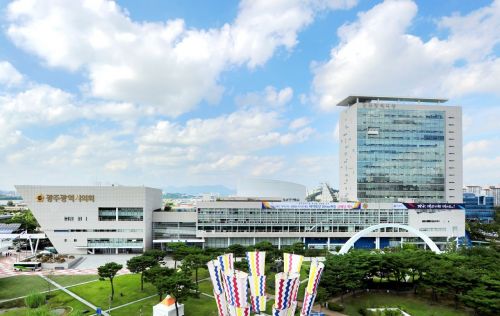
[Asia Economy Honam Reporting Headquarters Reporter Park Seon-gang] Gwangju Metropolitan City and Jeonnam Province will jointly discover large-scale super-regional cooperation projects to lead the future development of Honam.
Both the city and province share the view that the Honam region, which has shared a long-standing culture and formed a joint living area, must unite to create momentum for regional development, and have been steadily exchanging opinions on cooperation directions since January.
In particular, they agreed on the necessity of large-scale projects that transcend city and provincial boundaries, and have been planning super-regional cooperation projects by analyzing cases from other regions such as Busan, Ulsan, Gyeongnam, and the Chungcheong area.
Additionally, to actively discover super-regional cooperation projects in response to Busan-Ulsan-Gyeongnam and the Chungcheong region, a joint task force was formed with the head of the Planning and Coordination Office as the leader.
The task force is composed of three divisions: ▲Living, Safety, and SOC sector ▲Tourism and Culture sector ▲Industry, Agriculture, and Environment sector.
Each city and province involves 13 departments, with a total of 11 affiliated institutions participating, and the Gwangju-Jeonnam Research Institute serves as the secretariat.
In line with the government's regional balanced New Deal policy, both city and province plan to seek cooperation measures for building a super-regional transportation network, transitioning to renewable energy, carbon neutrality responding to climate change, and revitalizing regional tourism and Namdo culture. They also plan to focus on discovering future-oriented projects that can respond to the Fourth Industrial Revolution era by combining Gwangju's artificial intelligence (AI) and Jeonnam's blue economy.
The Gwangju-Jeonnam Research Institute plans to analyze domestic and international super-regional cooperation projects and devise sector-specific implementation strategies along with a mid- to long-term megacity strategy.
Before the full-scale discovery, from the 15th for two days, the city and province's working-level departments and the Gwangju-Jeonnam Research Institute held the first meeting by sector to share opinions on the key projects of both city and province and super-regional cooperation projects.
The super-regional cooperation projects discovered through the task force are expected to be reflected as Gwangju-Jeonnam win-win tasks in the pledges of the 20th presidential election next year to secure execution momentum.
Furthermore, to gather diverse and broad opinions from the region, they plan to collect feedback using external experts.
Moon Young-hoon, head of the Planning and Coordination Office of Gwangju City, said, “Gwangju and Jeonnam are a millennium-old single-root community, and we will cooperate closely to make this an opportunity to create a milestone for the new millennium with the spirit of learning from the past and innovating.”
Meanwhile, in February, Gwangju City and Jeonnam Province, together with Jeonbuk Province and the Democratic Party of Korea, launched a preliminary project for the ‘Honam RE300 Construction Project’ to form the Honam super-regional energy economy community.
They are also joining forces to ensure that the ‘Namdo Super-regional Railway Network Construction Project,’ connecting Gwangju~Naju and Gwangju~Hwasun, a super-regional transportation network between the city and province, is included in this year’s Ministry of Land, Infrastructure and Transport’s national railway network construction plan.
© The Asia Business Daily(www.asiae.co.kr). All rights reserved.

















