Publication of the Biography of Lee Yun-seok, Holder of the National Intangible Cultural Heritage Goseong Ogwangdae
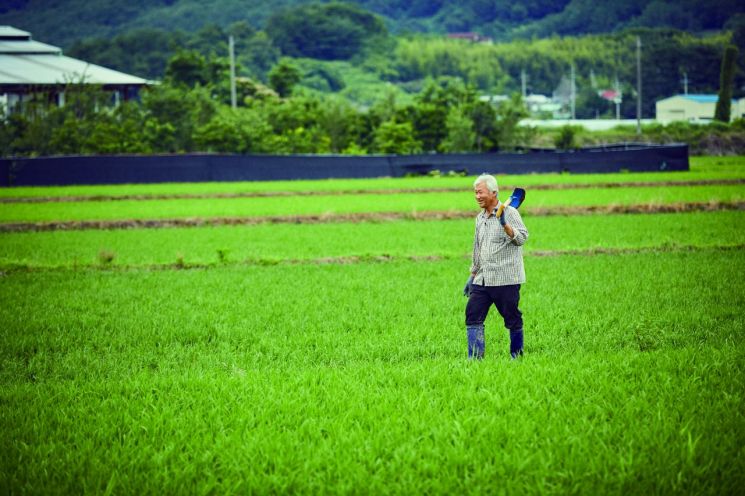
Lee Yun-seok, the holder of the National Intangible Cultural Heritage Goseong Ogwangdae, prefers to be called a "dancing farmer" rather than a "farming dancer." He considers farming both his vocation and family tradition.
"No matter how many times I see it, farming is always different and that's the joy of it. A single grain produced by a farmer helps sustain a life?what greater art could there be than that? The very process of farming, from sprouting to harvest, is so artistic!"
He was born and raised in Myeongsong Village, Dojeon-ri, Maam-myeon, Goseong-gun, Gyeongnam Province. Throughout his life, he moved between the fields and the dance stage, cultivating the land and performing dances. Surrendering his body to the sound of the kkwaenggwari (small gong), he revitalized Goseong Ogwangdae, a mask play from Goseong, Gyeongnam, performed by five clowns. Unlike his masters, Lee Yun-seok did not remain confined to the mask tradition. He made his debut in 1998 with a solo performance of the Deotbaegi dance at a master-invited show. With large strides crossing the rice field ridges, he boldly stepped onto the stage, completing a transcendent (?俗) dance.
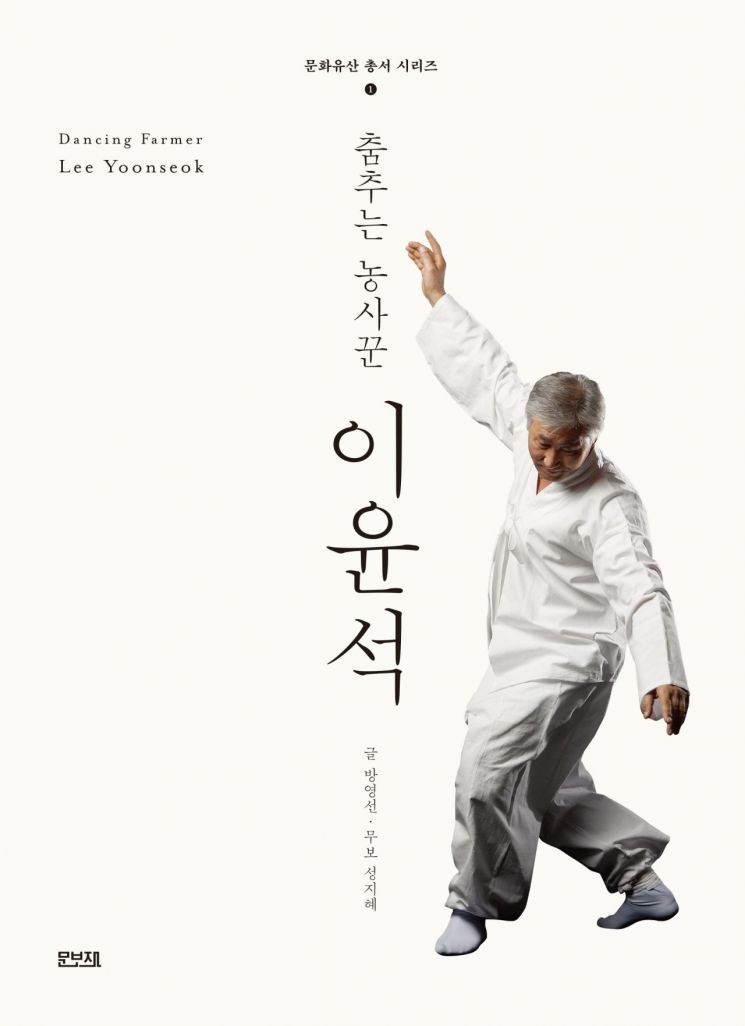
A book capturing the earthy scent of his life and dance has been published. Supported by the Daesan Shin Yong-ho Memorial Foundation and published by the Korea Cultural Heritage Foundation on the 19th, it is the first volume in the Cultural Heritage Series titled Dancing Farmer Lee Yun-seok. It weaves his life and art into rhythmic prose, from a childhood marked by identity confusion to the present day, where he has cultivated and preserved Goseong Ogwangdae. It also highlights the energy (運氣), scenery, and lives of the people of Goseong, Gyeongnam. Notably, co-author Seong Ji-hye, a dancer, meticulously transcribed the dance movements by dividing the Gutguri rhythm into 3/4 time, twelve cuts, and detailed dance steps. Looking forward to the spring of Goseong Ogwangdae that will come again...
"Isn't it said that after Daehan (Major Cold) comes Yangchun (Early Spring)? If I compare my life to the seasons, now must be winter. From now on, I await the joy."
© The Asia Business Daily(www.asiae.co.kr). All rights reserved.


















