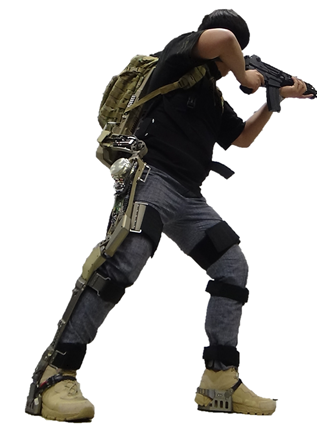
[Asia Economy Yang Nak-gyu, Military Specialist Reporter] Since its establishment in 1970, the Agency for Defense Development (hereinafter ADD), which has focused on the development of weapon systems and core technologies for 51 years, has recently responded to the government's demand to increase the mutual utilization of civilian and military technologies by actively promoting technology transfer to the civilian sector and commercialization of civilian products to maximize value by spreading scientific and technological achievements obtained during research and development processes such as patents and technologies in the defense field into social and economic outcomes. In particular, to support the entire cycle from discovering promising defense technologies for civilian use to supporting commercialization through technology transfer, ADD is establishing a full-cycle support system for defense technology transfer and civilian commercialization, and since 2020, it has secured related budgets and is actively promoting the "Defense Technology Transfer Commercialization Support Project (tentative name)" through pilot projects. In line with this trend, ADD introduces defense patent technologies that can be transferred to the civilian sector through military expert columns.
▲ Research and Development Trends of Military Wearable Robots= Wearable robots are robotic systems that recognize the wearer’s movement intentions based on the wearer’s biosignals and control motors to provide additional assistive force to the wearer. These robots are being researched and developed to enhance human motor abilities and maximize the combat power of individual soldiers. Starting with the first wearable robot Hardiman developed by General Electric (GE) in the United States in 1965, research on lower-limb wearable robots began in earnest in the early 2000s, centered on universities in Japan and the United States.
Early wearable robots were developed in the form of exoskeletons that assist the entire lower limbs of the wearer and enable carrying heavy loads. In the early 2000s, the University of California (U.C. Berkeley), supported by research funds from the Defense Advanced Research Projects Agency (DARPA) under the U.S. Department of Defense, developed the full lower-limb wearable robot BLEEX, and Lockheed Martin acquired the technology and introduced the full lower-limb wearable robot HULC. Although HULC was evaluated to have excellent vertical load-bearing capacity, it failed to be militarized due to poor agility.
Subsequently, Lockheed Martin introduced the modular wearable robot ONYX, which is attached to some joints (knee joints) instead of the entire lower limbs to improve agility, and it is currently undergoing combat experiments for militarization. Recently, research has focused on improving wearability by developing wearable robots that remove exoskeletons and use flexible materials.
▲ Ergonomic Knee Joint Design Technology for Lower-Limb Wearable Robots= The essence of wearable robots is wearability. Since the human body structure is very delicate and complex, even slight restrictions in movement cause significant discomfort to the wearer. Especially in the case of full lower-limb wearable robots, which are designed with a rigid exoskeleton surrounding the entire lower limbs, the sense of unity between the wearer and the wearable robot is very important.
Ergonomic knee joint design technology reflects the characteristics of the human body where the rotation center changes according to the knee angle, as shown in the figure below, minimizing the mismatch of the knee joint rotation axis between the wearer and the wearable robot to provide a natural wearing sensation. This minimizes interference caused by the exoskeleton to the wearer and allows the assistive force generated by the actuator to be fully transmitted to the wearer. Additionally, it can provide constant power with a fixed gear ratio regardless of knee joint movement, and it has the effect of reducing the weight of the wearable robot and lowering the inertia of the lower-limb exoskeleton. This technology can be applied to the design of military wearable exoskeleton robots and to lower-limb exoskeleton-type wearable robots for industrial workers and rehabilitation patients in the civilian sector.
▲ Current Status of Military Wearable Robots in South Korea= The Agency for Defense Development (ADD) has been conducting research and development on military wearable robots since 2011, actively engaging in core technology R&D projects and civilian-military technology cooperation projects with academia and industry, including rugged terrain-adaptive lower-limb strength augmentation robots, multi-mission wearable strength augmentation robot technology, interoperable modular strength-assist exosuit technology, and high-speed synchronization control technology based on complex signals between human and machine.
Currently, ADD is developing full upper and lower limb systems for carrying and loading heavy objects, modular knee joint systems for high-speed mobility, and upper limb assist devices for mine detectors. The wearable robot technologies possessed by ADD, such as ergonomic knee joint design technology and human-robot interaction control technology for improved wearability, are expected to be utilized not only in the defense sector but also in various civilian fields such as medical and industrial sectors.
▲ The Future of Wearable Robot Technology= With increases in carried load and operational distance, wearable robots are expected to become an essential platform for maximizing the combat power of individual soldiers in future battlefield environments, and continuous research and development of core wearable robot technologies will be necessary. Based on the wearable robot technologies acquired through previous projects, ADD is promoting specialized wearable robot solutions tailored to mission types considering the mission characteristics of combatants. Furthermore, unlike civilian wearable robots operated in structured environments such as indoors and flat terrain, ADD aims to specialize and develop military wearable robots considering mountainous terrain and battlefield environments.
© The Asia Business Daily(www.asiae.co.kr). All rights reserved.
![Clutching a Stolen Dior Bag, Saying "I Hate Being Poor but Real"... The Grotesque Con of a "Human Knockoff" [Slate]](https://cwcontent.asiae.co.kr/asiaresize/183/2026021902243444107_1771435474.jpg)
















