GDP 24.93 Trillion Yuan... Highest Since Quarterly Records Began in 1992 Due to Base Effects
Annual Growth of 8-9% Possible if COVID-19 Controls Continue
[Asia Economy Beijing=Special Correspondent Jo Young-shin] China’s economy is returning to normal after the shock of COVID-19, with the first quarter economic growth rate rising 18.3% year-on-year.
On the 16th, the National Bureau of Statistics of China announced that the first quarter gross domestic product (GDP) reached 24.9311 trillion yuan (approximately 4300 trillion KRW). Accordingly, China’s economic growth rate increased by 18.3% compared to the previous year. This is the highest level since quarterly GDP data began to be compiled in 1992. In January last year, when COVID-19 broke out, China’s economy experienced an unprecedented negative growth of minus 6.8% in the first quarter.
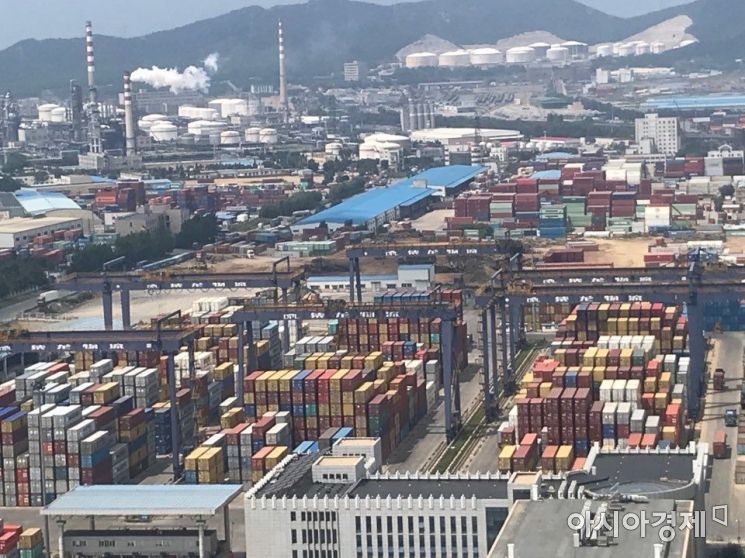
Before the announcement of China’s GDP, major Chinese economic institutions expressed expectations that GDP would grow between 16% and 22% year-on-year, supported by the base effect. Even considering the base effect, the 18.3% growth is regarded as a rapid recovery.
◇ China’s economy back on a normal track = China’s economy showed signs of recovery from the second quarter of last year. After recording minus 6.8% in the first quarter of last year, it immediately grew 3.2% in the second quarter, achieving a ‘V-shaped’ rebound. It then recorded 4.9% in the third quarter and 6.5% in the fourth quarter. On an annual basis, China’s economy grew 2.3%, making it the only major country in the world to achieve positive growth.
Major Chinese institutions expect China’s economic growth rate to decline after the second quarter as the base effect diminishes. However, since the economy is back on track, they forecast annual growth of 8-9%, far exceeding the government’s target of ‘over 6%’.
The International Monetary Fund (IMF) recently projected in its ‘World Economic Outlook’ report that China will grow 8.4% this year and 5.6% next year, following 2.3% growth last year.
◇ Anticipated growth of China’s economy = The forecast that China’s economy would grow in the high teens in the first quarter was detected in various indicators before the GDP announcement. China’s General Administration of Customs reported that first quarter exports increased 49% year-on-year to 709.98 billion USD. Imports rose 28.0% year-on-year to 593.62 billion USD. This indicates that production, including manufacturing, is operating normally.
In fact, China’s manufacturing Purchasing Managers’ Index (PMI) rose 1.3 points from the previous month to 51.9 last month, showing an expansion phase in the economy. The non-manufacturing PMI also surged 4.9 points from the previous month to 56.3. Retail sales, which gauge the vitality of the domestic market including consumption, are also on the rise. Retail sales from the beginning of this year through February increased 33.8% year-on-year to 6.9737 trillion yuan.
Strategic usage data that reflects China’s manufacturing situation also hinted at China’s economic growth rate. China’s electricity consumption in the first quarter increased 21.1% year-on-year, and electricity consumption in the secondary industry rose 24.1% year-on-year. The increase in industrial electricity consumption means that China’s manufacturing is operating normally.
◇ Expectations for China’s annual growth of over 8% this year = As various indicators improve, the Chinese business community expects this year’s economic growth to exceed the government’s target of ‘over 6%’. If issues such as further spread of COVID-19 and other infectious diseases are controlled, the dominant forecast is for 8-9% annual growth. Since April 1, the start of the second quarter, the number of people traveling for the Qingming Festival exceeded 100 million, energizing the domestic market. During the five-day Labor Day holiday starting May 1, more than 200 million Chinese are expected to travel.
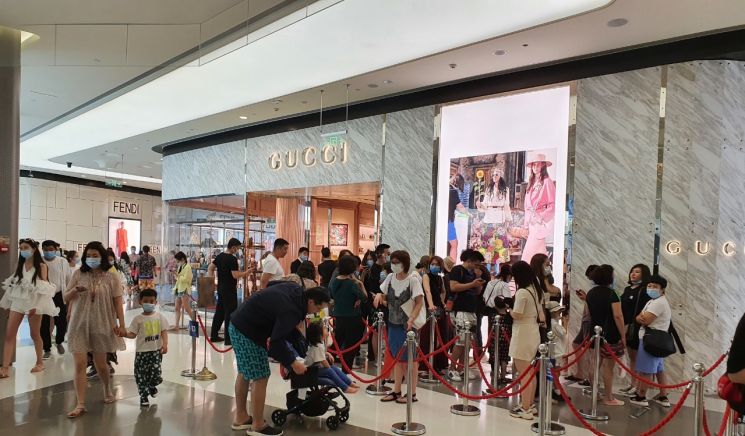 During the Qingming Festival holiday period in China, the number of travelers exceeded 100 million, indicating a significant improvement in Chinese consumers' sentiment this year. Chinese visitors to Hainan Island, known as the Hawaii of China, are shopping at duty-free stores.
The Global Times reported that airline tickets to major tourist destinations were sold out during the Labor Day holiday. The media added that demand for hotel and rental car reservations surged, driving prices up. It also noted that crowds will concentrate in major tourist spots such as Beijing, Shanghai, Guangzhou, and Hainan. Optimistic forecasts suggest that if manufacturing production supports sufficient consumption, growth will surpass the 2019 level before COVID-19.
© The Asia Business Daily(www.asiae.co.kr). All rights reserved.


















