Cosmetics Company Heoniseuteu Focuses on Exports... Market Expansion with Export Voucher Support from KOSMES
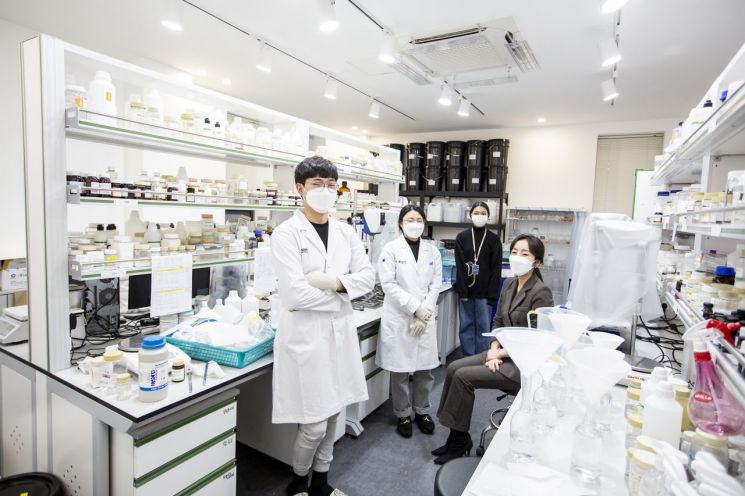
In the global cosmetics market, a South Korean startup is gaining attention based on its unique technological capabilities. Honeyst is emerging as one of the key players leading the 'K-Beauty' boom by choosing to target overseas markets.
According to Honeyst on the 20th, the company's export performance last year reached $3.719 million, a 67% surge compared to the previous year ($2.226 million). Honeyst explained that it is achieving results by earning more than 80% of its total sales from overseas.
Since its founding in 2016, Honeyst has pursued a strategy focused on exports rather than the domestic market. Starting with the Philippines, it has developed and sold over 50 products under 13 brands in six countries including Russia, Canada, the United States, and Japan. There are proprietary brand products such as 'Ceracos' as well as overseas brand products manufactured through an Original Design Manufacturer (ODM) method.
The background behind Honeyst's success includes independent technological capabilities based on core new materials and rapid strategic changes anticipating market shifts. A representative example is the development of 'Nim Tree' leaf extract at the company-affiliated research institute, for which a patent application was filed. Nim Tree leaf extract is excellent for protecting skin from fine dust and can be applied to various products. Honeyst chose an international patent (PCT) that allows a single patent application to be filed in multiple countries, enabling legal protection of this core new material since last year.
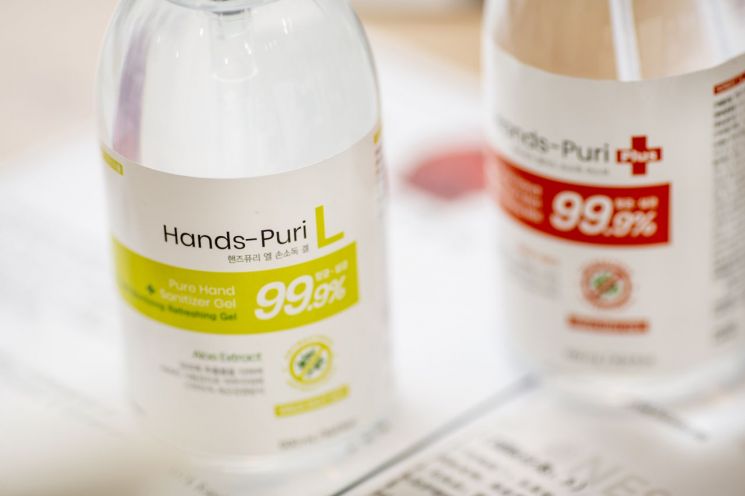
After cosmetic exports sharply declined following the spread of COVID-19 last year, Honeyst sought a new path in quasi-drugs. Hand sanitizers, the vanguard of 'K-Quarantine,' were the first item. Since the formulation is similar to cosmetics, products could be developed quickly, but the challenge was obtaining the certifications required for export. Honeyst first obtained the 'DUNS Number,' which is widely used as an international business registration number, and then in June acquired U.S. Food and Drug Administration (FDA) Over-The-Counter (OTC) approvals for a total of 13 products including its own hand sanitizer brand 'Hands Puree,' and Ceracos functional shampoos and tonics. These products achieved sales of over 3 million units, compensating for the decline in cosmetic sales caused by COVID-19.
During processes such as international patent applications and export certifications, Honeyst received support from the Small and Medium Business Corporation's 'Export Voucher Program.' This is a support project that allows companies to freely select and use services and executing agencies related to exports by utilizing vouchers. Honeyst is also using export vouchers for necessary permits and certifications for exports, as well as for promotion to widely publicize the company and its brands. The company is preparing to enter the Chinese market with the premium baby cosmetics brand 'Mon Cher B?b?,' scheduled to launch in the first half of this year, and the first step of registering English and Chinese trademarks was also carried out using the export voucher, creating a foothold for exports.
Kim Hyun-jung, head of Honeyst's company-affiliated research institute, said, "Without the export voucher, much more manpower and costs would have been consumed in verifying export-related matters one by one," adding, "Since recognized executing agencies are gathered in one place, it is the best export support project for startups with limited resources."
© The Asia Business Daily(www.asiae.co.kr). All rights reserved.


















