Business Restructuring Focused on Corporate Finance
Large-Scale Workforce and Branch Restructuring May Follow
Possibility of Entering Retail Finance Market
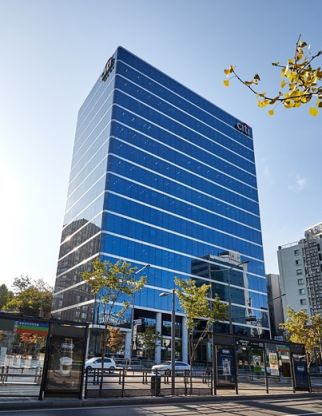
[Asia Economy Reporter Kim Hyojin] Citibank Korea has decided to exit its retail banking business targeting individual customers. This comes 17 years after Citigroup acquired Hanmi Bank and rebranded it as Citibank Korea. The withdrawal from the retail business, which accounts for about half of its revenue, is expected to trigger significant aftershocks such as large-scale workforce and branch restructuring.
According to banking circles on the 16th, Citigroup announced a business strategy including the withdrawal of Citibank Korea's domestic retail banking during its Q1 earnings announcement the day before. The plan is to continue operations in corporate banking and investment banking (IB) sectors while winding down consumer finance such as credit cards and mortgage loans.
Citibank Korea will proceed with the exit process after discussions with financial authorities once specific follow-up plans are prepared. This is expected to make an overall restructuring of Citibank Korea inevitable.
As of last year, Citibank Korea employs 3,494 people, including 194 temporary workers. It operates 43 branches in total. Among these, about 900 employees work in retail banking, and there are 36 retail banking branches. It is estimated that retail banking accounts for about half of Citibank Korea's revenue.
Citigroup's decision has once again brought up the case of HSBC Korea Bank, which exited domestic retail banking in 2013. At that time, HSBC Korea Bank closed all branches except the Seoul branch, which served as the domestic headquarters, and laid off more than 90% of its retail banking staff through voluntary retirement.
A banking industry insider said, "The restructuring could be carried out at a considerable scale," adding, "The key to the scale of restructuring will be how much of the retail banking workforce and assets can be absorbed into corporate banking and other sectors."
There is also speculation that Citibank Korea's retail banking division might be put up for sale in the financial M&A market. This is based on the expectation that it can maintain competitiveness through strengths in the wealth management (WM) sector targeting high-net-worth individuals. Some also see that regional financial holding companies might show interest in order to step up as commercial banks.
Citibank Korea's exit from retail banking is closely related to deteriorating performance due to the impact of COVID-19 and other factors. Last year, Citibank Korea's net profit was 187.8 billion KRW, down about 33% from the previous year, and total revenue decreased by about 8% to 1.2271 trillion KRW. There is also analysis that increasingly stringent domestic regulatory environments have had an impact.
Financial Authorities: "Considering Measures to Minimize Consumer Inconvenience"
The specific schedule for business withdrawal and reorganization has not yet been decided. A Citibank Korea official said, "We plan to take sufficient time with the board of directors to review and establish the best plan for both customers and employees." Existing services for consumers will be maintained until the final plan is confirmed.
Financial authorities plan to review necessary measures to minimize consumer inconvenience, ensure employment stability, and protect customer data. A financial authority official explained, "It may take some time for Citigroup or Citibank Korea's roadmap to be concretized," adding, "Appropriate detailed measures will be derived accordingly."
© The Asia Business Daily(www.asiae.co.kr). All rights reserved.
![Clutching a Stolen Dior Bag, Saying "I Hate Being Poor but Real"... The Grotesque Con of a "Human Knockoff" [Slate]](https://cwcontent.asiae.co.kr/asiaresize/183/2026021902243444107_1771435474.jpg)
















