Assemblyman Kim Byung-wook Proposes Amendment to Insurance Business Act
Legal Basis for Outsourcing to Professional Intermediaries and Prohibition of Medical Information Use
"Non-covered Service Status Assessment" to Address Medical Community Opposition
[Asia Economy Reporter Oh Hyung-gil] The insurance industry is expressing optimism as the revision of the Insurance Business Act related to the 'digitization of claims for indemnity health insurance,' which was stalled at the National Assembly last year, appears to be gaining momentum.
With both the government and ruling and opposition parties showing a positive attitude toward the legislative amendment, it is seen as a golden opportunity. However, how to persuade the still strong opposition from the medical community remains a variable.
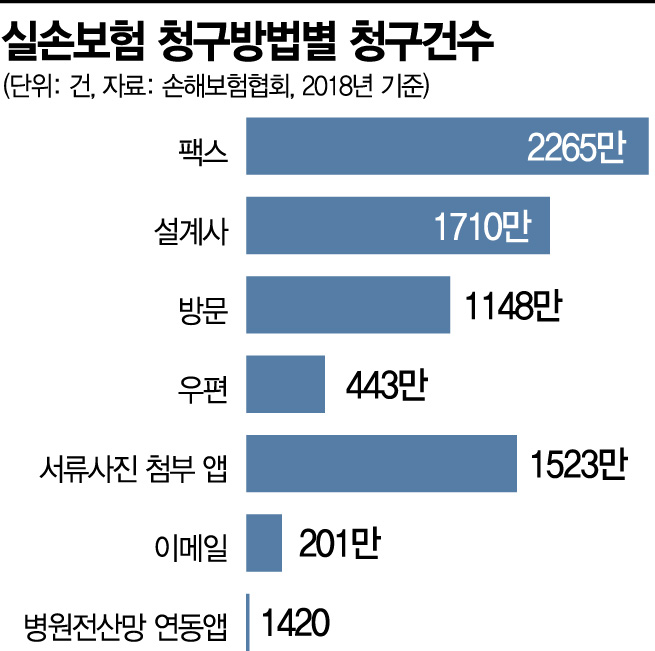
According to the insurance industry on the 15th, Kim Byung-wook, the ruling party's secretary of the Political Affairs Committee and a member of the Democratic Party of Korea, officially proposed the 'Partial Amendment to the Insurance Business Act' on the 12th. The core of the bill is to entrust medical institutions with submitting supporting documents necessary for insurance claims, such as medical bills, to a specialized intermediary agency, which then electronically transmits them.
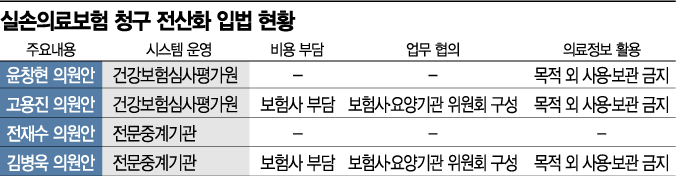
This is the fourth time in the 21st National Assembly that such a bill has been proposed, following similar bills introduced last year by lawmakers Yoon Chang-hyun, Ko Yong-jin, and Jeon Jae-soo.
The key point of these bills is to replace the current method where indemnity insurance subscribers receive their receipts from medical institutions and send them to insurance companies, with a system where the medical institution electronically transmits the documents directly to the insurer upon request. The bill was deferred last December during discussions at the National Assembly's Political Affairs Committee's subcommittee due to opposition from some lawmakers.
The current amendment also includes legal grounds to allow the outsourcing of tasks related to the establishment and operation of the electronic system to specialized intermediary agencies. This is intended to alleviate concerns from the medical community that if the electronic system is operated by the Health Insurance Review and Assessment Service, it could access medical information and identify the status of non-reimbursable services at medical institutions.
Additionally, the bill includes provisions to prevent specialized intermediary agencies from using or storing information for purposes other than document transmission. A committee involving insurers and medical institutions will be formed to discuss matters related to the operations of the specialized intermediary agencies.
This is explained as an effort to reflect the medical community's opposition or opinions as much as possible within the broader framework of digitization. Lawmakers from both ruling and opposition parties who proposed the amendment plan to hold a forum next month with participation from the insurance and medical sectors to seek consensus, which is expected to accelerate the bill's passage.
A related amendment to the Medical Service Act has also been proposed, allowing patients to request the transmission of their medical information to third parties if they wish. Recently, Kim Mi-ae of the People Power Party proposed an amendment stipulating that if a patient has received or will receive treatment at a specific medical institution for a certain period, they can request the transmission of their medical records to a third party designated by the patient through a medical record transmission support system.
The medical community has pointed out that the Insurance Business Act amendment conflicts with the existing Medical Service Act, arguing that "if problems arise from transmitting patient information to third parties, medical institutions could become embroiled in legal disputes."
An insurance industry official said, "The proposed amendments contain similar but slightly different contents, but a consensus will be reached during the legislative review process," adding, "The longer the bill's passage is delayed, the more consumer inconvenience continues, so we hope the bill will be passed promptly."
© The Asia Business Daily(www.asiae.co.kr). All rights reserved.
![Clutching a Stolen Dior Bag, Saying "I Hate Being Poor but Real"... The Grotesque Con of a "Human Knockoff" [Slate]](https://cwcontent.asiae.co.kr/asiaresize/183/2026021902243444107_1771435474.jpg)

















