Japanese Government to Decide 'Basic Policy on Treated Water Disposal' on 13th
Plan to Release Contaminated Water Over 30-40 Years Starting 2023
"Will Affect Lives of Neighboring Countries," Unanimous Condemnation from Both Ruling and Opposition Parties
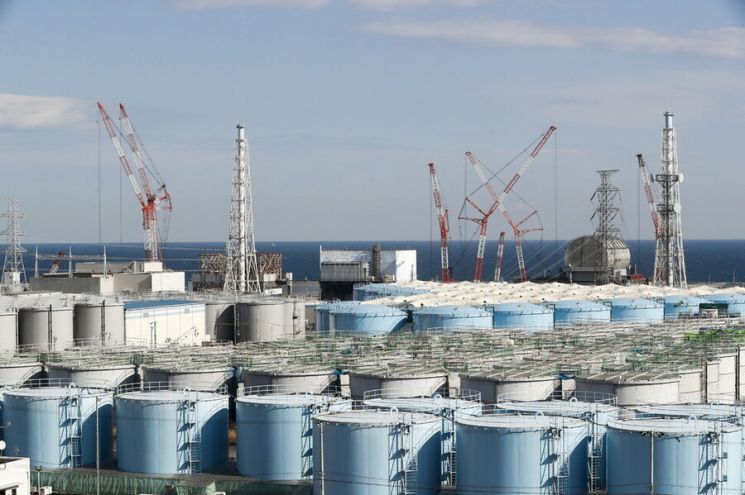 Radioactively contaminated water stored in tanks on the site of the Fukushima Daiichi Nuclear Power Plant in Japan. / Photo by Yonhap News
[Asia Economy Reporter Lim Juhyung] As the Japanese government has decided to discharge contaminated water from the Fukushima Daiichi Nuclear Power Plant into the ocean, the political circles have united in condemnation and called for its immediate withdrawal.
Choi Ji-eun, the international spokesperson for the Democratic Party of Korea, issued a statement on the 13th, saying, "It is shameless and selfish for the Japanese government to unilaterally decide to release treated water from Tokyo Electric Power Company's Fukushima Daiichi Nuclear Power Plant into the ocean," and criticized, "The discharge of contaminated water into the ocean could affect not only the Japanese people but also the lives and safety of neighboring countries."
She added, "The Japanese government must immediately cancel the decision to discharge contaminated water into the ocean," and emphasized, "The Democratic Party will take all necessary measures prioritizing the safety of our people."
Among the next party leadership candidates, voices condemning the Japanese government's decision also emerged. Woo Won-shik, a Democratic Party lawmaker, posted on Facebook, "By discharging as much as 1.37 million tons of radioactive contaminated water into the ocean, it could cause enormous economic damage to us as well," and pointed out, "The Japanese government's decision, which violates the obligation to protect and preserve the marine environment and the obligation to conduct environmental impact assessments, is a clear violation of international law."
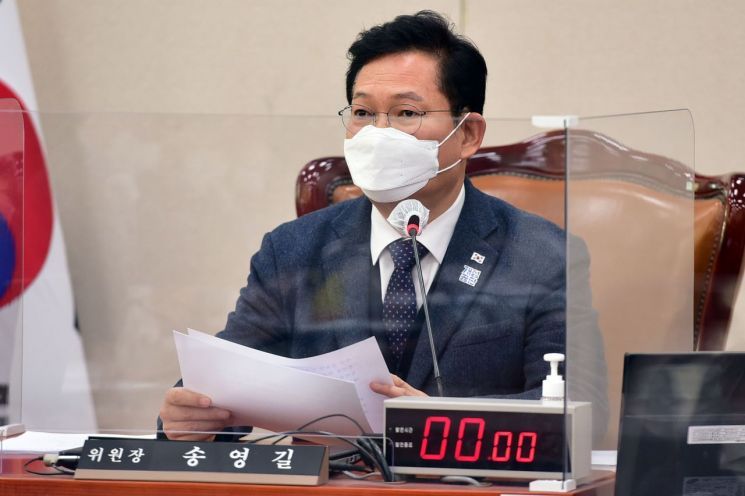
Song Young-gil also strongly criticized in a Facebook post on the same day, saying, "Japan's decision is extreme selfishness," and "It is an unforgivable crime against all humanity."
The People Power Party also called for countermeasures on the 14th, describing the Fukushima nuclear contaminated water discharge as a "matter directly related to national safety."
Joo Ho-young, acting leader of the People Power Party, said at a senior lawmakers' joint meeting held at the National Assembly that day, "Both the Japanese government's decision to discharge nuclear contaminated water and its attitude are unacceptable. We will convene a standing committee to scrutinize the government's response and devise countermeasures at the parliamentary level," and criticized, "It is infuriating how our government has handled this issue directly related to the safety of our people so far without concrete efforts."
Regarding the Japanese government's attitude after deciding to discharge nuclear contaminated water, he criticized, "They should first apologize and seek understanding for the expected damage to neighboring countries. This is a case of audacity beyond limits."
He added, "The People Power Party already conveyed the public's concerns about the Fukushima contaminated water issue through the Japanese ambassador to Korea in October last year, and received a response from the ambassador that it would be resolved through dialogue with neighboring countries," and said, "The Japanese government's decision and attitude this time are also unacceptable."
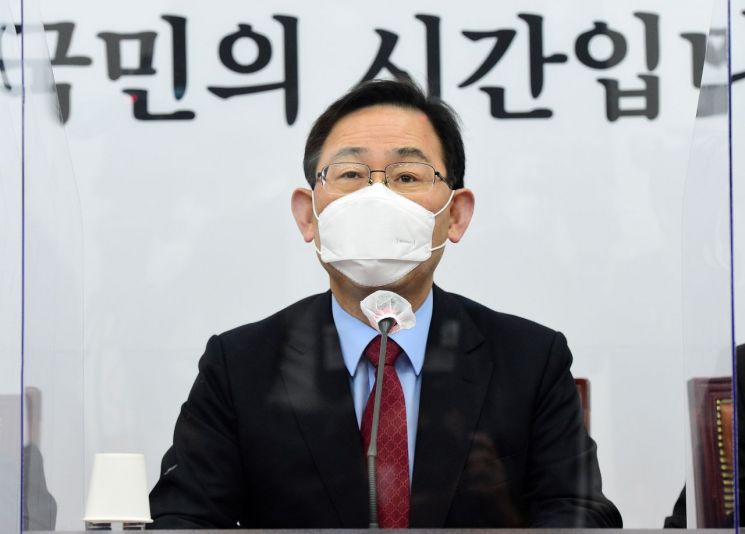 Joo Ho-young, Acting Leader of the People Power Party, is speaking at the joint meeting of the Acting Party Leader and senior lawmakers held at the National Assembly on the 14th. / Photo by Yonhap News
Meanwhile, according to the Japanese broadcaster NHK on the 13th (local time), the Japanese government held a cabinet meeting that morning and decided on the "Basic Policy on the Disposal of Treated Water," which includes discharging nuclear contaminated water into the ocean.
According to Tokyo Electric Power Company, as of the 18th of last month, the contaminated water stored in tanks at the Fukushima Daiichi Nuclear Power Plant amounts to a total of 1,220,844 tons. The Japanese government plans to begin discharging the contaminated water starting in 2023, two years from now, and complete the ocean discharge over approximately 30 to 40 years.
The government strongly opposed this plan. Koo Yoon-chul, Director of the Office for Government Policy Coordination, said at an emergency briefing held at the Seoul Government Complex that day, "We will strongly demand that the Japanese government include specific measures to ensure the safety of our people and prevent damage to the marine environment," and "We plan to convey our concerns to the International Atomic Energy Agency (IAEA) and the international community and request international verification."
He emphasized, "We will closely predict and analyze the domestic impact of the Fukushima nuclear contaminated water ocean discharge and strongly enforce origin control of imported seafood, including Japanese seafood."
© The Asia Business Daily(www.asiae.co.kr). All rights reserved.
![Clutching a Stolen Dior Bag, Saying "I Hate Being Poor but Real"... The Grotesque Con of a "Human Knockoff" [Slate]](https://cwcontent.asiae.co.kr/asiaresize/183/2026021902243444107_1771435474.jpg)


















