'Coarse and Quickly Filtered Alcohol' Believed to Have Existed Since the Agricultural Era
Popularized as Brewery Makgeolli Following the Liquor Tax Law... Trend of Reviving Traditional Home-Brewed Liquor Production
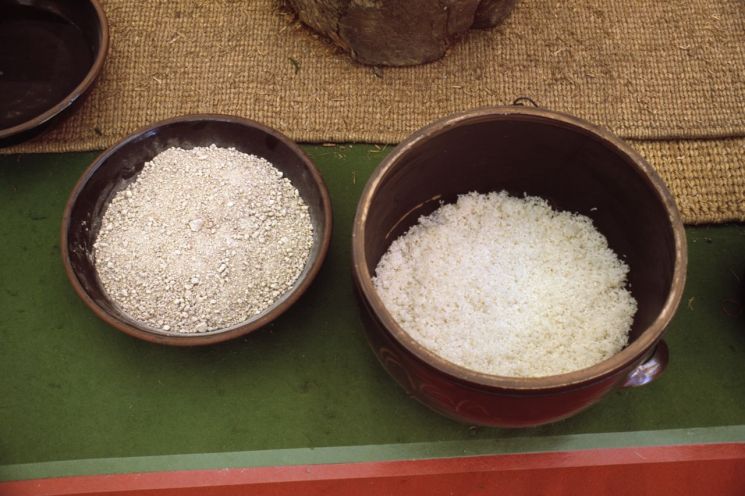
Makgeolli, which has existed since the agricultural period, is now managed at the national level. On the 13th, the Cultural Heritage Administration announced its intention to designate the 'Makgeolli Brewing Culture' as a National Intangible Cultural Heritage. This includes not only the brewing process but also related livelihoods, rituals, and traditional customs. Opinions from various sectors will be collected until the 12th of next month, and the designation will be decided after review by the Intangible Cultural Heritage Committee.
Makgeolli is believed to have existed even during the agricultural period because it is brewed from grains such as non-glutinous rice, glutinous rice, and barley. Related content is also recorded in historical texts such as the "Samguk Sagi," "Samguk Yusa," "Mion," "Jiju," and "Ryoe." During the Goryeo Dynasty, Yi Gyubo referred to makgeolli as "baekju (white liquor)" in the "Dongguk Isanggukjip." Korean script spellings like "mokgeolli" and "makgeolni" can be found in Joseon Dynasty works such as "Chunhyangjeon" and "Gwangjaemulbo." Brewing methods are also documented in cookbooks like "Gyuhap Chongseo" and "Eumsik Dimibang."
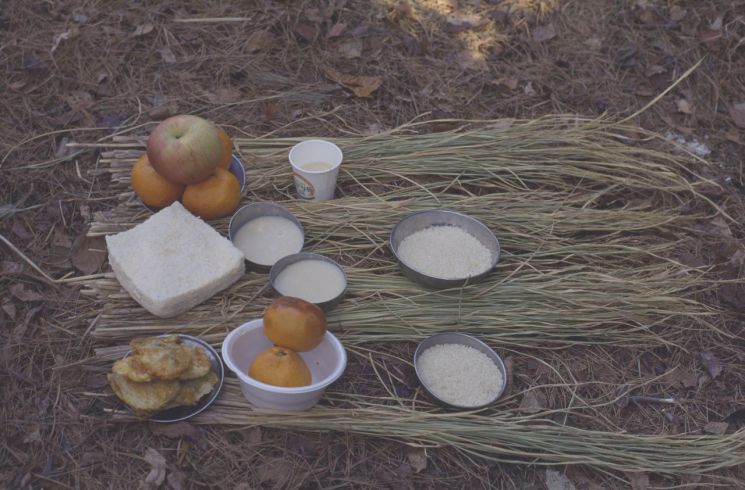 Jeongsan Table Setting for Namhaean Byeolsingut Ritual in Susan Village, Dongbu-myeon, Geoje-si, Gyeongnam
Rice makgeolli is made by adding nuruk (fermentation starter) and water to steamed rice (godu-bap, which is steamed rice cooked to a firm texture) and fermenting it for several days before straining. The word "mak" in makgeolli means "roughly" or "quickly," and "geolli" means "to strain." Thus, it refers to "roughly and quickly strained liquor." It is a pure Korean word that reveals the brewing method and characteristics in its name.
Makgeolli is not difficult to make. Its affordability has made it a drink that consoles the hardships of common people. Especially for farmers, it was recognized as a farm liquor (nongju) that relieved sweat and thirst during busy farming seasons. It was indispensable in village community livelihoods, rituals, and celebrations. Even today, it is offered as a sacred drink (sinju) at completion ceremonies, car rituals, and opening ceremonies.
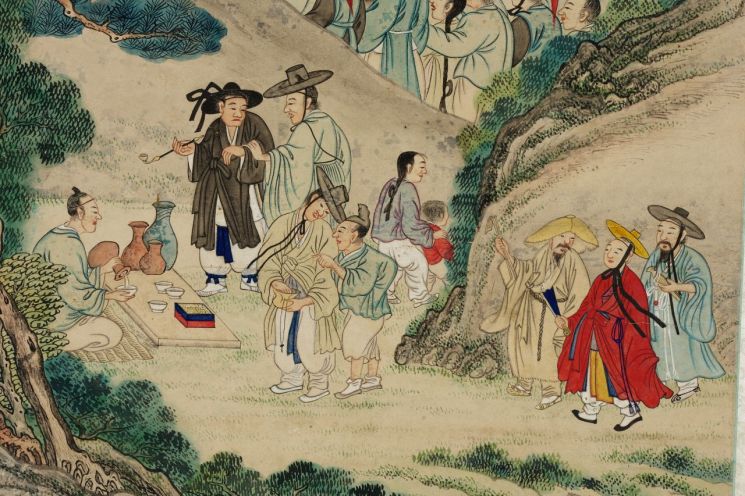
Until the Joseon Dynasty, makgeolli was a fermented food made directly at home. Due to national policies such as those by Juse Ryeong (1916), it became common to consume makgeolli from breweries instead of homemade liquor. However, many households still maintain their unique flavors. Home brewing has been increasing again since 1995, when home production of liquor for personal consumption was reauthorized.
The Cultural Heritage Administration sees sufficient intangible cultural heritage value in six major aspects: ▲Long history and transmission/enjoyment throughout the Korean Peninsula ▲Brewing methods confirmed in ancient texts from the Three Kingdoms period ▲Academic research materials in food nutrition, folklore, and history ▲Expansion into various cultures such as farming songs, proverbs, and literary works ▲Distinctive characteristics formed around breweries nationwide ▲Transmission and maintenance of brewing methods through diverse transmission communities.
Since the entire nation transmits and enjoys it, no specific holder or holder group was recognized. An official explained, "This is the first case of designation announced after a proposal was made by the public through 'Finding Hidden Intangible Heritage' and the 'National Petition to the People's Suggestion Box.'"
© The Asia Business Daily(www.asiae.co.kr). All rights reserved.



















