Ministry of Oceans and Fisheries Focuses on Monitoring Polluted Water Inflow and Ensuring Seafood Safety
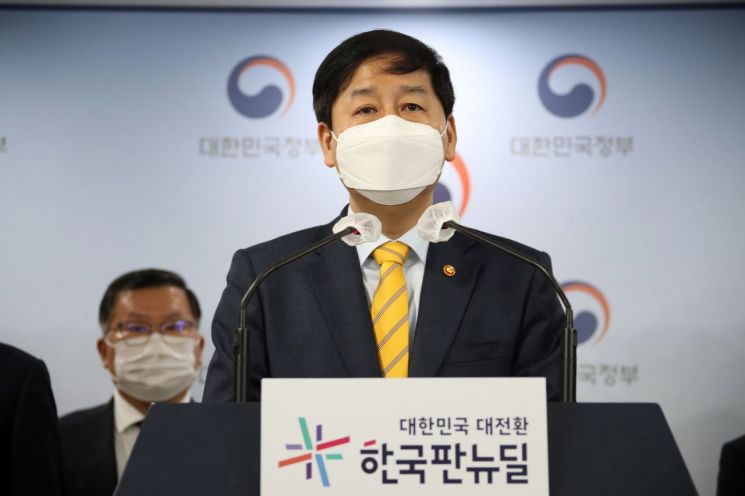
[Sejong=Asia Economy Reporter Kwon Haeyoung] Regarding the Japanese government's decision to discharge contaminated water from the Fukushima nuclear power plant into the ocean, the government announced that it will strengthen monitoring of radioactive substances and other contaminants entering the waters and focus on ensuring the safety management of seafood. In particular, radiation inspections will be intensified for seafood produced in waters where contaminated water inflow is possible, and distribution tracking and origin control of imported Japanese seafood will be reinforced.
The Ministry of Oceans and Fisheries announced these countermeasures on the 13th.
First, a dense monitoring network for radioactive substances will be established along the entire national coastal waters to closely monitor the inflow of radioactive materials such as tritium and cesium from nuclear power plant contaminated water into domestic waters. Last year, the Ministry expanded the number of harbor survey points by adding 7 locations, bringing the total to 39. This year, the annual survey frequency at 13 key points in the East Sea, South Sea, and Jeju will be increased from 4 to 6 times to proactively investigate changes in our marine environment before and after the ocean discharge.
Additionally, radiation inspections on ship ballast water will continue, and ships calling at Japanese ports within the contaminated water influence zone will be subject to focused management. Currently, the Ministry is inspecting radiation levels in ballast water of all ships entering Korea that have taken on ballast water in Fukushima Prefecture, the nuclear accident area, and neighboring Miyagi Prefecture. They also plan to advance predictions regarding whether radioactive substances from nuclear contaminated water enter domestic waters, the timing of such inflow, and concentration levels.
A Ministry of Oceans and Fisheries official stated, "If the ocean discharge actually occurs, we will urge domestic and foreign ships to refrain from calling at 17 ports across 6 prefectures including Fukushima Prefecture as much as possible," adding, "In unavoidable cases, detailed measures will be implemented requiring ships to exchange ballast water outside the territorial waters of Korea before entering."
Furthermore, cooperation with related agencies such as the Ministry of Food and Drug Safety, the Korea Coast Guard, and local governments will be strengthened to ensure seafood safety. For domestically produced seafood, radiation inspections will be conducted more thoroughly on about 40 species including mackerel pike and seaweed, following the recently enhanced inspection methods of the Ministry of Food and Drug Safety. Radiation inspections will also be expanded for seafood produced in waters where contaminated water inflow is possible and for seafood from distant waters.
In addition, distribution tracking and origin control of imported seafood, including Japanese products, will be strengthened. Especially, items with a history of origin violations and seafood with high consumer sensitivity will be designated as key items. Year-round focused inspections will be conducted targeting importers, distributors, and retailers including restaurants handling Japanese imported seafood, and strict penalties will be imposed for violations.
© The Asia Business Daily(www.asiae.co.kr). All rights reserved.
![Clutching a Stolen Dior Bag, Saying "I Hate Being Poor but Real"... The Grotesque Con of a "Human Knockoff" [Slate]](https://cwcontent.asiae.co.kr/asiaresize/183/2026021902243444107_1771435474.jpg)
















