Reducing Biden's Veto Burden
Increasing Competition for Leadership in the Electric Vehicle Battery Market
[Asia Economy Reporter Choi Dae-yeol] The battery dispute between LG Energy Solution and SK Innovation, which arose over trade secret infringement, was temporarily resolved on the 10th (local time) through an agreement between the two companies. It has been two years since LG filed a lawsuit against SK with the U.S. International Trade Commission (ITC) and local courts in April 2019, and three and a half years since conflicts such as employee poaching surfaced. Given that many expected it would be difficult to bridge the gap due to prolonged legal battles and public opinion wars, this agreement is considered dramatic. We examined the background behind the sudden agreement made just one day before the presidential veto deadline.
① White House and U.S. Political Interests Align
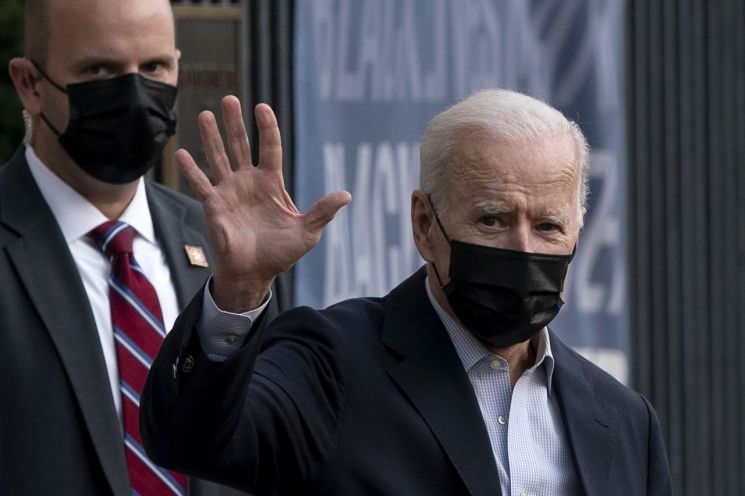
Bloomberg reported the agreement between the two companies, stating that "U.S. President Joe Biden ensured that choices damaging intellectual property rights or negatively impacting (the president's) climate agenda were avoided." For President Biden, local factories of Korean battery companies were essential to expand electric vehicle adoption in the U.S. Since taking office, Biden has clearly emphasized active responses to climate issues, spearheading the Green New Deal. He has also directly overseen key industrial sectors, including semiconductors and electric vehicle battery supply chains, approaching them from a security perspective.
SK had just completed its factory in Georgia, U.S., and announced plans for additional plants, making it practically difficult for President Biden to exercise a veto in favor of SK. There has never been a case where a U.S. president exercised a veto due to trade secret infringement. Former President Obama vetoed a case involving Apple's patent infringement against Samsung, but this was interpreted by the industry as a measure reflecting the special status of a domestic company. A veto would dampen the trend of protecting intellectual property rights. Given the potential for trade disputes with China to arise at any time, the U.S. government was in a position where it was difficult to exercise a veto against the ITC decision to maintain grounds for future actions.
Brian Kemp, governor of Georgia where SK's factory is located, had repeatedly requested the exercise of a veto. If SK were unable to operate its U.S. business and had to close the factory, 6,000 jobs could be lost at once. One of Georgia's Democratic senators was facing re-election next year. The Georgia state legislature also urged the two companies to reach an agreement to expand local jobs and investments.
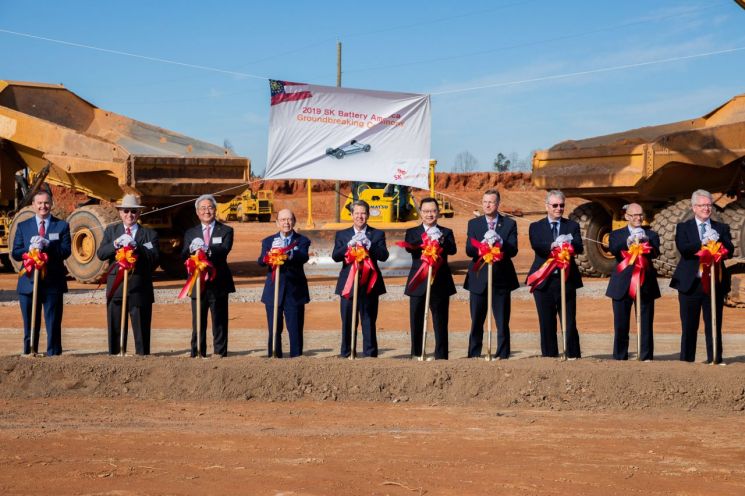 Groundbreaking ceremony of SK Innovation's Georgia plant held in March 2019. Kim Jun, President of SK Innovation (third from left), Brian Kemp, Governor of Georgia (fifth from left), Choi Jae-won, Senior Vice Chairman of SK, and others are posing for a commemorative photo. Currently, Plant 1 has been completed and is in operation, while Plant 2 is under construction.
 ② Rising Market Share of Chinese Companies and Accelerated In-House Production by Automakers
The intensifying global competition for leadership in the electric vehicle battery market also contributed to the two companies eventually joining hands. Deloitte projected that the global electric vehicle market would grow from 2.5 million units last year to 11.2 million units in 2025, and exceed 30 million units by 2030. Since electric vehicle batteries represent a new market unlike any before, how the early-stage market is captured is likely to be a crucial factor in gaining a competitive advantage over the coming decades.
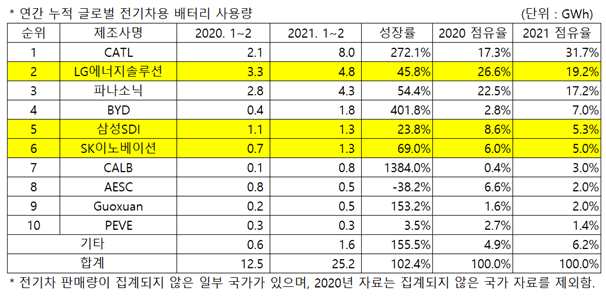
Recently, Chinese battery companies, backed by domestic sales expansion, had been gaining momentum. According to SNE Research's data on global electric vehicle battery usage from January to February this year, the combined market share of the three domestic battery companies (LG Energy Solution, Samsung SDI, SK Innovation) was 29.5%. This was a decline of over 11 percentage points from 41.2% during the same period last year, causing them to lose the top spot to China. The market share of Chinese battery companies surged from 22.1% to 43.7%.
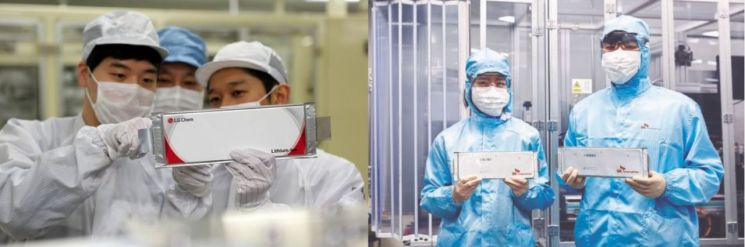
The move by major automakers to develop their own batteries was also seen as a motivating factor. Volkswagen, a major customer of LG and SK, declared in-house production by deciding to switch its main battery type to prismatic cells. Both LG and SK primarily focus on pouch-type batteries. Volkswagen, along with Tesla, is currently ranked as the top two global electric vehicle sellers.
Most major automakers, including Tesla, Toyota, Hyundai, and BMW, have announced plans to develop batteries in-house, creating a subtle tension with the battery industry. Unlike general industrial products, batteries are considered difficult to reverse engineer. It is not easy to replicate the manufacturing process by only having the finished product. However, since batteries account for a significant portion of electric vehicle costs and are directly linked to vehicle performance, automakers have long felt that relying solely on external procurement will not be sustainable.
③ Burden of Prolonged Litigation... Patent Battles Remain
In the short term, the nearly four years of disputes, including two years of overseas litigation and earlier conflicts such as employee poaching domestically, likely made the prolonged lawsuit burdensome. The companies have consecutively hired former officials as advisors and spent considerable amounts on law firms and lobbying agencies. According to data compiled by a local nonprofit organization, both companies spent hundreds of thousands of dollars on lobbying last year alone (SK $650,000, LG $530,000). This only accounts for disclosed amounts, and considering litigation costs and hiring of political figures, the actual expenses are estimated to be much higher.
Unlike trade secret infringement, SK may have gained the upper hand in patent lawsuits, possibly shifting the negotiation dynamics. The ITC mostly did not recognize LG's patents in the patent infringement lawsuit. Regarding the patent lawsuit filed by SK, the ITC has decided to proceed with the review as scheduled without accepting LG's requests.
© The Asia Business Daily(www.asiae.co.kr). All rights reserved.



















