Seoul Mayor Oh Se-hoon Elected... Expectations for Deregulation
Strong Regulations Needed for Attractive Public Development
Possible Exodus of Complexes if Deregulation Occurs
"Government Must Show Results... Incentives Need to Be Increased"
[Asia Economy Reporter Moon Jiwon] With Oh Se-hoon of the People Power Party inaugurated as the Mayor of Seoul, analysis suggests that the uncertainty surrounding government-led public redevelopment projects, including ambitious public reconstruction initiatives, has increased. Public-led projects require strong regulations on the private real estate market to have a reflexive appeal, but Mayor Oh is focusing on easing private regulations, contrary to the government's stance.
Concerns are rising that not only the public reconstruction and redevelopment projects, which recently selected pilot sites, but also the 'public direct implementation maintenance projects' and 'urban public housing complex development projects' proposed in the 2.4 Plan will struggle to gain momentum. Although the government promotes public-led methods as more advantageous to residents, major complexes, including those in Gangnam, are showing a stronger inclination toward private development.
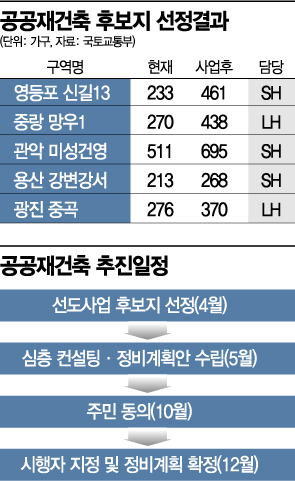
According to the government and real estate industry on the 8th, the Ministry of Land, Infrastructure and Transport selected five sites as the first candidates for public reconstruction: Shingil 13 District in Yeongdeungpo-gu (233 households), Mangwoo 1 District in Jungnang-gu (270 households), Miseong Geonyeong Apartment in Gwanak-gu (511 households), Gangbyeon Gangseo Mansion in Yongsan-gu (213 households), and Junggok Apartment in Gwangjin-gu (276 households).
The government announced in the August 4th Plan last year that it would supply 50,000 households through public reconstruction, and this is the first set of candidate sites.
However, many in the industry analyze that the outlook for public reconstruction, which has just taken its first step, is not bright. According to data released by the government, a total of 2,232 households will be supplied across the five candidate sites, but excluding the existing 1,503 households, only 729 new units will be added. Only small-scale complexes with 200 to 500 households participated, and even then, the project can only proceed in earnest if residents' consent rates are secured by October.
In particular, the absence of any Gangnam area complexes among the candidates highlights clear limitations. The only Gangnam site, Sinbanpo 19th Complex, reportedly gave up due to strong opposition from residents who prefer private reconstruction. Major reconstruction complexes such as Eunma Apartment in Gangnam-gu and Jamsil Jugong 5 Complex in Songpa-gu have already expressed their intention not to participate in public-led projects. Although it is still early with only the first candidate sites announced, the initial progress falls far short of expectations.
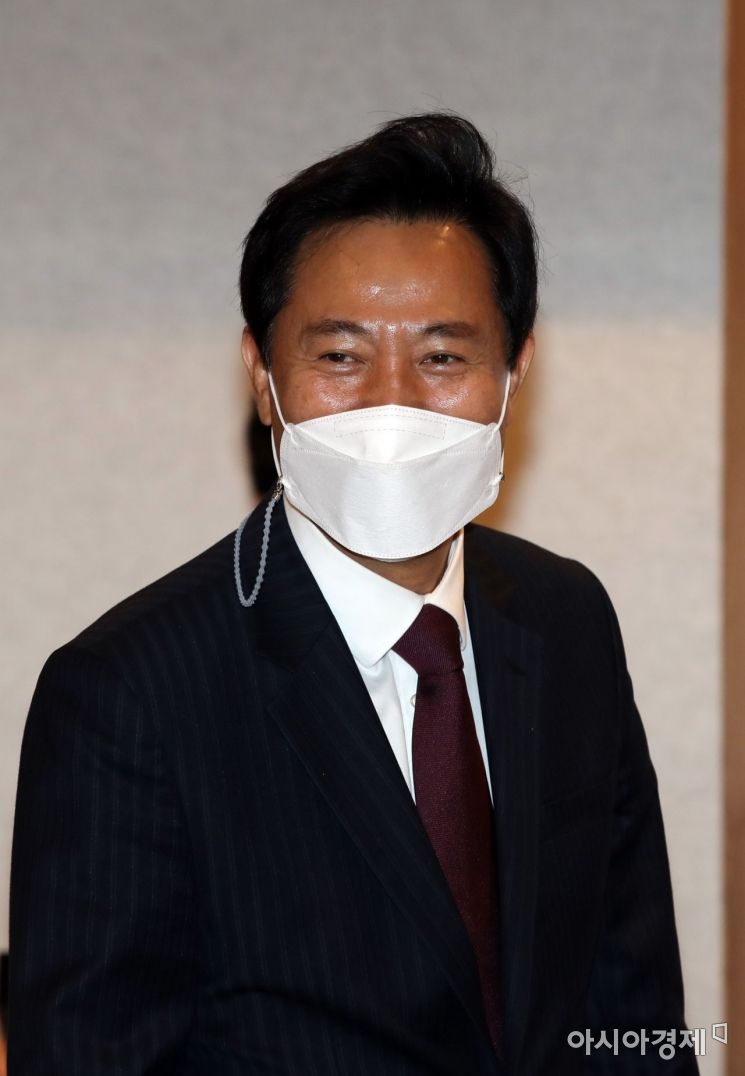 Seoul Mayor Oh Se-hoon is entering his office after arriving at Seoul City Hall on the morning of the 8th. / Photo by Joint Press Corps
Moreover, with Mayor Oh, who campaigned on easing private reconstruction regulations, winning the Seoul mayoral by-election the day before, there are many criticisms that the appeal of public reconstruction has further diminished. The Ministry of Land, Infrastructure and Transport has so far responded to such concerns during the election by stating, "Both Seoul City and the government deeply recognize the need to expand housing supply," offering only a general stance, but internally, the dilemma is significant.
A ministry official explained regarding concerns that some complexes might defect from public reconstruction projects due to preference for private reconstruction, "If the private sector is judged capable of carrying out maintenance projects independently, they will proceed privately; if not, they will choose public maintenance projects. The decision is up to the owners." However, if regulations are eased as per Mayor Oh's pledge and the majority of associations opt out of public-led projects, it would undermine the government's policies that have strengthened regulations and promoted public projects to stabilize housing prices, making it difficult for the government to accept.
For now, since public-led developments like public reconstruction are still in the early stages, the government plans to focus on observing market reactions and garnering residents' support. Lee Eun-hyung, Senior Researcher at the Korea Construction Policy Institute, said, "First, it is necessary to visibly demonstrate to the original residents of the project sites why they should choose public-led development over private development through tangible results," adding, "It may also be necessary to consider increasing incentives for project participation."
© The Asia Business Daily(www.asiae.co.kr). All rights reserved.
![Clutching a Stolen Dior Bag, Saying "I Hate Being Poor but Real"... The Grotesque Con of a "Human Knockoff" [Slate]](https://cwcontent.asiae.co.kr/asiaresize/183/2026021902243444107_1771435474.jpg)
















