Asahi Shimbun Reveals in Editorial on the 7th
Last Pacific War Survivor Lee Hak-rae Passes Away
Japanese Government Ultimately Refuses Compensation and Relief Measures
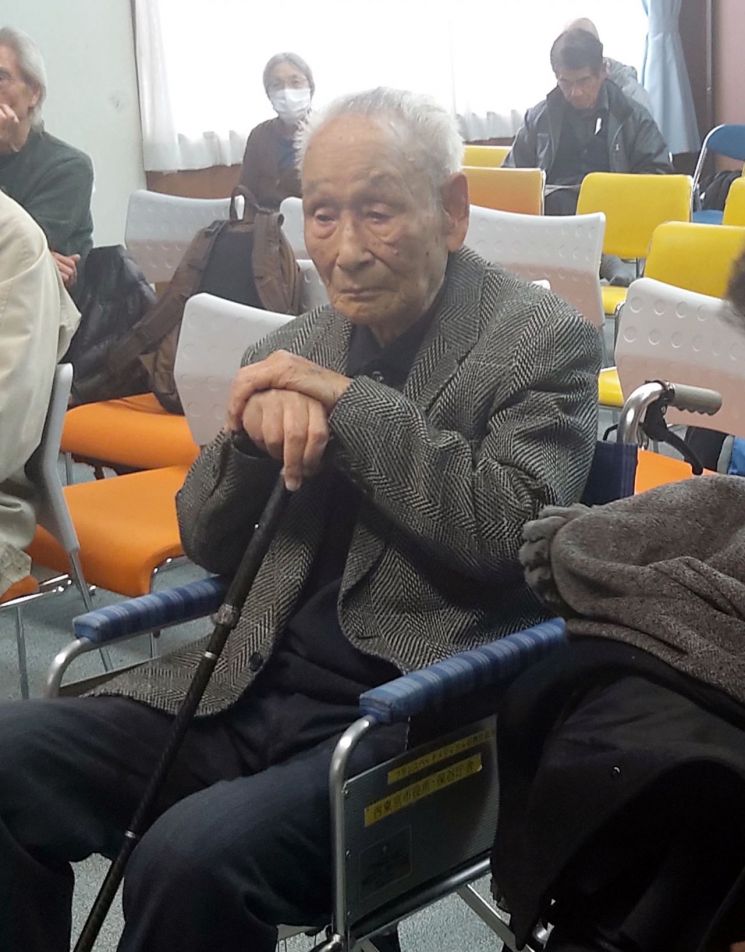 ▲Late Lee Hak-rae, a leading figure in the compensation movement for Korean victims of Japanese war crimes [Image source=Yonhap News]
[Asia Economy Reporter Kwon Jae-hee] Japanese media pointed out that "the Japanese government’s neglect of Korean Pacific War war criminals is the responsibility of the Japanese people."
On the 7th, Asahi Shimbun reported the death of Lee Hak-rae, the last surviving Korean B and C class Pacific War war criminal, in an editorial titled "Questioning Japan’s Justice Again and Again," stating, "Relief was never achieved during his lifetime."
The deceased was conscripted at the age of 17 in 1942 and served as a military laborer (military worker) for the Japanese army, overseeing Allied prisoners of war forced to work on railroad construction sites in Southeast Asia.
The orders of superiors were absolute, and no one informed them of the existence of the Geneva Convention, which regulates the treatment of prisoners.
The deceased had previously revealed that the construction sites were severely lacking in medical supplies, creating harsh conditions where they could not respond even when prisoners fell ill.
Many Allied prisoners of war died at that time, and after the war ended, the deceased was sentenced to death in a war crimes trial for prisoner abuse but was later commuted and released in 1956.
After his release, he intended to return to his hometown in Jeollanam-do, but upon hearing that Korean war criminals were stigmatized as pro-Japanese collaborators and ostracized by their villages, he gave up returning and remained in Japan.
Asahi reported, "Those who became war criminals (Koreans) were tormented by the cold gaze of their homeland," adding, "Even after returning, they were not accepted by those around them as collaborators with Japan, and some took their own lives after returning."
Korean war criminals who remained in Japan were also neglected by the Japanese government.
While Japanese war criminals and their families received pensions and compensation from the Japanese government, Korean war criminals who lost Japanese nationality due to the enforcement of the 1952 San Francisco Peace Treaty were excluded from compensation.
The deceased, along with other surviving Korean war criminals remaining in Japan, formed an organization called Dongjinhoe and demanded compensation from the Japanese government for over 60 years, but the Japanese government ultimately did not accept their persistent demands.
Regarding this, Asahi reflected with the question, "What is the justice and conscience of this country?" and voiced regret, stating, "The responsibility lies with politics and the people who turned a blind eye to that political inaction."
© The Asia Business Daily(www.asiae.co.kr). All rights reserved.

















