Hanwha Asset Management Managers Resign in Droves
Some Move to Contract Intern Positions at Other Companies
Concerns Over Declining Asset Management Capability of 104 Trillion KRW Including Hanwha Life
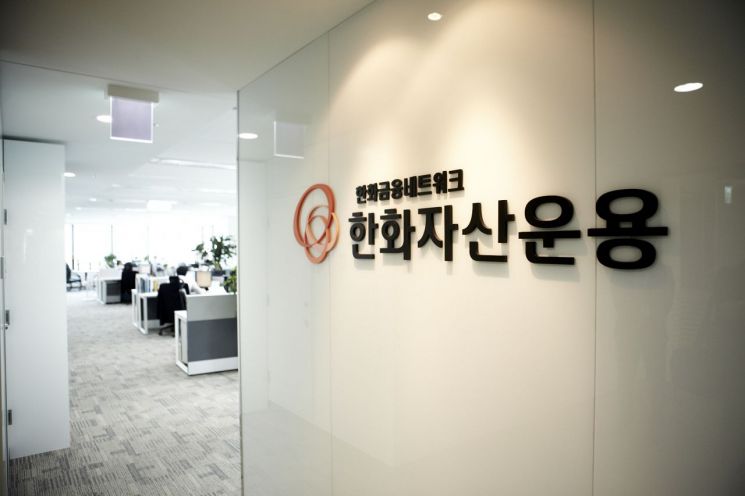
[Asia Economy Reporter Junho Hwang] An exodus of employees is unfolding at Hanwha Asset Management, the financial subsidiary of Hanwha Group. In particular, concerns are growing that the continuous resignation of fund managers could create gaps in the management of assets totaling 104.4064 trillion KRW. Approximately 74% of Hanwha Asset Management's managed assets belong to Hanwha Life Insurance, raising expectations of a decline in management capability for these assets.
According to the Korea Financial Investment Association on the 7th, there have been about 50 public disclosures of fund manager replacements due to resignations at Hanwha this year. The industry analyzed that around 20 managers have resigned so far this year.
Hanwha Asset Management's Manager 'Exodus'

Most of the resigning employees are junior-level staff with less than 10 years of experience. Many of them took their first steps into society through open recruitment conducted until last year. Among them, one employee even gave up a full-time position at Hanwha Asset Management to join another company as a contract intern.
The departing employees cited opaque personnel policies and relative deprivation as reasons for leaving. The starting salary for college graduates at Hanwha Asset Management is known to be in the low 40 million KRW range. The average annual salary is in the 50 million KRW range, about 10 million KRW less than competitors. This is because salaries are aligned with other financial subsidiaries within Hanwha Group rather than with manufacturing or service subsidiaries.
There is no personnel policy to increase pay based on ability and performance. What employees find particularly difficult to endure is the inability to narrow the wage gap with transferred talents. For employees with similar years of service, the wage gap between transferred employees and internal employees should gradually decrease over time. However, the wage structure is such that even a lifetime of service cannot catch up with the pay gap related to experience, leading employees to explain that changing jobs is better.
Bonuses are also paid late, around May or June. Unlike other companies that calculate and pay bonuses immediately after the March fiscal year-end, Hanwha Asset Management delays payment. The industry views this delayed bonus payment as an outdated practice aimed at preventing mass resignations, given that many employees receive bonuses and then resign.
Resigning employee A said, "Due to the industry's lowest salary level and opaque personnel policies, it is difficult to feel that the company provides fair compensation for the work done. We should be creating flagship products and increasing assets under management (AUM) through human and material investment, but since we only manage group company volumes, I did not feel any sense of growth," he said.
Concerns Over Decline in Asset Management Capability

As quick-moving juniors vacate their positions en masse, recently even department head-level talents have joined the exodus. The head of the Retirement Asset Consulting Center, internally launched last November, moved to another company in less than six months. He was even promoted in the regular personnel reshuffle last March but left in search of a better place.
The industry has evaluated Hanwha Asset Management's talents as 'best cost performance.' Regardless of ability, the strength lies in being able to recruit talents who can be immediately deployed on-site without paying a premium. However, doubts have been raised about the decline in Hanwha Asset Management's asset management capability due to the outflow of personnel. In fact, Hanwha Asset Management, which had been ranked third in AUM for years, was pushed down to fourth place last month by KB Asset Management. Despite a stock market boom after COVID-19 last year, operating profit also decreased by 14.25% from the previous year to 27 billion KRW.
Meanwhile, Hanwha Asset Management has not provided any response to industry concerns regarding this talent outflow and decline in management capability.
© The Asia Business Daily(www.asiae.co.kr). All rights reserved.


















