Professor Yoo Yusang of Soongsil University: "Unicorns Should Focus on M&A Rather Than IPO"
1 in 4 US Startups with Early Investment Exit... 97% Through M&A
Exit Potential Directly Linked to Company Drive: "Pursuing Aggressive Strategy with Investments Offsetting Deficits"
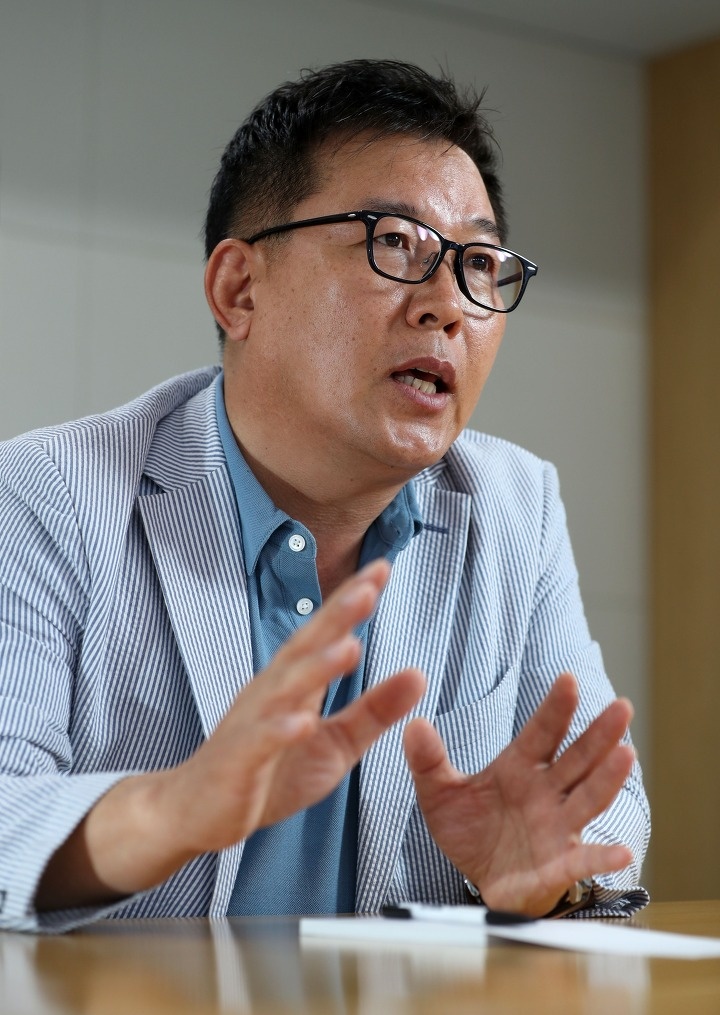 Professor Yoo Hyo-sang, Soongsil University Graduate School of Small and Medium Business.
 [Photo by Professor Yoo Hyo-sang]
[Asia Economy Reporter Junhyung Lee] "Even unicorns will eventually become 'zombiecons' if they fail to successfully exit (recover funds). Instead of pursuing low-probability initial public offerings (IPOs), exits through mergers and acquisitions (M&A) should be activated."
Professor Yoo Hyosang of Soongsil University Graduate School of Small and Medium Business stated this on the 6th at a seminar held at the Korea Chamber of Commerce and Industry in Jung-gu, Seoul, themed "Achievements and Challenges of Innovative Growth." Although the venture industry’s attention has recently been drawn to exits through IPOs following Coupang's listing, such cases are extremely rare. He explained that even in the United States, known as a "startup paradise," only 0.1% of startups that received early-stage investment succeed in going public. Professor Yoo emphasized, "We need to create an exit environment centered on M&A, which has a higher probability than IPOs."
According to Professor Yoo, one out of four U.S. startups that received early-stage investment succeeds in exiting, and 97% of these exits are through M&A. In contrast, in Korea, IPOs account for 36.7% of all exits, while companies recovering investments through M&A make up only 0.5%.
In reality, the proportion of M&A as an exit method for domestic companies is very small. According to the Ministry of SMEs and Startups’ "2020 Venture Business Detailed Survey," only 0.3% of venture companies experienced M&A. The problem is that the possibility of exit through listing is also significantly low. According to the Korea Exchange, 103 domestic companies newly listed on KOSDAQ last year. There were about 40,000 domestic venture companies last year. Arithmetically, only 0.2% of venture companies go public. This implies that only a very small number of companies succeed in exiting domestically, while the rest fail to properly recover their investments.
Increasing the possibility of exit is directly linked to securing the driving force of startups. The background for "perennial deficit" startups growing into unicorns lies in the expectation of exit. Professor Yoo explained, "Unlike traditional companies that rely on sales, startups generate cash flow through investment attraction," adding, "Investment funds are key for startups to dominate the market, and the expectation of being able to exit increases investment potential." He said, "Coupang has accumulated losses exceeding 4.6 trillion won, and Market Kurly, which rose as a unicorn, has never escaped deficits. Nevertheless, they were able to pursue aggressive strategies by receiving investments that offset the deficits."
He also expressed the opinion that management focus should be aligned with exit. Professor Yoo said, "The goal of venture capital and others is to recover larger funds after investment," and added, "Startups need to recognize the importance of exit and actively seek companies that will acquire them." He suggested, "Active exits should produce 'serial entrepreneurs' like Elon Musk of Tesla, and organizations such as the Inno-Biz Association can contribute to creating such an environment."
© The Asia Business Daily(www.asiae.co.kr). All rights reserved.
![Clutching a Stolen Dior Bag, Saying "I Hate Being Poor but Real"... The Grotesque Con of a "Human Knockoff" [Slate]](https://cwcontent.asiae.co.kr/asiaresize/183/2026021902243444107_1771435474.jpg)











