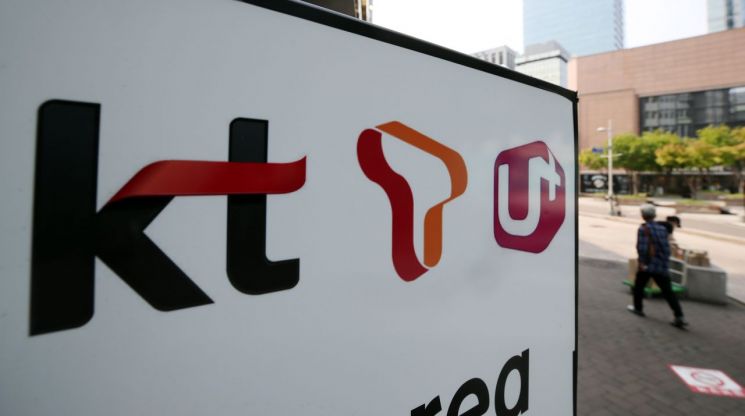
"Can we really say that data from as far back as 15 months ago accurately reflects the current market situation?"
There are criticisms that the government's annual 'Telecommunications Market Competition Assessment' fails to reflect the rapidly changing market environment, making it outdated. The evaluation report released last March was based on data from as far back as 15 months ago. This inevitably raises concerns about the reliability and effectiveness of using it as a basis for policy-making.
◇Failure to Reflect Rapidly Changing Market Conditions
According to industry sources on the 8th, the 'Telecommunications Market Competition Assessment' report released by the Korea Information Society Development Institute (KISDI) under the Ministry of Science and ICT at the end of last month was based on data from the end of 2019. It did not include the intense 5G price competition and mergers and acquisitions (M&A) that reshaped the industry landscape in the second year of 5G commercialization last year. Major policy changes such as the abolition of the telecommunications fee approval system and the introduction of the reservation notification system at the end of last year were also not reflected.
Although the impact of the non-face-to-face (untact) transition accelerated by COVID-19 on the telecommunications market last year was extensive, it was only briefly mentioned in the introductory page. The influence of platform operators, who have rapidly risen in recent years by breaking down the barriers of telecommunications operators' domains, was also not properly reflected.
The telecommunications market competition assessment, which began in 2008, was conducted with the purpose of helping the private sector understand the market status and assisting the government in policy formulation, ultimately to activate market competition and enhance user welfare. However, it has been pointed out that reflecting data from as far back as 15 months ago in the evaluation report, which serves as the starting point for domestic telecommunications market regulation, is not timely. An industry insider said, "The issue of timeliness has been raised for quite some time," adding, "It is because it fails to reflect the rapidly changing market conditions such as various mergers and alliances." A Ministry of Science and ICT official also acknowledged, "It is true that there is some time lag."
Last year, the domestic mobile telecommunications market saw notable growth in MVNOs and 5G price competition. MVNOs, led by attractive unlocked device combinations, recorded net subscriber increases for seven consecutive months last year. This triggered price competition and accelerated the launch of mid-to-low priced 5G plans by the three major mobile carriers. This was also the background for the National Assembly's Science, ICT, Broadcasting and Communications Committee mentioning last year that effective competition had been secured in the telecommunications market as a reason for abolishing the approval system.
◇Calls to Adjust Evaluation Targets and Frequency
Some critics argue that the competition assessment released last month lacks consistency in terms of content. For example, while the mobile telecommunications market, where the market share gap between the leading operator and its challengers is narrowing, was consecutively evaluated as 'insufficient competition,' the high-speed internet market, where the gap between the first and second operators is larger, was assessed as having 'active competition.'
Even excluding last year's situation not reflected in the report, SK Telecom, the leading operator in the mobile telecommunications market, saw its revenue share drop from 48.2% in 2015 to 45.4% in 2019. On the other hand, KT's revenue share in the high-speed internet market rose from 45.5% in 2015 to 47.8% in 2019. The revenue share gap between the first and second operators is also larger in the high-speed internet market (22 percentage points) than in the mobile telecommunications market (18.34 percentage points). Even considering that competition cannot be evaluated solely by market share, this raises legitimate questions.
Inside and outside the industry, there is a flood of criticism that the evaluation targets and frequency should be adjusted to reflect changes in the industry landscape. It is also argued that it is time to reflect the influence of platform operators. An industry insider summarized the recent market situation by saying, "The boundaries between telecommunications and platform operators are becoming increasingly blurred, and they have entered a state of fierce competition." Overseas, such as in the United States, Japan, and the European Union (EU), competition assessments are conducted biennially or only when necessary to ensure timely reflection at appropriate points.
© The Asia Business Daily(www.asiae.co.kr). All rights reserved.

















