'Opening of Japanese Popular Culture' Ended, Naver Launched in 2002
Cultural Exchange Between Korean and Japanese Netizens Through Machine Translation
Turned into a Battlefield of National Conflicts Over History and Culture... 'Online Korea-Japan Match'
Experts Say "Despite Differences in Perception, Korea-Japan Relations Improved After Cultural Opening"
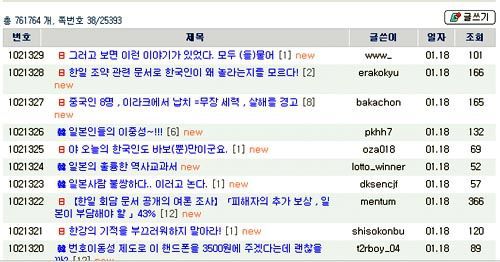 In 2005, the 'Enjoy Japan' current affairs news bulletin board. / Photo by Internet homepage capture
[Asia Economy Reporter Lim Juhyung] As the conflict between South Korea and Japan intensifies over Japanese history textbooks that define Dokdo as Japanese territory, the divide between netizens of the two countries is deepening even in online spaces. Some voices are calling for a movement to protect Korean culture against Japan's so-called 'cultural invasion.'
There is a perspective that these movements between the two countries resemble the early stages following South Korea's 'opening to Japanese popular culture.' At a time when internet culture was not yet well developed, netizens from both countries shared information through cultural exchange websites such as 'EnjoyJapan.' Back then, an 'online Korea-Japan battle' unfolded over various national pride issues related to history, politics, and culture.
◆From History and Territory to Cultural Conflicts
According to reports from Japanese media including Kyodo News on the 30th of last month (local time), the Japanese government approved about 30 types of high school first-year social studies textbooks containing descriptions that "Dokdo is Japanese territory." Previously, in March 2018, the Japanese government announced curriculum guidelines asserting sovereignty over Dokdo and the Senkaku Islands (known in Chinese as Diaoyu Islands). As a result, some Japanese high school social studies courses revised from 2022 will include content stating that Dokdo is inherent Japanese territory.
After this information became public, domestic netizens expressed their resentment toward Japan through online communities and social networking services (SNS). They argue that the Japanese government, which has repeatedly clashed over issues such as compensation for victims of Japanese military sexual slavery, is blatantly attempting historical distortion.
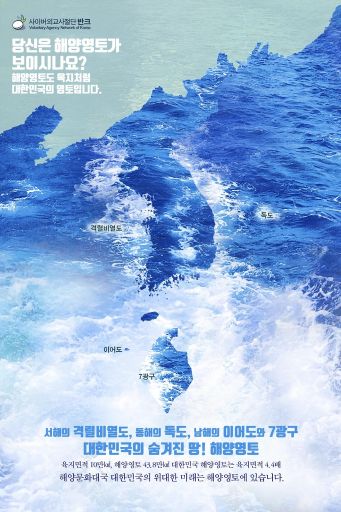 Promotional poster by VANK for 'Raising Awareness of Maritime Territories' including Dokdo, Ieodo, and the 7th East Sea Area. / Photo by VANK
In response, the private organization 'VANK,' which calls itself a 'cyber diplomatic mission,' launched a campaign distributing posters with the message "Dokdo is Korean territory" in the United States, the United Kingdom, and Europe.
Some netizens also argued for active countermeasures against Japan's cultural invasion. They protested against certain Japanese animations and videos on the streaming platform Netflix that included symbols resembling the Rising Sun Flag. In fact, a domestic company responsible for distributing these videos directly edited the problematic symbols. Thus, the conflict between the two countries over history and territory is spreading into the cultural realm.
◆"Let's Embrace Good Japanese Culture"…Naver Launches 'EnjoyJapan'
There are observations that the conflicts between netizens of the two countries in online spaces resemble the patterns following the opening of popular culture. Notably, the 'EnjoyJapan' service launched by Naver after the internet became widespread domestically is a representative example.
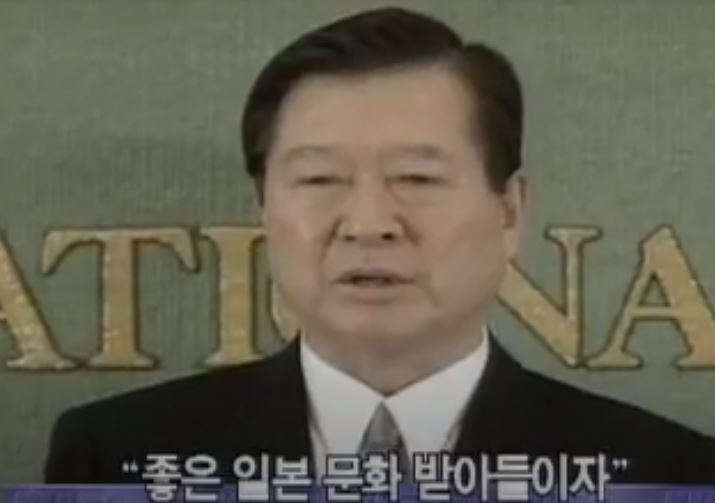 Statement by Kim Dae-jung, then Chairman of the Asia-Pacific Foundation, in 1995. / Photo by YouTube Capture
The opening of popular culture was promoted during the administration of the late President Kim Dae-jung in 1998. At that time, direct imports of Japanese popular culture such as films, music, and comics were banned in South Korea. However, from the Kim Dae-jung administration through the Roh Moo-hyun administration until 2002, this policy was relaxed in four stages.
In 1998, President Kim emphasized, "Our people have independently accepted foreign cultures for thousands of years, so there is no need to fear opening to Japanese popular culture," adding, "Rather, by blocking it, we fail to bring in good culture and only allow violent and criminal bad cultures to enter, which is a cause for concern."
Meanwhile, Naver, which was conducting IT businesses such as search services domestically at the time, launched a service called 'EnjoyJapan' in 2002. Although today it is possible to access information about other countries in real time through various media such as SNS and YouTube, at the time when the internet was just beginning to spread, it was difficult for the general public to access information related to Japan. Naver devised this site with the aim of promoting cultural exchange between netizens of the two countries.
◆"Koreans Eat Filthily" vs. "Japanese Have Clumsy Brain Structure"?Conflict Turns Ugly
The EnjoyJapan domain was established in both South Korea and Japan. In Korea, it was called EnjoyJapan, meaning "Enjoy Japan," while in Japan, it was launched under the name EnjoyKorea. Netizens from both countries could post articles or comments directly on the site, and machine translation services between Korean and Japanese were provided to translate posts in real time.
However, EnjoyJapan developed in a direction completely different from Naver's intentions. The conflict began with 'history education.' Since netizens from both countries had received different historical education, they held completely different perspectives on the same events. This led to an online Korea-Japan battle among netizens over various historical incidents such as Japanese colonial rule and the Imjin War.
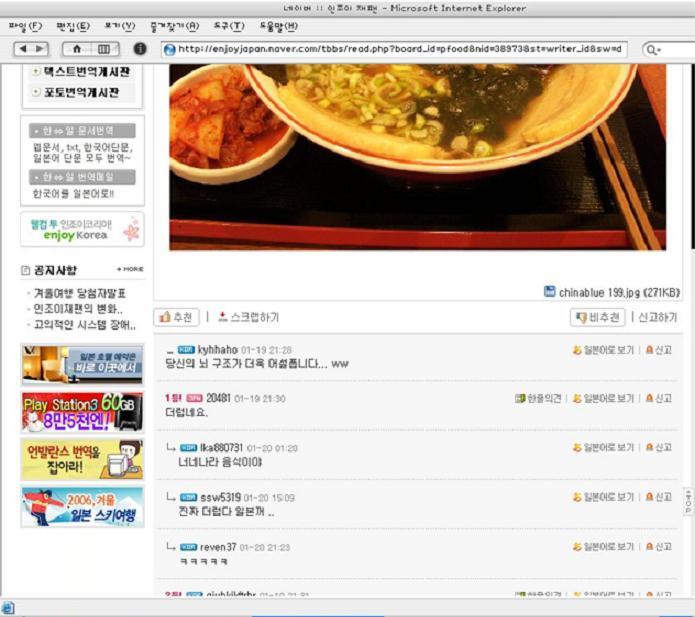 Naver's 'Enjoy Japan,' originally launched for Korea-Japan cultural exchange, ultimately ended its service after becoming a platform for conflict. / Photo by Internet homepage capture
The conflict soon spread to overall culture, and netizens from both countries exchanged harsh insults over foods like gimbap and ramen, with comments such as "Koreans eat filthily" and "I think I understand the clumsy brain structure of Japanese people," deepening emotional rifts.
Naver terminated the EnjoyJapan service in 2009. Ultimately, the site established for Korea-Japan cultural exchange ended as a battleground of conflict.
◆Significant and Minor Influences on Korea-Japan Internet Culture
Ironically, EnjoyJapan later had significant and minor influences on the online cultures of both Korea and Japan. For example, in Korea, it became an opportunity for Japanese netizens' slang to spread. The Japanese netizens' way of expressing laughter with 'www' became known domestically through EnjoyJapan. Also, the term 'fact,' meaning to provide clear evidence, is said to have spread through EnjoyJapan.
The Japanese netizens' use of 'EnjoyKorea' also influenced Japan. Makoto Sakurai, an ultra-right-wing politician who served as the first chairman of the 'Citizens Group That Does Not Permit Special Privileges for Zainichi' (Zaitokukai), a civic group leading various anti-Korean demonstrations in Japan, was an active debater on EnjoyKorea.
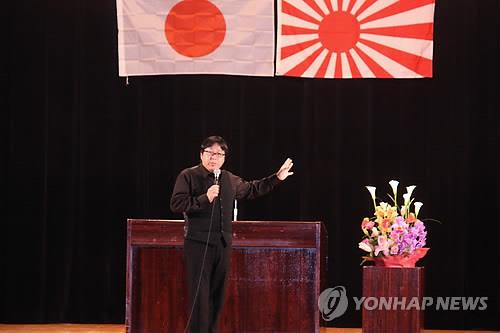 Sakurai Makoto giving a speech at an indoor rally in 2014 when he was the president of Zaitokukai. / Photo by Yonhap News
Currently leading the Japanese ultra-right-wing party 'Japan First Party,' he explained in a post on EnjoyJapan in September 2003 the reason he came to hate Koreans. He said, "During my school days, I met a Korean exchange student who told me things I could never have imagined, such as 'Old Japan did terrible things to Korea' and 'Japan is a truly terrible country.' The more I got to know Korea, the more I disliked it."
◆Expert: "Relations Between the Two Peoples Have Improved Since Cultural Opening"
So, is it impossible for the peoples of the two countries to narrow their conflicts in the future? Experts emphasize that since the cultural opening in 1998, relations between the civil societies of the two countries have rapidly improved and can continue to improve.
Cultural critic Jung Deok-hyun explained, "Although there are some differences in perception, since the cultural opening under the Kim Dae-jung administration, relations between Korean and Japanese people have become much better than before. Cultural exchanges at the private level have become more active, and the contents of both countries are mutually popular."
He added, "Rather, what hinders the promotion of culture between the two countries is conflicts between governments. Since the Abe administration took office, various diplomatic issues have cooled Korea-Japan relations."
He further suggested, "Historical issues inevitably cause conflicts between Korea and Japan, but if the two countries sincerely face each other and resolve these issues, the current young people of both countries or the next generation can independently establish a new friendly relationship."
© The Asia Business Daily(www.asiae.co.kr). All rights reserved.



















