One in Three Adults Obese... Sugar Tax Needed to Reduce Sugar Intake
Taxing Obesity?... Social Consensus on Sugar Risks Must Also Be Established
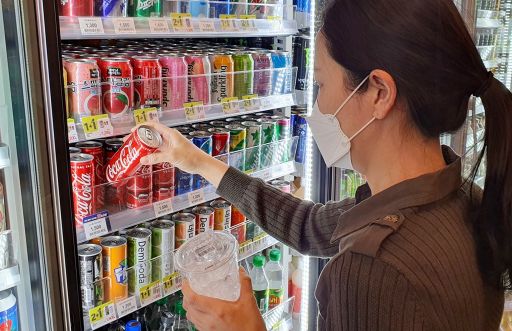
[Asia Economy Reporter Joo-mi Lee] Recently, a so-called 'sugar tax' bill imposing taxes on beverages has been proposed in the National Assembly, sparking controversy. The bill aims to impose a certain amount on beverage prices based on sugar content. However, there are criticisms that simply raising prices cannot manage public health, and that the bill's purpose is essentially a policy to raise prices, amounting to a kind of 'tax omnipotence'.
In February, Kang Byung-won, a member of the Democratic Party of Korea, proposed the "Partial Amendment to the National Health Promotion Act," which imposes a national health promotion levy on companies that manufacture, import, distribute, or sell beverages containing sugars. According to the proposal, if the sugar content exceeds 20kg per 100L of beverage, a levy of 28,000 KRW is imposed; if the sugar content is between 16 and 20kg per 100L, 20,000 KRW is imposed, with differential levies based on sugar content.
In an interview with a media outlet, Representative Kang explained, "The World Health Organization (WHO) has identified excessive sugar intake as a major cause of obesity, diabetes, and dental caries, and recommended considering fiscal policies such as subsidies to promote the consumption of healthy foods and beverages." Currently, the bill is under review by the Health and Welfare Committee.
However, contrary to the bill's intent, opposing opinions have emerged. Imposing a uniform levy on processed foods containing sugars inevitably leads to price increases, infringing on consumer rights, and other alternatives besides a uniform approach should be considered.
The Consumer Citizens' Coalition criticized through a media outlet, "It is more important to educate consumers to directly compare and choose products based on sugar content." Also, Kim, a company employee in his 30s, said, "It is very commendable that the National Assembly is concerned about public health," but added, "The idea that raising prices can manage health seems dangerous. It does not seem to be a fundamental solution to the problem."
◆ Rising Obesity Risks... Need for Sugar Consumption Regulation
Despite the controversy surrounding the bill, obesity rates in South Korea pose a health threat. Other countries are also creating and revising various policies to address this issue.
According to the Ministry of Health and Welfare, as of 2018, the adult obesity rate in South Korea was 34.6%, meaning one in three adults is obese. Considering the Korean Diabetes Association's survey showing a 13.8% prevalence of diabetes among adults aged 30 and over in the same year, the seriousness of obesity is evident.
Moreover, adolescents are not free from obesity risks. According to the 2019 student health examination sample statistics released by the Ministry of Education last year, 25% of elementary, middle, and high school students were overweight or obese. Notably, the obesity rate increased from 11.9% in 2015 to 15.1%, showing a rising trend.
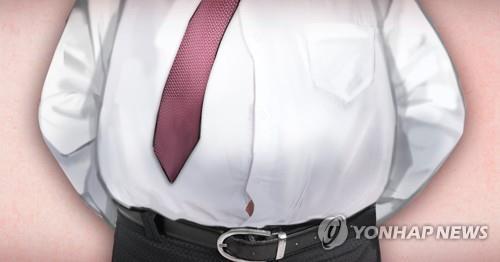 One in three adults in our country has been found to be obese. Obesity is one of the causes that lead to various adult diseases such as hypertension and diabetes.
 [Image source=Yonhap News]
As the risk of health threats from obesity grows, the academic community had called for the introduction of a sugar tax even before this bill was proposed.
At the 2019 Spring Academic Conference of the Korean Society of Health, Professor Yoon Ji-hyun of Seoul National University's Department of Food and Nutrition argued, "Considering the relatively high sugar intake among Korean adolescents, it is time to seriously consider introducing a sugar tax. After the UK announced the sugar tax, more than 50% of soft drink companies adjusted their sugar content."
The Korean Society for the Study of Obesity also emphasized in 2016 that "to prevent obesity, urgent measures such as reviewing high-level regulations like the sugar tax introduced in advanced countries and providing tax support for efforts to reduce sugars in food processing are necessary."
◆ Sugar Tax Alone Cannot Reduce Sugar Intake... Only Increases Price Burden
However, there are many criticisms that the obesity problem is being addressed solely through tax increases rather than exercise or education. The sugar tax is not effective in reducing sugar intake and only increases consumer burden due to higher beverage prices.
Initially, consumers may reduce purchases temporarily due to price burden, but over time, they may continue sugar consumption even by paying more. There are also concerns about the balloon effect, where consumers might buy from other countries to avoid taxes or shift consumption to similarly flavored but cheaper beverages.
France imposed a sugar tax on carbonated drinks in 2011, resulting in about a 3% decrease in sales in the first year. However, as consumers got used to the higher prices, the sales suppression effect weakened. In the same year, Denmark implemented a tax on high-calorie foods, but as prices rose, people increasingly shopped in neighboring countries like Sweden or Germany. Due to effectiveness controversies, the policy was abolished after one year.
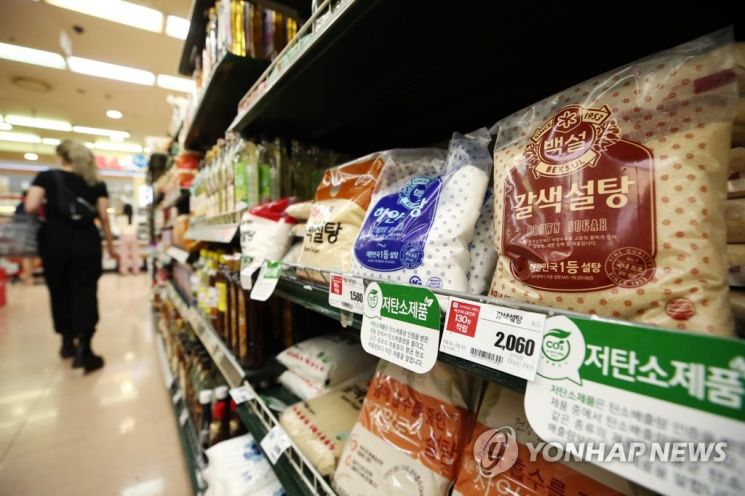 Sugar displayed on a supermarket shelf. A bill proposing the imposition of a health promotion surcharge on sugary drinks has sparked controversy. [Image source=Yonhap News]
Considering the example of tobacco, which already imposes a health promotion levy, there is an opinion that sugar tax alone cannot reduce sugar consumption.
Tobacco sales, which were 4.4 billion packs in 2014, decreased to 3.3 billion packs after the cigarette price increase in 2015. Although sales rose to 3.6 billion packs in 2016, they fell again to 3.5 billion packs last year, showing no significant increase.
However, this is attributed to the simultaneous implementation of non-price tobacco control policies such as warning labels, disease images, smoking area restrictions, and expansion of no-smoking zones, which helped change social perceptions of smoking. The WHO also cited cigarette pack warning images combined with expanded no-smoking zones as one of the most cost-effective policies in 2018.
Considering these situations, it is argued that social consensus on the risks of sugar intake must be formed alongside the sugar tax to see the policy's effectiveness. For example, after the cigarette price increase in 2015, the male smoking rate dropped from 40.7% to 37.9%, but rose again to 38.4% the following year. The Ministry of Health and Welfare analyzed that the effect of the price policy was diminished because non-price policies were not implemented simultaneously.
Experts emphasize the importance of non-price policies over taxes as a way to control consumption. Professor Lee Eun-hee of Inha University's Department of Consumer Studies suggested, "Non-price policies such as campaigns should be promoted rather than taxes," and added, "Providing information by especially highlighting sugar content on nutrition labels can encourage consumers to take care of their health themselves." She further pointed out, "Since the sugar tax can affect living costs, it should be introduced cautiously," and "Taxation should be the last resort."
© The Asia Business Daily(www.asiae.co.kr). All rights reserved.



















