The college counselors at Vivian & Stanley Gangnam International Scholars (VSGIS) explained the analysis of the 2020-2021 U.S. college admissions results and future admissions trends. The biggest change in the 2021 U.S. college admissions, directly affected by COVID-19, was the change in the number of early applicants. Top-tier schools encountered a significantly increased number of early applicants compared to previous admissions, resulting in lower acceptance rates.
U.S. college admissions, directly impacted by COVID-19, saw many changes such as SAT/ACT Optional policies, which brought significant shifts to the admissions process.
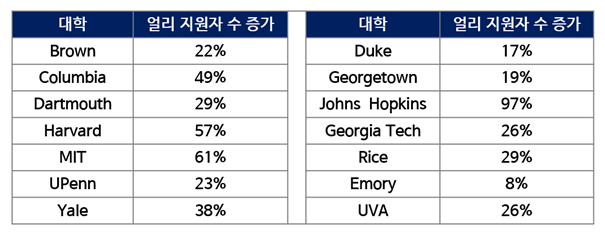
Looking at the results of representative prestigious U.S. universities, early round applicants showed a large change, and acceptance rates became even lower.
This is expected to be due to the removal of mandatory submission of scores like the SAT. At the point when most admissions results were announced, contrary to expectations, students who had consistently made efforts through individual activities showed better outcomes than those with excellent GPAs. Additionally, in a situation where objective indicators were excluded, students who emphasized uniqueness rather than achievements had higher acceptance rates.
However, it cannot be confidently said that these admissions results will apply to next year’s admissions. Considering that Princeton University canceled early rounds this year, it is clear that universities have not yet finalized their future admissions trends.
This outcome can be analyzed as a result of the reduction or inequity of all the criteria universities have traditionally used to select students, such as the absence of standardized tests, grades including online classes, recommendation letters from teachers who have not met the students, and the lack of offline activities at schools. Ultimately, in a situation where high school activities have shifted to non-face-to-face formats, how students express their individual efforts and sustained interest in universities has become crucial.
As seen in the early round results of prestigious universities, not only did the number of applicants increase, but the number of applied universities also rose. In particular, applications from international students increased significantly. Students who experienced inefficiencies in their home countries’ online systems appear to have chosen to study in the U.S., which offers relatively advanced education. In fact, applicants from China decreased by 18%, while those from India, Canada, Pakistan, the United Kingdom, and Brazil increased by 28%, 22%, 37%, 23%, and 41%, respectively. This is a significant increase compared to the 3% decrease in U.S. applicants.
Considering the educational environment and admissions results comprehensively, it is expected that competition among international students for U.S. college admissions will become even fiercer next year. It is necessary to thoroughly prepare for the highly uncertain admissions by managing not only standardized test scores and school records but also extracurricular activities well.
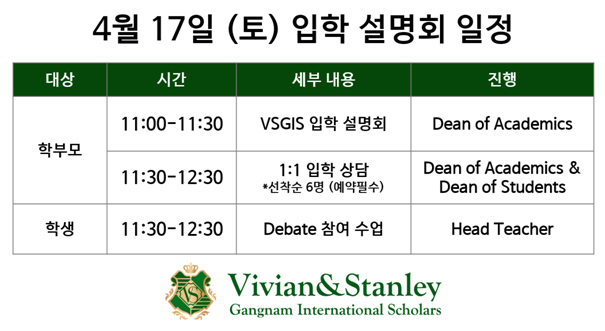
Meanwhile, a school official stated, “The admissions information session to be held on April 17 will provide not only information about the school but also details about this year’s admissions results, making it a beneficial session for students and parents currently preparing for admissions to prestigious U.S. universities.”
© The Asia Business Daily(www.asiae.co.kr). All rights reserved.