Announcement of the 4th Comprehensive Cancer Control Plan
The government plans to build a cancer big data system covering approximately 3 million cancer patients, accounting for 70% of all cancer patients, by 2025. Additionally, through the advancement of cancer prevention and screening, it aims to reduce the incidence of 'preventable cancers' by more than 20%, lowering the annual number of new stomach, colorectal, liver, and cervical cancer patients under the age of 75 to around 45,000.
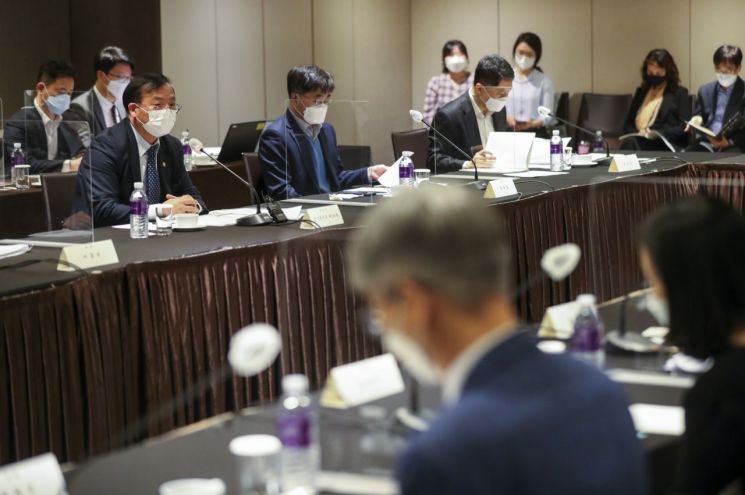
On the 31st, the Ministry of Health and Welfare held the first National Cancer Control Committee meeting of 2021 and deliberated and approved the '4th Comprehensive Cancer Control Plan' containing these details. Through this plan, the government will focus on ▲building and disseminating high-quality cancer data ▲reducing the incidence of preventable cancers ▲alleviating disparities in cancer treatment and care over the next five years until 2025.
First, the government will establish a national cancer data system covering 3 million people by 2025 and operate a dedicated National Cancer Data Center. It will collect and process various cancer-related data held by multiple institutions such as the National Health Insurance Service and the Health Insurance Review and Assessment Service to build a national-level cancer data sector. Yoon Tae-ho will actively share this data externally.
Yoon Tae-ho, Director of Public Health Policy, stated, “The constructed data will be actively utilized for cancer research and drug development through sharing and openness,” adding, “The goal is to integrate cancer clinical data to cover about 70% of all cancer patients.” Existing data held by public institutions will be linked with cancer registration statistics to produce public data, and high-quality cancer patient imaging information will be established by integrating genomic and proteomic information from about 2,000 patients across 10 cancer types.
A comprehensive cancer registration surveillance system covering the entire diagnostic timeline of cancer patients will also be established. The current nine cancer surveillance indicators will be significantly expanded to 50 through data linkage and other methods. A model to automatically extract and collect existing cancer registration data is also under development.
Public interest cancer research based on cancer data will be promoted. The government will evaluate new cancer risk factors and implement an anti-cancer new drug development and dissemination project linking the National Cancer Center, regional cancer centers, private hospitals, and pharmaceutical companies. It will open 165 types of cancer research support services across 10 fields to the public, advancing research that applies cutting-edge technology to cancer management.
Furthermore, through the advancement of cancer prevention and screening, the government plans to reduce the annual number of new cancer patients under 75 from about 56,000 to 45,000. To this end, stomach, liver, colorectal, and cervical cancers are classified as preventable cancers. For stomach cancer, from 2022, early treatment will be strengthened by reviewing the expansion of health insurance coverage for Helicobacter pylori testing and eradication therapy, a strong risk factor. For colorectal cancer, the introduction of colonoscopy as the primary screening method in the national cancer screening program is under consideration. For liver cancer, linked with the pilot project for early detection of hepatitis C patients aged 56 conducted by the Korea Disease Control and Prevention Agency, a project to detect high-risk groups early and prevent liver cancer occurrence will be promoted. For cervical cancer, considering international standards, the expansion of the target group for human papillomavirus (HPV) vaccination and increasing screening participation rates will be reviewed.
The national cancer screening program will also be improved. The government will gradually implement plans to adjust the target groups and screening intervals of the current national cancer screening. Low-accuracy screening methods such as upper gastrointestinal series and film mammography will be abolished, and the application of cloud-based information systems will be expanded, actively considering the use of advanced technologies.
To strengthen cancer treatment and response, the government will gradually include anticancer drugs in insurance coverage and alleviate the medical expenses burden for low-income cancer patients. Public responsibility for rare and intractable cancers, which have low private investment, will also be increased. The function of the Rare Cancer Research Division within the National Cancer Center will be expanded to increase investment in research related to anticancer drugs and treatment methods.
The number of cancer survivors eligible for care support will be more than doubled. Non-face-to-face screening programs will also be developed for residents in remote island areas and people with disabilities who have low medical accessibility.
Kang Do-tae, Chairperson of the National Cancer Control Committee, said, “This Comprehensive Cancer Control Plan aims to leap beyond quantitative growth to become a world-leading country in qualitative cancer management,” adding, “The government will take the lead in actively utilizing big data and advanced technologies to achieve world-class cancer diagnosis and treatment outcomes and establish an equitable cancer management foundation so that all citizens can live without cancer worries anywhere.”
© The Asia Business Daily(www.asiae.co.kr). All rights reserved.

















