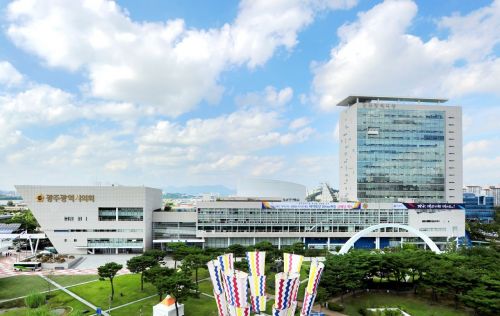
[Asia Economy Honam Reporting Headquarters Reporter Park Seon-gang] Gwangju Metropolitan City announced on the 29th that it will expand the target recipients and the range of diseases for this year's mental illness treatment cost support project to ensure stable treatment for patients with mental illnesses.
The mental illness treatment cost support project is designed to encourage intensive treatment in the early stages of mental illness onset and to provide treatment cost support to patients with mental illnesses so that they can receive appropriate and continuous treatment even during emergency hospitalization and after discharge.
The types of treatment cost support include emergency/administrative hospitalization treatment costs, early-stage (within 5 years) mental illness treatment costs, and outpatient treatment cost support after discharge.
First, in the case of emergency/administrative hospitalization, treatment costs that patients must pay themselves are fully supported regardless of income level to provide optimal treatment for patients who are at risk of harming themselves or others or are suspected of such risk.
Early-stage mental illness treatment costs are provided for patients diagnosed with schizophrenia within 5 years of onset to offer early treatment, and outpatient treatment support is provided to those who have received outpatient treatment support decisions from the Mental Health Review Committee under Article 64 of the Mental Health Welfare Act to prevent treatment discontinuation and re-hospitalization after discharge.
Regarding early-stage mental illness and outpatient treatment support, the support, which was previously provided to those with 65% or less of the median income, will be expanded to those with up to 80% or less starting this year.
Additionally, the target diseases for early-stage mental illness treatment costs have been expanded from the existing schizophrenia, schizoaffective, and delusional disorders (Korean Standard Classification of Diseases and Causes of Death F20-F29) to include some mood (affective) disorders (F30-F39).
The support period is year-round, and support is available up to an annual limit of 4.5 million KRW per person.
Applications for treatment cost support can be made by the patient who received treatment at a mental medical institution or by the patient who paid the medical expenses at the public health center, and detailed support information can be obtained by contacting the local public health center.
Im Jin-seok, Director of the City Health Policy Division, said, “We hope that the expansion of treatment cost support for patients with mental illnesses will serve as a stepping stone for treatment for economically vulnerable and marginalized individuals,” and added, “We will make further efforts to ensure that patients with mental illnesses receive continuous and appropriate treatment and support.”
© The Asia Business Daily(www.asiae.co.kr). All rights reserved.

















